
Choosing the right nail can make a wood project strong, neat, and long lasting. Choosing the wrong one can lead to split wood, loose joints, rust marks, or a finish that looks messy. That is why understanding the types of nails for wood matters for both beginners and experienced builders.
Many people think nails are all the same. They are not. Nail shape, size, material, coating, and head style all change how a nail performs in wood. A nail for framing is not the same as a nail for trim. A nail for outdoor decking is not the same as one for a small craft project.
This guide explains the most useful nail types, when to use them, and how to choose the right one for your project. You will also learn a few details that many beginners miss, like why shank design matters and why some nails hold better in softwood than hardwood.
How to think about nails before you buy
Before looking at each nail type, it helps to know what makes one nail better than another. The best choice depends on five simple things: the wood, the project size, the weight the joint must hold, the location, and the final look you want.
Wood type matters. Softwood like pine is easier to nail into, but it can split if the nail is too large. Hardwood like oak or maple is denser and often needs smaller pilot holes or thinner nails. Outdoor wood needs corrosion resistance. Hidden joints need holding power. Visible trim needs a clean finish.
One useful rule is this: do not choose a nail only by length. A long nail is not always better. In many cases, the wrong thickness causes more damage than the wrong length. A shorter nail with the right shank can hold better than a long, thin nail that bends easily.
The main types of nails for wood
Here are the nail types you will see most often in woodworking, carpentry, and home repair. Each has a different job.
| Nail type | Best use | Main benefit | Common risk |
|---|---|---|---|
| Common nail | Framing and rough construction | Strong holding power | May split smaller wood |
| Box nail | Light woodwork and thinner boards | Less splitting | Less strong than common nails |
| Finish nail | Trim and molding | Small visible hole | Lower holding power |
| Brad nail | Small trim and delicate pieces | Very discreet | Not for heavy joints |
| Pin nail | Very fine detail work | Almost invisible | Very weak on its own |
| Duplex nail | Temporary construction | Easy removal | Not for permanent joints |
| Sinker nail | Framing with nail guns | Good grip and speed | Not ideal for visible finish work |
| Flooring nail | Wood floor installation | Strong side grip | Wrong size can damage boards |
| Roofing nail | Roofing felt and shingles | Wide head and weather use | Not a general wood nail |
| Spiral or ring-shank nail | High-hold wood joints | Resists pulling out | Harder to remove |
1. Common nails
Common nails are one of the strongest and most basic types of nails for wood. They have a thick shank and a large head. This gives them strong holding power, which is why they are widely used in framing, heavy boards, and general construction work.
They work well when strength matters more than appearance. You often use them in wall framing, subfloors, and rough carpentry. Because they are thick, they can split thin pieces of wood. That is why they are best for larger boards or structural work, not delicate trim.
Best for: framing, rough construction, heavy-duty joints
2. Box nails
Box nails are similar to common nails, but they are thinner. That thinner shape lowers the chance of splitting wood. This makes them useful for lighter projects and thinner lumber.
They are often chosen for boxes, light frames, and some types of indoor woodworking. They do not grip as aggressively as common nails, so they are not the best choice when the joint must carry a lot of weight. Still, they are useful when you want a safer nail for narrow boards.
Non-obvious tip: if a common nail keeps splitting your pine board, a box nail may solve the problem without needing a larger repair.
3. Finish nails
Finish nails are made for visible woodwork. They have a small head that can be driven below the surface and hidden with filler. That makes them a strong choice for trim, baseboards, casing, crown molding, and cabinet work.
These nails give you a clean result, which is important when the nail hole must not stand out. However, because the head is small, finish nails do not hold as much as common nails. For that reason, they often work best when glue or other fasteners help support the joint.
Best for: trim, molding, cabinets, finish carpentry
4. Brad nails
Brad nails are even thinner than finish nails. They are used for delicate pieces where a larger nail would leave a noticeable mark or damage the wood. Think of small trim, thin moldings, picture frames, and light decorative pieces. For tool choice on this kind of work, see our pin nailer vs brad nailer comparison.
Because they are slim, brad nails are less likely to split fine wood. They are easy to hide, which is one reason they are popular in detailed work. But they do not provide much strength on their own. A brad nail is a holding aid, not a structural fastener.
Common mistake: using brad nails for joints that need real strength. If the piece will be bumped, pulled, or load-bearing, choose something stronger.
5. Pin nails
Pin nails are very small and almost headless. They are used when the nail should be nearly invisible. This makes them a favorite for very fine woodworking and small trim pieces.
They are not meant to carry weight. Their main role is to hold a piece in place while glue dries or to keep tiny parts from moving. If you need strength, pin nails are not enough. If you need a clean look, they can be excellent.
Best for: decorative work, tiny trim, glue support
6. Sinker nails
Sinker nails are a modern framing nail often used with nail guns. They are similar to common nails but usually have a thinner shank and a textured coating. This coating helps them drive easier and hold better in wood. If you are sizing framing fasteners, our framing nail gauge guide explains the common measurements.
They are called “sinker” nails because they sink into wood more smoothly. Builders often like them for framing because they save time and still provide solid holding power. They are not usually the first choice for visible finish work, since the head is larger and the look is rougher.
7. Duplex nails
Duplex nails have two heads. The lower head sits in the wood, while the top head stays visible. This design makes them easy to remove later with a crowbar or hammer. That is why they are used for temporary structures like concrete forms, scaffolding, or short-term supports.
They are not designed for final joints. If you need a piece to stay in place for years, duplex nails are the wrong option. But if you need a structure that will come apart later, they are very practical.
8. Spiral-shank and ring-shank nails
These nails are built for extra grip. A ring-shank nail has small ridges around the shaft. A spiral-shank nail has a twisted shape. Both are designed to resist pulling out over time.
This is a major advantage in projects where wood may move, vibrate, or dry out and shrink. Flooring, decking, and framing in demanding conditions can benefit from this design. One detail many beginners miss is that pull-out resistance matters just as much as nail length. A ring-shank nail of the right size can hold far better than a smooth nail that is longer.
9. Flooring nails
Flooring nails are made for wood floor installation. They help hold boards while allowing some natural movement. Many have a shape that supports a tighter grip without causing too much visible damage.
Flooring work is sensitive. If the nail is too large, the board may crack. If it is too small, the floor may become loose or squeaky later. This is why floor nail size and placement matter so much.
Helpful insight: flooring problems often come from poor nail choice, not poor wood quality.
10. Roofing nails
Roofing nails are not used for most woodworking jobs, but they are still a nail type for wood-based construction. They have a broad head to hold roofing materials in place. They are usually used where weather resistance matters.
These nails are useful when attaching roofing felt, shingles, or similar materials to wood sheathing. Their wide head helps prevent tear-through. They are not the right choice for furniture, trim, or general carpentry.
Material and coating matter more than many people think
The nail material affects how long the nail lasts and how it reacts to moisture. This is a big deal in wood projects. A strong nail that rusts quickly can stain the wood and weaken the joint over time.
Steel nails are common and strong. Stainless steel is better for outdoor use, coastal areas, or damp spaces. Galvanized nails have a protective coating that helps resist rust. Bright nails are plain steel and are usually best for dry indoor spaces.
For outdoor work, the wrong coating can lead to ugly rust streaks and failure. If you are building a deck, fence, or outdoor frame, choose nails rated for exterior use. For trusted guidance on fastener corrosion and material selection, the Family Handyman site has helpful practical information.
Non-obvious insight: if your project uses pressure-treated lumber, standard nails may corrode faster. In that case, choose fasteners made for treated wood, not just “rust resistant” nails in general.

Credit: reddit.com
Head style and shank style change performance
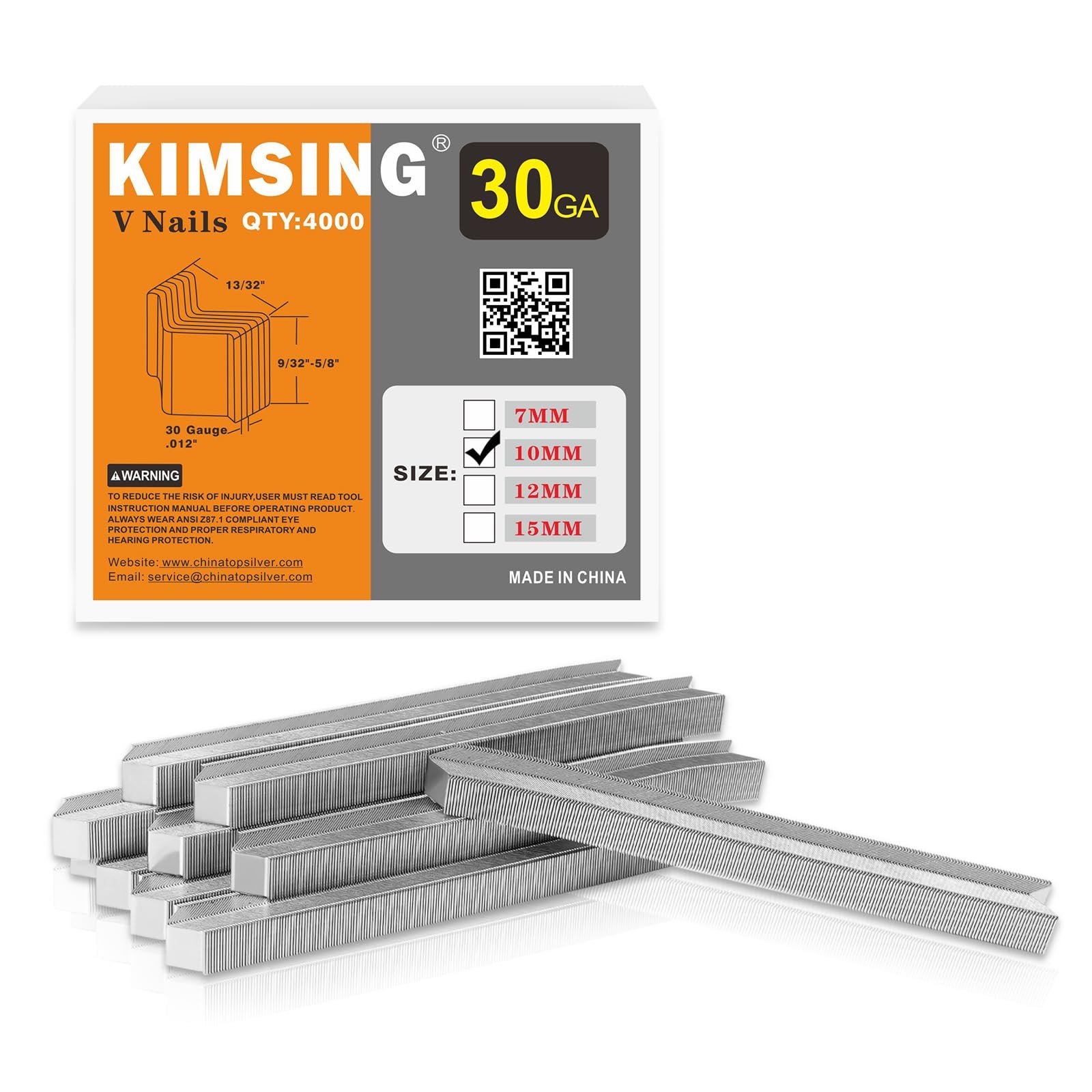
Most beginners focus on length, but head style and shank style often decide how well a nail works. The head controls how much surface area presses against the wood. The shank controls how well the nail grips inside the material.
Credit: amazon.com
Head style
A larger head gives more holding power and is good for structural work. A smaller head is better when you want the nail to disappear into the wood. Some nails are made to be set below the surface and filled later.
Shank style
Smooth shank nails are easy to drive, but they can pull out more easily. Ring-shank and spiral-shank nails hold better because they resist movement inside the wood. If the joint may face vibration, wind, or repeated stress, the shank style becomes very important.
Practical example: for a garden fence, a smooth nail might work at first, but a ring-shank nail can stay tighter over time, especially if the wood dries and shrinks.
How to choose the right nail for your project
Picking the right nail is easier when you match the nail to the job. The best choice is not always the strongest nail. It is the nail that gives the right balance of grip, appearance, and safety.
- For framing: use common nails, sinker nails, or ring-shank nails.
- For trim and molding: use finish nails.
- For delicate details: use brad nails or pin nails.
- For temporary work: use duplex nails.
- For floors: use flooring nails made for that purpose.
- For outdoor wood: use galvanized or stainless nails.
When in doubt, ask one question: do I want this nail to provide strength, a clean look, or temporary support? That single question removes a lot of confusion.
Wood type and nail size: what beginners often miss
Wood density affects how a nail behaves. Softwood is easier to drive into, but it can split if the nail is too thick or too close to the edge. Hardwood is harder to penetrate and often needs a pilot hole or a slimmer nail.
Another point many beginners overlook is grain direction. Nailing across the grain can sometimes split wood more easily than nailing with care near the grain line. Edges are also risky. The closer you are to the edge, the more likely the wood is to crack.
Useful habit: when working with hardwood or near edges, test a nail on a scrap piece first. This takes only a minute and can save the project.
Simple nail sizing advice
A common carpentry rule is that the nail should go deep enough to hold firmly, but not so long that it damages what lies behind the board. In many woodworking jobs, the nail should pass through the first piece and enter the second piece deeply enough to grip well.
If you are joining thin boards, a shorter and thinner nail is often safer. If you are joining heavy framing lumber, you need more length and more shank strength.
Common mistakes when using nails in wood
Even good nails can fail when used the wrong way. These are the mistakes that cause the most trouble.
- Using the wrong nail type: A brad nail is not a framing nail, and a common nail is too rough for fine trim.
- Ignoring rust resistance: Outdoor wood needs the right coating or material.
- Choosing length only: Thickness and shank design matter too.
- Not checking wood hardness: Hardwood often needs a pilot hole.
- Driving nails too close to the edge: This often causes splitting.
- Using a nail where glue or screws would be better: Some joints need more than one fastener type.
One subtle mistake is over-nailing. Adding too many nails does not always make a joint stronger. Sometimes it weakens the wood by creating too many holes. A smaller number of well-chosen nails is often better than a crowded pattern.
When to use nails instead of screws
Nails and screws both have their place. Nails are faster to install and often handle shear force well, which makes them useful in framing. Screws usually offer stronger pull-out resistance, which can be better for some repair and furniture tasks. For a direct fastener comparison, read our drywall screws vs nails guide.
Use nails when speed, flexibility, or traditional framing behavior matters. Use screws when the joint may need future removal or where extra clamp-like pull is helpful. In many real projects, the best answer is both: glue plus nails, or nails plus screws in different parts of the same build.
Non-obvious insight: wood moves with heat and moisture. Nails can be better than screws in places where slight movement is expected, because they flex a little instead of snapping the joint loose.
Credit: pinterest.com
Quick guide to the best nail for each common wood project
- Wall framing: common nails, sinker nails, or ring-shank nails
- Baseboards and crown molding: finish nails
- Small decorative trim: brad nails
- Fine craft work: pin nails
- Temporary build support: duplex nails
- Wood flooring: flooring nails
- Decking and outdoor structures: galvanized or stainless ring-shank nails
- Roof sheathing or shingles: roofing nails
Final thoughts on choosing the right nail
The best types of nails for wood are the ones matched to the job, not the ones that simply look strongest. A good nail choice protects the wood, improves holding power, and helps the finished project look clean. Once you understand the main nail types, selection becomes much easier.
Remember this simple rule: heavy work needs grip, fine work needs control, and outdoor work needs protection. If you keep those three ideas in mind, you will avoid most common mistakes and get better results in every project.
FAQs
1. What are the most common types of nails for wood?
The most common types are common nails, box nails, finish nails, brad nails, sinker nails, and ring-shank nails. Each one is made for a different purpose, from framing to trim work.
2. Which nail is best for wood trim?
Finish nails are usually best for trim because they have a small head and leave a cleaner look. For very small or delicate trim, brad nails may be better.
3. What nail should I use for outdoor wood?
Use galvanized or stainless steel nails for outdoor wood. These resist rust better and last longer in rain, moisture, and changing weather.
4. Do I need a pilot hole for nails in wood?
Sometimes yes, especially in hardwood or near the edge of a board. A pilot hole helps reduce splitting and makes the nail easier to drive.
5. Are nails or screws better for wood projects?
It depends on the job. Nails are often better for framing and fast work, while screws are often better for strong pull-out resistance and parts that may need removal later.
