
If you have ever bought screws for a deck, fence, shelf, or heavy wood joint, you may have seen both names used: lag screw and lag bolt. Many people think they are the same thing. In daily use, that is often true. But when you need the right fastener for a real project, the small differences can matter.
Choosing the wrong fastener can lead to loose joints, stripped wood, or weak support. That is a problem when the connection must carry weight or resist movement. The good news is that once you understand how these fasteners work, the choice becomes much easier.
This guide explains the lag screw vs lag bolt question in simple terms. You will learn what each one is, how they are used, what makes them different, and how to choose the right one for your project.
What these fasteners actually are
A lag screw is a heavy-duty screw with a sharp tip and coarse threads. It is made to bite into wood and create a strong hold. People use it for large wood joints, structural parts, and outdoor projects.
A lag bolt looks very similar, and many stores and workers use the two names for the same item. In practice, both are large fasteners with a hex head and deep threads. The main idea is simple: they are made for strong wood connections, not light household fastening.
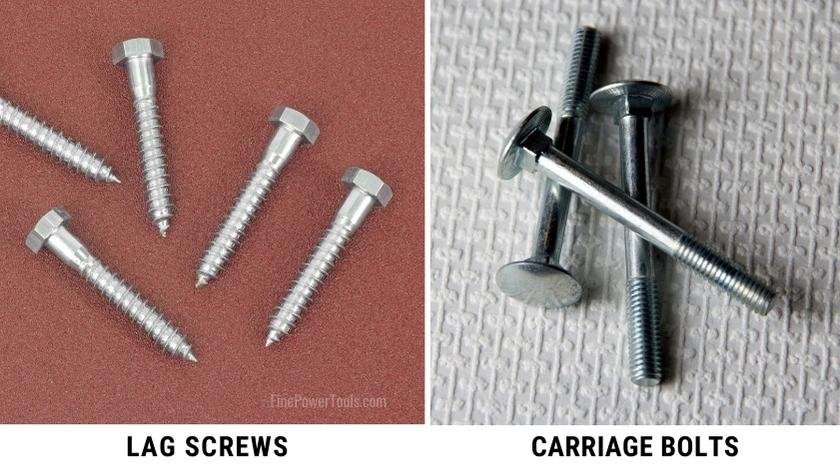
The confusion comes from the word bolt. A true bolt usually goes through a pre-made hole and uses a nut on the other side. A lag fastener usually threads directly into wood. So in strict technical language, a lag screw is closer to the real function. Still, many people call it a lag bolt, and many suppliers do too.
If you want a simple rule, remember this: lag screw is the more precise term for a wood-threaded fastener, while lag bolt is a common name used in the same way.
Lag screw vs lag bolt: the key differences
For most buyers, the difference is not about shape. It is about language, function, and how the fastener is installed. Here is a clear breakdown.
| Feature | Lag Screw | Lag Bolt |
|---|---|---|
| Common meaning | Large screw used in wood | Often the same item, but name is less precise |
| Installation | Threads directly into wood, usually with a pilot hole | Often used the same way in common speech |
| Thread design | Coarse threads for wood grip | Usually the same |
| Head style | Often hex head | Often hex head |
| Technical accuracy | More correct for wood-threaded fasteners | Less exact unless used in a broad, casual way |
| Typical use | Decks, beams, fences, framing | Same projects in common usage |
The most important difference is not physical. It is how the term is used. If you are talking to a hardware store worker, contractor, or supplier, both names may still be understood as the same kind of fastener. But if you want to be exact, use lag screw when you mean a heavy wood screw.
Why the names get mixed up
The mix-up has been around for a long time. In many regions, workers, sellers, and manufacturers use both names for the same fastener. That means a product label may say one thing, while a technical guide says another.
This can confuse beginners. But once you know the general rule, you can read product details more confidently. Look at the thread type, head style, diameter, length, and material. Those details matter more than the label alone.
How each fastener works in real projects
These fasteners are used when you need a strong connection in wood. They are common in projects where nails are too weak and regular screws are too small.
A lag screw works by cutting threads into the wood as it goes in. The coarse threads grip the wood fibers tightly. This creates a strong hold that resists pulling and sliding. It is especially useful when one piece of wood must be attached to another thick piece or to a wall support.
A lag bolt, when used in the same loose way, works the same way in practice. It usually goes into a pilot hole, then tightens with a wrench or socket. The large head gives good torque, which helps you drive it deep into dense material.
One thing beginners often miss is that the strength of the joint depends not only on the fastener, but also on the wood around it. Soft or cracked wood can fail long before the metal fastener does. So the connection is only as strong as both parts together.
Where they shine
- Attaching ledger boards for decks
- Fastening heavy brackets to wood
- Building outdoor frames
- Securing fence posts or gates
- Joining structural lumber
These uses share one thing: they need strong holding power. That is why lag-style fasteners are so common in construction and woodworking.
When to choose a lag screw
Choose a lag screw when the connection must hold weight and stay tight over time. It is a smart choice for wood-to-wood fastening, especially where movement or vibration may happen.
Here are common situations where a lag screw is a good fit:
- Heavy wood framing – Use it when joining thick lumber or structural parts.
- Outdoor decks – Use corrosion-resistant versions for deck ledgers and supports.
- Fence or gate hardware – It helps hold brackets and hinges securely.
- Mounting large items to wood – Good for shelves, supports, and heavy fixtures.
Another detail many people miss is pilot-hole sizing. A pilot hole that is too small can split the wood or make driving the screw very hard. A hole that is too large reduces grip. So correct pilot-hole size is not optional. It is part of the job.
Also, lag screws work best when the wood is thick enough to give the threads room to bite. If the wood is thin, the fastener may pull through or split the material. In that case, a through-bolt with washers may be stronger.
Credit: finepowertools.com
When a lag bolt is the better choice
In many cases, a lag bolt means the same thing as a lag screw. But if a supplier uses the term more loosely, it usually still refers to a heavy-duty fastener for wood. The better choice depends on the same basic factors: load, material, and environment.
You may see the term lag bolt used more often in construction talk, especially when people are speaking casually. If a product is labeled that way, check the details instead of the name. If it has coarse wood threads and a hex head, it is likely serving the same purpose as a lag screw.
Choose it for the same kind of jobs: strong wood joints, outdoor structures, and heavy-duty fastening. The exact name matters less than whether the fastener matches the job.
Do not confuse it with a regular bolt
This is a common beginner mistake. A standard bolt is different from a lag-style fastener. A standard bolt usually goes through drilled holes and is secured with a nut. It clamps materials together from both sides.
A lag screw or lag bolt, by contrast, threads into wood. That means it depends on the wood holding the threads firmly. If you need a joint that can be taken apart often or must clamp two materials tightly, a through-bolt may be better.
This difference is important because choosing the wrong fastener can lead to a weak or unsafe connection.
Materials, coatings, and why they matter
Many buyers focus only on size, but material is just as important. A strong fastener in the wrong material can fail early, especially outside.
Common options include:
- Steel – Strong and common for indoor use
- Zinc-coated steel – Offers some rust resistance
- Hot-dip galvanized steel – Better for outdoor exposure
- Stainless steel – Best where moisture or corrosion is a major concern
If the fastener will be exposed to rain, humidity, or treated lumber, corrosion resistance becomes a serious issue. Treated wood can be harsh on metal fasteners. In many outdoor builds, a stronger coating is worth the extra cost.
Here is the second non-obvious point many beginners miss: the fastener can rust faster where the coating is damaged during installation. Using the wrong tool or driving it too hard can scratch the protective layer. That small damage may shorten the life of the fastener, especially outdoors.
If you want a reliable general reference on fastening and construction hardware, this guide from WOOD Magazine can be helpful for practical wood project advice.
Size, length, and thread choices
Picking the right size is not just about making the screw “big enough.” It is about matching the fastener to the wood thickness and load.
Longer fasteners usually give better holding power, but only if the base wood is thick enough. A fastener that is too short will not grip enough material. One that is too long may poke through where it should not.
Diameter matters too. A thicker fastener can hold more weight, but it also needs a larger pilot hole and more care to avoid splitting the wood.
Thread style also matters. Coarse threads are common because they grip wood fibers well. Fine threads are less common in this type of fastener and usually serve different purposes.
Credit: newportfasteners.com
A simple sizing rule
For many wood projects, aim for enough embedment in the base wood to create a strong grip, not just a few shallow turns. If the joint carries weight, be conservative. When in doubt, check the project guide, structural plans, or fastener chart for your specific task.
How to install them correctly
Good installation matters as much as the fastener itself. A high-quality lag screw can still fail if it is installed badly.
- Mark the exact spot – Measure carefully so the joint aligns properly.
- Drill a pilot hole – This reduces splitting and makes driving easier.
- Use the right driver – Most need a socket wrench or drill with a hex bit.
- Drive it straight – Angled installation weakens the joint and can damage threads.
- Tighten firmly, but do not overdo it – Too much force can strip the wood.
One common mistake is skipping the pilot hole because the screw looks strong enough to go in by force. That often leads to split wood, crooked fastening, or a stripped head. Another mistake is using the wrong driver size, which can round off the head and make removal difficult later.
If you are working on a project with several fasteners, install them gradually and evenly. That helps keep the joint aligned and reduces stress in one spot.
Lag screw vs lag bolt for different projects
Here is a practical way to think about the choice. Ask yourself what the fastener must do.
- If the fastener must grip into wood, both names usually point to the same solution.
- If the joint must carry weight, choose the right diameter, length, and material first.
- If the connection may face rain or outdoor conditions, choose the proper coating.
- If the material is too thin for direct wood threading, use a through-bolt instead.
That means the label on the package is less important than the actual design. The real decision comes from the job itself.
A deck builder, for example, may say “lag bolts” even when buying wood-threaded fasteners. A furniture maker may prefer the term “lag screws.” Both may be talking about the same hardware. What matters is whether the fastener is strong enough, long enough, and suited to the wood.
Common buyer mistakes
- Buying by name only instead of checking the specs
- Using indoor fasteners outside
- Skipping the pilot hole
- Choosing a length that is too short for the load
- Using a lag fastener where a bolt-and-nut joint would be safer
So which one should you buy?
For most shoppers, the best answer is simple: buy based on the application, not the name. If a product is called a lag screw or lag bolt but has the right thread, head, size, and coating, it may work the same way.
Use this quick decision guide:
- Wood-to-wood connection – A lag screw is usually the better technical term.
- Heavy-duty outdoor wood project – Choose a corrosion-resistant lag-style fastener.
- Through-connection with a nut – Use a bolt instead.
- Thin material or weak wood – Consider another fastening method.
The biggest lesson in the lag screw vs lag bolt debate is this: the terms are often used interchangeably, but the job still demands the right details. Focus on load, material, environment, and installation method. That is where the real difference is.
Credit: oldwestiron.com
Final thoughts
Lag screws and lag bolts are often treated as the same fastener, and in everyday use that is usually fine. But when you need a secure, long-lasting connection, it helps to know the technical difference. A lag screw is the more exact term for a large wood-threaded fastener. A lag bolt is a common name that often means the same thing.
When you choose by function instead of label, you make better decisions. Check the material, coating, length, and load requirements. Drill the right pilot hole. Install it carefully. Those small steps can turn a simple fastener into a strong, reliable connection.
FAQs
1. Are lag screws and lag bolts the same thing?
In everyday use, many people treat them as the same. Technically, a lag screw is the more correct term for a fastener that threads directly into wood. “Lag bolt” is often used as a common name for the same item.
2. What is the main use of a lag screw?
A lag screw is used for heavy-duty wood fastening. It is common in decks, fences, framing, brackets, and other projects where a strong hold is needed.
3. Do lag screws need pilot holes?
Yes, most of the time. A pilot hole helps prevent wood splitting and makes the screw easier to drive. It also helps the threads seat properly.
4. Can I use a lag screw outdoors?
Yes, but choose the right material or coating. Hot-dip galvanized or stainless steel options are better for outdoor use because they resist rust more effectively.
5. When should I use a bolt instead of a lag screw?
Use a bolt when you need a through-connection with a nut on the other side, or when the material is too thin or weak to hold threads safely. Bolts are often better for certain structural or removable joints.
