
If you need to fix a lock, replace old hardware, or paint a door, you may need to remove a door knob that has no visible screws. This can feel confusing at first. Many people look for the screw and cannot find it anywhere.
The good news is that most hidden-screw knobs are not hard to remove. They usually use a spring clip, a small release slot, or a decorative cover plate. Once you know what to look for, the job becomes simple and safe.
In this guide, you will learn how to remove door knob without screws step by step. You will also learn common knob types, the tools you may need, mistakes to avoid, and what to do if the knob is stuck. If you follow the steps carefully, you can remove the knob without damaging the door.
First, identify the kind of door knob you have
Before you start pulling anything apart, take a close look at the knob. Hidden-screw designs are common, but they do not all work the same way. If you guess wrong, you may waste time or scratch the finish.
Most screwless-looking knobs fall into one of these groups:
- Knobs with a hidden release hole near the neck of the knob
- Knobs with a snap-on faceplate that covers the screws
- Knobs with a spring clip inside the trim plate
- Knobs with a decorative collar that twists off
Look at both sides of the door. On many interior doors, one side has a small pinhole or slot, while the other side has a cover plate. On older or decorative knobs, the trim may look seamless even though the screws are hidden underneath.
Non-obvious tip: use a flashlight and look from the side, not only from the front. Hidden release holes are often easier to spot when light hits the knob at an angle.
What you may need
Most of the time, you only need a few simple tools.
- A flathead screwdriver
- A small Phillips screwdriver
- A paperclip, pin, or small Allen key
- A putty knife or thin plastic pry tool
- A towel or soft cloth to protect the door finish
If you do not have a pry tool, a plastic card can sometimes help, but use care. Metal tools can leave marks on painted or wood surfaces.
Check for a release pin or small hole
This is one of the most common ways to remove a door knob without visible screws. Many knobs have a tiny opening on the side or underside of the neck. Inside that hole is a spring-loaded catch.
When you press the catch, the knob loosens from the spindle and slides off.
How to do it
- Open the door so you have more room to work.
- Look for a small hole on the neck of the knob, close to the base.
- Insert a paperclip, pin, or small tool into the hole.
- Press gently until you feel a spring or click.
- At the same time, pull the knob straight away from the door.
- If it does not move, keep the pin pressed and twist the knob slightly while pulling.
Some knobs need a firm press, while others release with very little force. Do not stab hard into the hole. The goal is to press the catch, not damage it.
Non-obvious tip: if one side refuses to come off, try the opposite side. Many door knobs only release from one specific side, and the release hole may be easier to access from there.
What if the knob spins but does not come off?
If the knob turns freely, the release pin may not be fully depressed. Try pressing the pin again with a straighter angle. You can also move the knob slightly in and out while holding the pin down. That often helps the catch line up with the slot inside.
Remove the decorative cover plate
Some knobs look screwless because the screws are hidden under a trim ring or cover plate. This cover is usually thin and round. It may twist, pop, or slide off.
Once the cover is removed, the screw heads become visible. Then the rest of the knob is easy to take apart.
Steps for removing the cover
- Hold the knob with one hand.
- Look for a seam between the cover plate and the main knob body.
- Try turning the cover ring counterclockwise.
- If it does not turn, slide a flat tool under the edge.
- Lift gently until the cover pops off.
- Remove the exposed screws with the correct screwdriver.
Be patient here. Some trim rings fit tightly and may need a little wiggling. If the finish is delicate, wrap the tip of your tool with tape to reduce scratches.
For a general reference on door hardware terms and home repair basics, you can also check The Spruce.
Why this method matters
This is often the safest method because it follows the knob’s natural design. Instead of forcing parts apart, you are simply uncovering the screws that were hidden from view.
Many beginners miss the seam because the cover and the knob are the same color. Run your fingertip around the edge. If you feel a slight lip or gap, that is a strong sign the cover can move.
Take apart a spring-clip knob
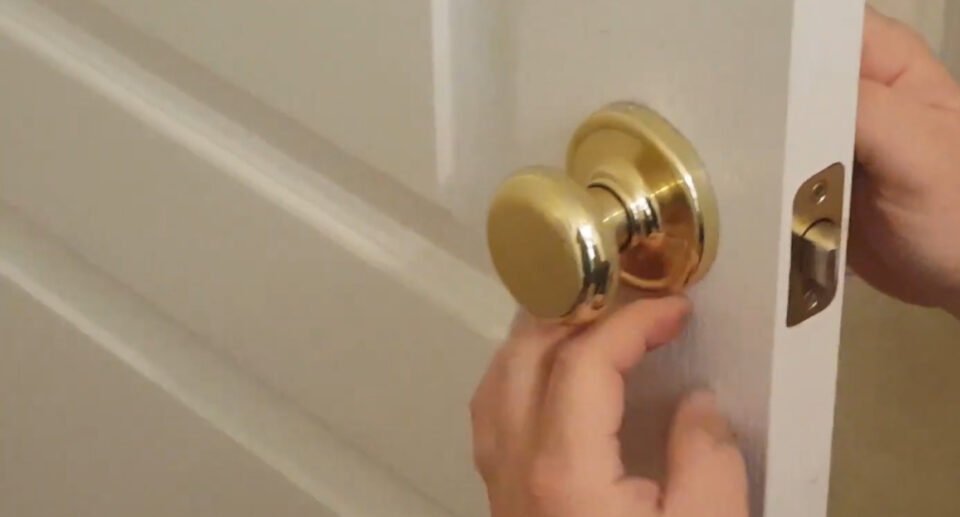
Spring-clip knobs are common on interior doors. These are designed to stay together until a hidden clip is pressed. The clip is often near the base plate or under the decorative collar.
When the clip is pressed, the knob and trim can slide off the spindle.
Credit: doorandwindowguide.com
Step-by-step removal
- Inspect the side of the knob and the trim ring closely.
- Look for a tiny slot, notch, or hole.
- Insert a small tool into the opening.
- Press the clip inward.
- Pull the knob and trim away from the door.
- Repeat on the other side if needed.
If the knob feels stuck, do not yank hard. The clip may still be partly engaged. Press again and try a gentle twist. The movement is usually small, but once the clip releases, the parts come off quickly.
Common mistake to avoid
A very common mistake is trying to pry the knob out before the clip is pressed. That can bend the trim plate or mar the door. Always find the release point first. If you cannot locate it, use light and inspect every side before applying force.
Twist off a threaded or collar-style knob
Some knobs have a decorative collar that hides the inner fastening system. The collar can often be unscrewed by hand. Other times it is only snug and will slide off after a slight turn.
This design is less common than the release-pin style, but it appears on many older or decorative interior knobs.
How to remove it safely
- Hold the knob firmly.
- Search for a thin collar behind the knob.
- Turn the collar counterclockwise.
- If it feels stuck, wrap a cloth around it for better grip.
- Once the collar loosens, slide it away from the door.
- Check for screws underneath.
Do not use too much force. If the collar will not turn, it may not be threaded at all. In that case, it may be a snap-on cover instead.
Non-obvious tip: some collars look like one solid piece, but they are actually two parts. A very small seam around the middle can reveal where they separate.
Remove the latch assembly after the knob is off
After the knobs are removed, the latch mechanism in the edge of the door usually stays in place. If your goal is to fully replace the hardware, you will need to remove that too.
This part is simple, but many people stop too soon and think the whole job is done.
Steps for removing the latch
- Look at the side edge of the door.
- Find the two screws holding the latch plate.
- Unscrew them carefully.
- Pull the latch body straight out of the door pocket.
If the latch does not move, lightly tap it from the opposite side with your hand. Old paint or dust can make it stick. Avoid using sharp tools that can chip the wood around the hole.
| Knob type | How it usually opens | Best tool | Difficulty |
|---|---|---|---|
| Release-pin knob | Press a small hole to unlock the knob | Paperclip or pin | Easy |
| Cover-plate knob | Pop or twist off the decorative trim | Flathead screwdriver or pry tool | Easy to moderate |
| Spring-clip knob | Press a hidden clip near the trim | Small flat tool | Moderate |
| Collar-style knob | Twist off the threaded ring | Hands or cloth for grip | Moderate |
How to avoid damaging the door or knob
Removing a knob without screws should be a clean job. A few small habits can save you from scratches, dents, and broken parts.
- Use the smallest tool that can do the job.
- Protect the door with a cloth near the trim.
- Pull straight, not at an angle.
- Stop if you feel heavy resistance.
- Work slowly around painted surfaces.
One of the biggest mistakes is using a large screwdriver where a small pin would work better. Big tools can slip and mark the finish. Another mistake is twisting the knob too hard while the release pin is only half-pressed. That can jam the inner parts.

Credit: reddit.com
If the knob is painted over
Paint can make a hidden knob feel stuck. If the trim ring has been painted shut, score the edge gently with a utility knife before trying to remove it. Cut only the paint line, not deep into the wood or metal.
This is a small step, but it can prevent the trim from peeling paint off the door.
What to do if the knob will not come off
Sometimes a knob seems impossible to remove. Usually, the problem is one of these:
- The release hole is on the other side
- The clip is not fully pressed
- Paint or rust is holding the parts together
- The knob has a different hidden fastening system
Try this simple order:
- Recheck both sides for a release hole or clip.
- Apply stronger but careful pressure to the release point.
- Twist the knob slightly while pulling.
- Inspect for a hidden cover plate or collar.
- Use a little penetrating oil only if the metal is rusty.
If you use oil, apply only a very small amount and keep it away from wood finishes. Wipe away any extra right away.
For old or historic hardware, forcing the parts apart is risky. In that case, it may be better to stop and ask a handyman or locksmith for help. The cost of repair is often higher than the cost of a careful removal.
How to put the knob back later
If you are removing the knob only for repair, painting, or cleaning, you will probably want to reinstall it later. Keep every part in a safe place as you work.
A simple trick is to place the screws, cover ring, and latch parts in a small cup or bag. Label it with the room name if needed. That saves time during reassembly.
Reinstallation basics
- Put the latch back into the edge of the door.
- Secure it with the screws.
- Align both knob sides with the spindle.
- Push or twist the knob until it locks in place.
- Test the latch several times before closing the door fully.
Always test the knob while the door is open. That way, if something is not aligned correctly, you will notice before the door gets stuck shut.
Quick signs you are using the right method
You are probably on the right track if you notice one or more of these signs:
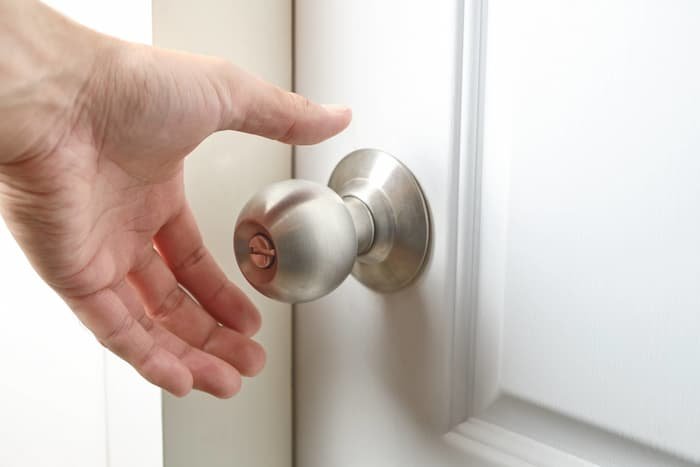
- The knob has a tiny hole near the neck
- The trim ring has a clear seam
- The collar moves slightly when twisted
- The knob loosens after the release pin is pressed
- A hidden screw appears after the cover pops off
If none of these signs appear, the knob may be a different style. In that case, stop and inspect more closely before forcing it.
Credit: vancouverdoorrepair.ca
Final thoughts
Learning how to remove door knob without screws is mostly about patience and close inspection. Most hidden-screw knobs are designed to come apart cleanly once you find the release point. The key is to look for a pinhole, a snap-on cover, a spring clip, or a twist-off collar before applying force.
Start slowly, use the smallest tool that works, and protect the finish of the door. If the knob resists, pause and inspect again. A careful approach is almost always faster than trying to pry your way through the job.
FAQs
1. Can all door knobs be removed without visible screws?
No, not all of them. Many knobs hide their screws under a cover plate or use a release pin, but some models are built differently. If you cannot find a pinhole or trim seam, the knob may need a different removal method.
2. What is the easiest way to remove a door knob without screws?
The easiest method is usually pressing the small release pinhole with a paperclip or pin. Once the catch releases, the knob normally slides off with light pulling.
3. Why does my knob turn but not come off?
This usually means the release clip is not fully pressed, or you are pulling from the wrong side. Try the other side of the door and keep steady pressure on the release point while pulling straight out.
4. Will removing a door knob damage the door?
Not if you work carefully. Damage usually happens when people pry too hard or use the wrong tool. A cloth, a small screwdriver, and slow movement help protect the finish.
5. Can I reinstall the same door knob after removing it?
Yes, in most cases you can. Keep all the parts together, including screws and trim pieces. Then align the spindle and latch carefully when putting it back.
