
If you need to open a padlock but do not have bolt cutters, the first thing to know is this: not every lock should be “cut.” In many cases, there are safer and less damaging ways to open it, especially if the lock is yours and you simply lost the key or forgot the combination. The best method depends on the lock type, the situation, and how much damage you can accept.
This guide explains how to cut padlock without bolt cutters in a practical, safety-first way. You will also see non-cutting alternatives that often work better. The goal is not to force a quick damage-heavy solution when a cleaner one exists. The right approach can save time, protect the item the lock is attached to, and keep you safer.
Before you try anything, pause and check one important point: Do you legally own the padlock and the property it secures? If the answer is no, stop there. Only use these methods on your own lock, or where you have clear permission to act.
Start with the easiest and safest opening methods
Many people assume the only choice is to break the lock. That is often wrong. A padlock may open with much less effort if you try the right non-destructive method first. This matters because some locks are hardened against cutting, and some cutting attempts create more danger than success.
Check for the key, code, or spare access
This sounds obvious, but people often skip it. Look for a spare key, ask anyone who may have one, or check if the lock uses a code that was written down somewhere. If it is your own lock, this can save a lot of trouble.
Try the correct reset or release method
Some padlocks are not standard key locks. They may have a reset button, a hidden release pin, or a combination dial that can be recovered if you know the original numbers. Read the brand information if possible. If you still have the packaging or model name, the manufacturer may offer instructions.
Use lubricant only when the lock is stuck
If the lock is not lost-key or lost-code, but simply jammed, a dry graphite lubricant or a lock-safe spray may help. Do not flood the lock with random oil. Too much liquid can trap dirt inside and make the problem worse later.
A useful source for general lock care and safe security practices is the Master Locksmiths Association. Their information is helpful if you want to understand locks better before using force.
When cutting is the right choice
Sometimes a padlock cannot be opened cleanly. It may be badly rusted, the key may be lost, or the lock may be protecting something that needs immediate access. In that case, cutting can be reasonable. But “cutting” does not always mean one tool or one method.
If you are trying to figure out how to cut padlock without bolt cutters, the real question is which safe alternative tool can do the job without making the situation dangerous. Some methods create sparks, heat, or flying metal. Others need patience, not force.
Consider these factors before using force
- Lock body material: Solid brass, steel, and laminated locks behave differently.
- Shackle thickness: A thick hardened shackle is harder to cut than the lock body.
- What is behind the lock: You may damage doors, chains, cabinets, or storage units.
- Your workspace: Indoor spaces need better ventilation and more caution.
- Fire risk: Cutting tools can produce sparks or heat.
One beginner mistake is focusing only on the padlock itself. The real risk is often the object holding the lock. A cheap lock on a painted gate may be easy to replace. A lock on a fuel storage area, electric panel, or rental property is a very different matter.
Safe alternatives to bolt cutters
There is no single universal method. The best alternative depends on the padlock and your tools. Below are common options, starting with the ones that are usually safer and more controlled.
Use a hacksaw for small to medium shackles
A hacksaw is one of the most common alternatives when you do not have bolt cutters. It works best on exposed shackles that are not too thick. The cut is slower, but that is also an advantage because you have more control.
Work gently and keep the blade straight. If you rush, the blade can slip and scratch nearby surfaces. Put something protective between the lock and the surface behind it if possible. A thin piece of metal or wood can reduce damage.
Best for
- Thin or medium padlock shackles
- Locks with enough clearance to reach the shackle
- Situations where sparks are not desirable
Common mistake
Many people start sawing at the thickest or hardest section. That wastes time. If the lock has a weaker area, such as a side of the shackle with better access, the cut is often easier there.
Try an angle grinder for heavy-duty locks
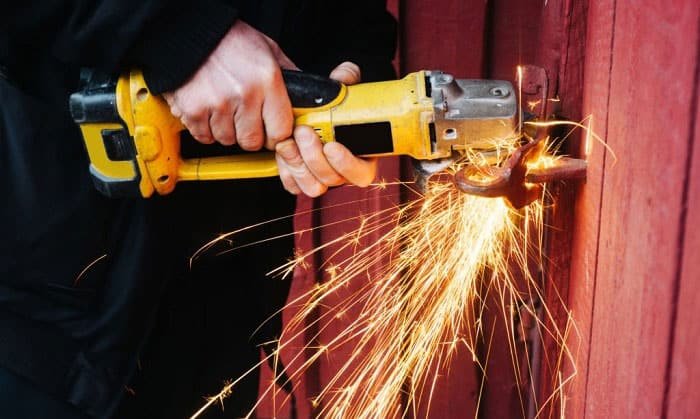
An angle grinder can cut many padlocks quickly, but it is not the safest first choice. It creates sparks, noise, and heat. Use it only if you understand the risks and can work in a clear, controlled area. Gloves, eye protection, and stable positioning matter here.
This method is usually used on stubborn hardened shackles or padlocks that resist hand tools. However, it can also damage nearby materials. If the lock is on a gate, fence, or cabinet, make sure the cutting wheel will not hit anything important.
Best for
- Hardened steel shackles
- Outdoor locks with space around them
- Cases where speed matters more than preserving the lock
Common mistake
People often hold the grinder too close to the lock body. That can overheat the tool and reduce control. A steady angle and a careful approach work better than force.
Use a reciprocating saw with a metal blade
A reciprocating saw can cut padlock parts if you can position the blade safely. It is less precise than a hacksaw, but it may be faster on thicker metal. This tool works better when the lock is attached to a chain, has room around the shackle, or can be moved into a safer position.
The main advantage is reach. The main drawback is vibration. If the lock is loose or swinging, controlling the blade becomes harder.
Cut the hasp or chain instead of the lock
Sometimes the padlock is not the easiest part to cut. If the lock secures a chain, latch, or hasp, that section may be weaker. In many cases, cutting the hasp is cleaner than attacking a hardened padlock body.
This is one of the most practical ideas beginners miss. A padlock can look like the “main target,” but the surrounding hardware may be the weak point. That choice can save time and reduce tool wear.
Freeze-and-break methods are usually a bad idea
Some people try extreme temperature tricks, then strike the lock. In real life, this is unreliable and risky. It can damage surfaces, hurt hands, and create shards. For most people, it is not the best answer.
If your goal is safe access, this is one of the first methods to skip.
Compare the most practical options
When you need to decide quickly, it helps to compare tools by safety, control, and speed. The table below gives a simple view.
| Method | Best for | Safety level | Speed | Damage risk |
|---|---|---|---|---|
| Hacksaw | Small to medium shackles | Moderate to high | Medium | Low to medium |
| Angle grinder | Hardened locks | Lower | Fast | High |
| Reciprocating saw | Accessible metal parts | Moderate | Medium | Medium |
| Cutting the hasp or chain | Weak surrounding hardware | Moderate | Medium | Medium |
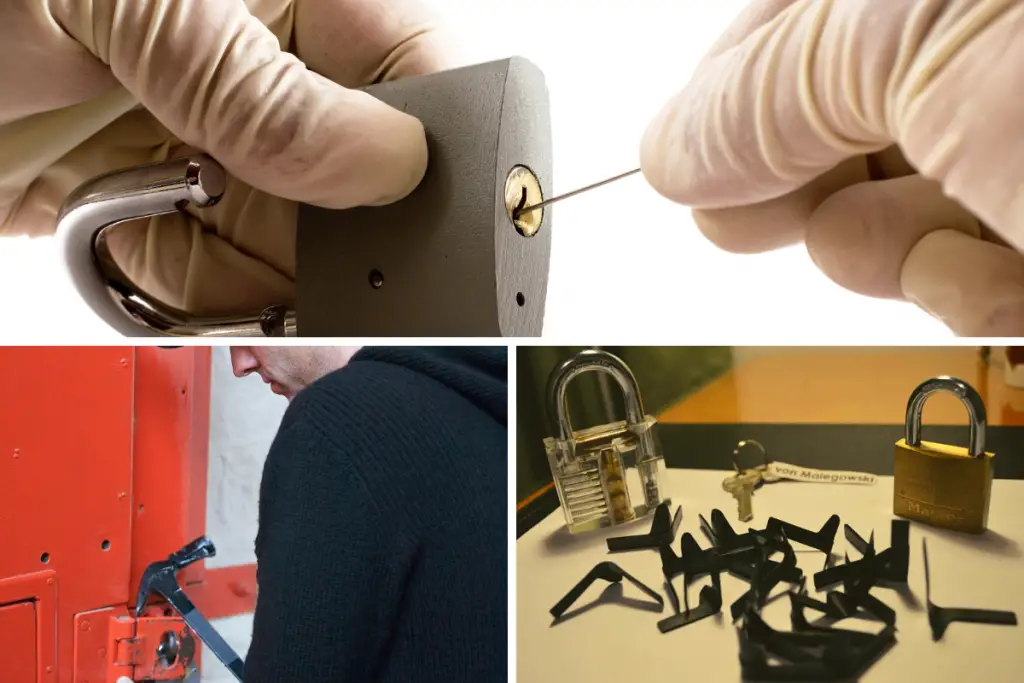
A second beginner insight many people miss: the fastest tool is not always the safest one. If you are working near flammable material, glass, paint, plastic, or wiring, slower tools can actually be the smarter choice.
Credit: locksbuddy.com
How to choose the right method for your lock
If you are trying to decide how to cut a padlock without bolt cutters, use the lock’s shape and situation as your guide. A narrow shackle with good access suggests a hacksaw. A thick, hardened shackle may need a grinder or help from a professional. A padlock on a chain may be better attacked at the chain link, not the lock.
Credit: revolar.com
Use this simple decision approach
- Try non-destructive opening first.
- Check whether the lock body or nearby hardware is weaker.
- Choose the least dangerous tool that can still reach the target.
- Protect nearby surfaces before cutting.
- Stop if heat, sparks, or slipping becomes a problem.
If the lock is in a sensitive place, like a rented unit, storage room, vehicle, or workplace area, it may be better to call a locksmith or the property owner first. That is often cheaper than fixing damage later.
Safety matters more than speed
Cutting metal looks simple from a distance, but it can be dangerous. Small metal shards can fly into your eyes. Hot metal can burn skin. Power tools can catch and jump. Even a hand saw can slip if the lock shifts.
Basic safety steps
- Wear eye protection.
- Use gloves that fit well.
- Keep your hands away from the blade or wheel path.
- Secure the lock so it does not move.
- Work in a clear area with good light.
- Keep flammable items away from sparks.
Another non-obvious point: the position of the lock matters almost as much as the tool. A locked item lying flat and stable is much easier and safer to cut than one hanging freely in the air.
Non-cutting alternatives that may solve the problem faster
Before you destroy the lock, ask whether you can solve the problem another way. In many cases, that answer is yes.
Call a locksmith
If the lock has value, or if you need clean access without damage, a locksmith can often open it faster than you can cut it. This is especially useful for locked doors, storage units, or security hardware you may need to keep using.
Contact the manufacturer
Some lock brands offer replacement keys, reset help, or model-specific guidance. If you know the product name, this can save time.
Replace the lock if it is cheap
For a low-cost padlock, replacement may be easier than trying to save it. If the item secured by the lock is more important than the lock itself, replacement is often the practical choice.
Use master-keyed or keyed-alike systems going forward
If this happened because you keep losing keys, think about a better lock system for next time. Keyed-alike locks, digital locks, or combination locks can reduce repeat problems.
What beginners usually get wrong
People often make the same mistakes when trying to open a lock without bolt cutters. Avoiding these errors can save time and reduce damage.
- Choosing the biggest tool first: Bigger is not always better. It can be harder to control.
- Cutting near the body blindly: This can damage what the lock is attached to.
- Ignoring metal thickness: Some shackles are harder than they look.
- Working without protection: Eye and hand injuries are common when people rush.
- Forgetting the legal side: Never cut a lock you do not own or have permission to open.
A third useful insight: if one method does not work after a reasonable attempt, do not keep forcing it. Switching tools or calling a professional is often the smarter move. Repeated force usually increases damage and lowers your control.
Practical examples by situation
Credit: mussalains.com
Old rusted padlock on a garden gate
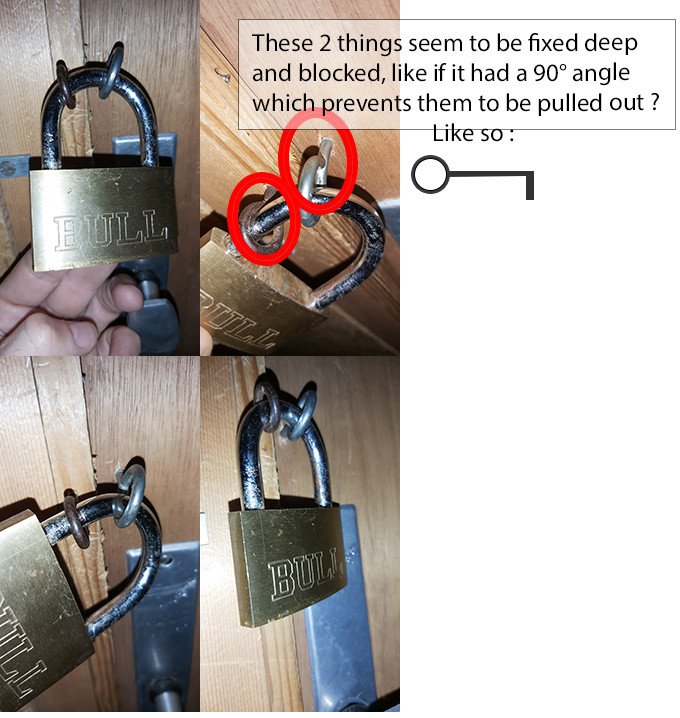
Start with lubricant and check whether the key still exists. If it is still locked and must come off, a hacksaw may work if the shackle is exposed. If the gate hardware is weak, cutting the hasp may be easier.
Heavy-duty padlock on a storage chain
Here, the padlock may be difficult to cut directly. A reciprocating saw or angle grinder may be needed, but check whether a chain link is easier and safer to cut than the lock itself.
Small lock on a cabinet
A hacksaw is usually safer than a grinder because it reduces the chance of damaging the cabinet. If the lock is cheap, replacement is often the simplest path.
Frozen lock in wet weather
Try drying and lubricating it first. Cutting may be unnecessary if the lock is only stuck. Force should be the last step, not the first.
Choose the least destructive path first
If you remember only one thing, make it this: the best answer to how to cut padlock without bolt cutters is often not to “cut harder,” but to choose the safest method that still works. A hacksaw, grinder, or saw can all be useful, but each has trade-offs. In many cases, a locksmith or a replacement lock is the better solution.
Use force only when it is truly needed, and always think about what is behind the lock. That habit protects your hands, your property, and your time.
FAQs
Can I cut any padlock without bolt cutters?
Not always. Some padlocks have hardened shackles or protected bodies that resist hand tools. The best method depends on the lock type, the available space, and the tools you have.
Is a hacksaw better than an angle grinder?
For small or medium locks, a hacksaw is usually safer and more controlled. An angle grinder is faster for heavy-duty locks, but it creates sparks and needs more safety care.
What should I cut first, the shackle or the lock body?
Usually the shackle is the easier target. But sometimes the hasp, chain, or surrounding hardware is weaker and easier to cut than the padlock itself.
Will lubricant help me open a stuck padlock?
Yes, if the lock is stuck because of rust or dirt. Use a lock-safe lubricant, apply a small amount, and give it time to work before trying force.
When should I call a locksmith instead of cutting the lock?
Call a locksmith when the lock is valuable, the item behind it is sensitive, or you want to avoid damage. This is often the best choice for doors, storage units, and secure property.
