
If you are comparing a crown stapler vs brad nailer, you are probably trying to choose the right tool for trim, furniture, paneling, or light woodworking. These two tools can look similar at first, but they do very different jobs. Choosing the wrong one can lead to weak joints, ugly marks, or extra repair work.
The simple truth is this: a crown stapler grips material with two legs and a wide crown, while a brad nailer drives thin nails that leave a smaller hole. That small difference changes how each tool holds wood, how visible the fastening point is, and where each tool works best.
In this guide, you will learn the key differences, the best uses for each tool, common mistakes people make, and how to choose the right one for your project. By the end, you will know which tool fits your work instead of guessing.
For nearby nailer comparisons, also review pin nailer vs brad nailer, compare angled vs straight finish nailers, and use this guide to the different types of nail guns before choosing a tool.
How these two tools actually work
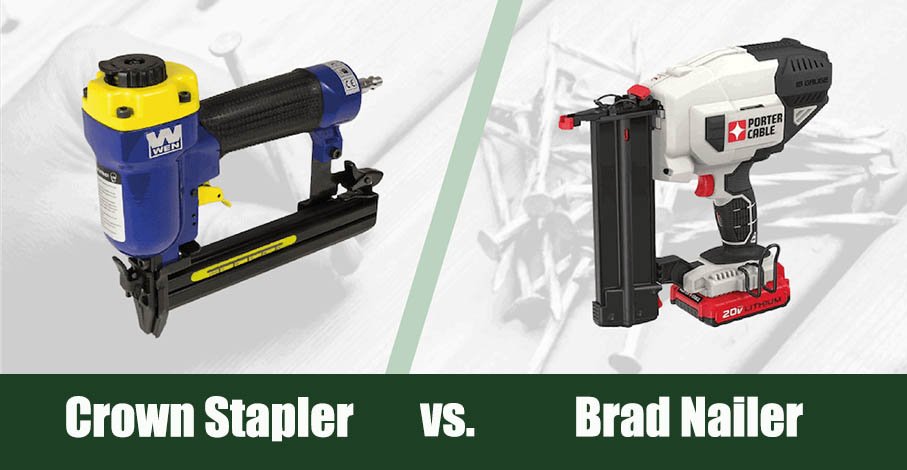
A crown stapler drives staples into wood or other materials. Each staple has two legs and a flat top, called the crown. That crown spreads the holding force over a wider area. Because of that, crown staples are good when you need more grip on thin or soft material.
A brad nailer drives thin nails, usually 18-gauge brads. These nails are small, so they make tiny holes and are easier to hide. That is why brad nailers are popular for finish work where appearance matters.
Both tools use compressed air, batteries, or sometimes corded power. Both are fast. But they are not interchangeable. The fastening style, hole size, and holding power are different enough that one may be clearly better than the other for a task.
What the crown does in a stapler
The crown is the flat top part of the staple. It spans across the surface and helps hold wider or softer materials in place. This is useful when the material could split or pull away if you used a single thin nail.
A crown stapler is especially helpful when the workpiece needs more surface contact. That means it can hold paper-backed materials, upholstery fabric, thin wood strips, or light paneling more securely in many cases.
What makes a brad nail different
A brad nail is thin and leaves a much smaller mark. It is designed for neat finish work, not heavy holding force. The small size makes it easier to conceal with putty or paint.
That is why brad nailers are common in trim installation, small moldings, cabinet trim, and decorative woodworking. They do their best work when strength is needed, but appearance matters even more.
Key differences you should know before buying
The best way to understand crown stapler vs brad nailer is to compare them by the things that matter in real projects: holding strength, visibility, material type, and finish quality.
| Feature | Crown Stapler | Brad Nailer |
|---|---|---|
| Fastener type | Staples with two legs and a crown | Thin nails, usually 18-gauge |
| Holding power | Strong grip across a wider area | Moderate grip with less surface contact |
| Hole size | Larger and more visible | Smaller and easier to hide |
| Best use | Light fastening, paneling, upholstery, some trim | Finish trim, molding, cabinets, decorative woodwork |
| Risk of visible marks | Higher | Lower |
| Material safety | Good for soft or thin materials | Better for clean finish surfaces |
One important detail many beginners miss is that more holding area does not always mean better for finish work. A crown staple may hold better in some materials, but it can also leave a more noticeable mark. In visible trim work, that can matter more than raw strength.
Another overlooked point is splitting. Brad nails are thin, so they are often safer in delicate trim. But if the piece is under stress, a brad nail alone may not hold it well enough. The best tool depends on both the material and the load.
When a crown stapler is the better choice
A crown stapler is a smart choice when you want strong temporary or semi-permanent holding power across a wider surface. It shines when appearance is less important than secure fastening.
Credit: homegrail.com
Best uses for a crown stapler
- Upholstery work
- Fabric-to-wood fastening
- Thin panel installation
- Insulation or underlayment attachment
- Light wood assembly where fast grip matters
- Back panels on cabinets or furniture
If you are working with thin materials that may shift, a crown stapler gives a broad hold. That is useful when the material could tear if the fastening point is too small.
For example, when attaching fabric to furniture frames, a staple spreads the force and keeps the fabric from pulling free as easily as a small nail would. This is one reason upholstery shops still rely on crown staplers so much.
Where crown staplers are less ideal
They are not the best choice for exposed trim where every fastener hole must blend in. The crown leaves a larger mark, and that can be hard to hide on finished surfaces.
They are also not the best option for hard hardwood trim, where a brad nailer or another fastening method may be cleaner and more precise.
When a brad nailer is the better choice
A brad nailer is the better tool when you want a neat look and only need light to medium holding power. It is built for finish work where the fastening point should almost disappear.
Best uses for a brad nailer
- Baseboards
- Window and door casing
- Small crown molding
- Cabinet trim
- Decorative wood strips
- Light furniture assembly
Brad nailers are especially helpful for detailed trim work because they leave tiny holes. That means less filling, less sanding, and a cleaner final look.
They are also useful when you want to hold a piece in place while glue dries. Many woodworkers use brad nails as a temporary clamp in finish projects. This is one of the most practical uses of the tool.
Where brad nailers are less ideal
They are not strong enough for every task. If a piece carries stress, vibration, or movement, a brad nail may not be enough. A narrow nail can pull out more easily than a staple in the same material.
They are also not the best fit for upholstery, insulation, or any task that needs wide surface grip. In those cases, the narrow nail does not offer the same support as a staple crown.
Strength, finish quality, and hole size
Strength and appearance often pull in opposite directions. That is the heart of the crown stapler vs brad nailer choice.
A crown stapler usually wins on grip. A brad nailer usually wins on appearance. If you need something to stay down firmly and the fastener can be seen, a crown stapler may be fine. If the work must look clean and polished, a brad nailer is usually the safer choice.
Here is a simple way to think about it:
- Choose a crown stapler when the material is soft, thin, or likely to pull loose.
- Choose a brad nailer when the work is visible and must look neat after finishing.
Beginners often assume a more powerful-looking fastener is always better. That is not true. In finish carpentry, the smallest fastener that still does the job is often the best one. Less damage, less filling, and less chance of splitting usually lead to better results.
Material matters more than many people expect
The best tool choice changes based on the material you are fastening. Soft pine, MDF, hardwood, plywood, fabric, and thin trim all behave differently.
Soft wood and thin boards
Soft wood can split less easily, but it can also crush under pressure. A crown stapler may hold better if the board is very thin. A brad nailer may still be better if the piece is visible and does not need a wide grip.
Hardwood trim
Hardwood is tougher and more likely to split with the wrong fastener. Here, brad nails are often preferred because they create smaller holes. Still, pre-drilling or choosing a different nailer may be needed for very dense wood.
MDF and engineered wood
MDF can hold fasteners well in some cases, but edges can break apart. Brad nails are often used for finish work here because they leave smaller marks. Staples can work in certain hidden applications, but the visible hole may be harder to finish well.
Fabric and upholstery
This is where crown staplers usually dominate. The wide crown holds fabric better and helps prevent tearing. A brad nailer is simply not the right tool for this type of work.
Common mistakes people make with both tools
Many problems are not caused by the tool itself. They come from using the wrong fastener, wrong depth, or wrong material.
Credit: sawshub.com
Using the tool as a replacement for glue
Fasteners help hold pieces while glue sets, but they are not always a full replacement for glue. In trim and woodworking, glue plus brads is often stronger than brads alone.
That said, glue is not always needed. In some repair jobs, too much glue makes future removal difficult. A simple fastening plan is often better than overbuilding.
Driving too deep
Both crown staplers and brad nailers can sink too deep if the pressure or depth setting is wrong. Overdriving can crack the surface, weaken the hold, or leave ugly marks.
Always test on a scrap piece first. This is one of the easiest habits to build, and it saves time later.
Using the wrong fastener length
A fastener that is too short will not hold. One that is too long may poke through the back of the material or damage something behind the surface. The correct length depends on the thickness of the pieces and the type of wood.
Ignoring the finish requirement
Some people choose based only on strength. But if the fastener is visible in the final result, appearance matters too. A small hole that is easy to fill can save a lot of cleanup work.
How to choose the right one for your project
Here is the easiest way to decide between the two:
- Look at the material. Is it fabric, thin paneling, trim, or solid wood?
- Ask how visible the fastener will be. If the hole will show, appearance matters.
- Check how much holding power you need. Light holding and finish work often point to a brad nailer. Wider grip and soft material often point to a crown stapler.
- Think about the final finish. If you want a clean painted or stained look, smaller holes are easier to hide.
- Consider whether glue is part of the job. If glue helps carry the load, a brad nailer may be enough.
A useful rule of thumb is this: if the fastening point will be seen and should blend in, choose a brad nailer. If the material needs a wider hold and looks are less important, choose a crown stapler.
For more detailed tool safety and fastening advice, you can also check a trusted source like OSHA.
Which tool is better for beginners?
For many first-time users, a brad nailer is easier to live with because the holes are smaller and mistakes are less visible. That does not mean it is always the right tool, but it is often more forgiving in finish projects.
A crown stapler is not hard to use, but it is more likely to leave marks that stand out. If you are learning on visible work, that can be frustrating. If you are doing upholstery, paneling, or hidden fastening, a crown stapler may actually feel easier because it grabs material quickly.
The best beginner choice depends on the job you want to do first, not just on the tool itself.
Practical buying tips before you spend money
Before buying either tool, pay attention to a few things that many shoppers miss.
Air vs battery
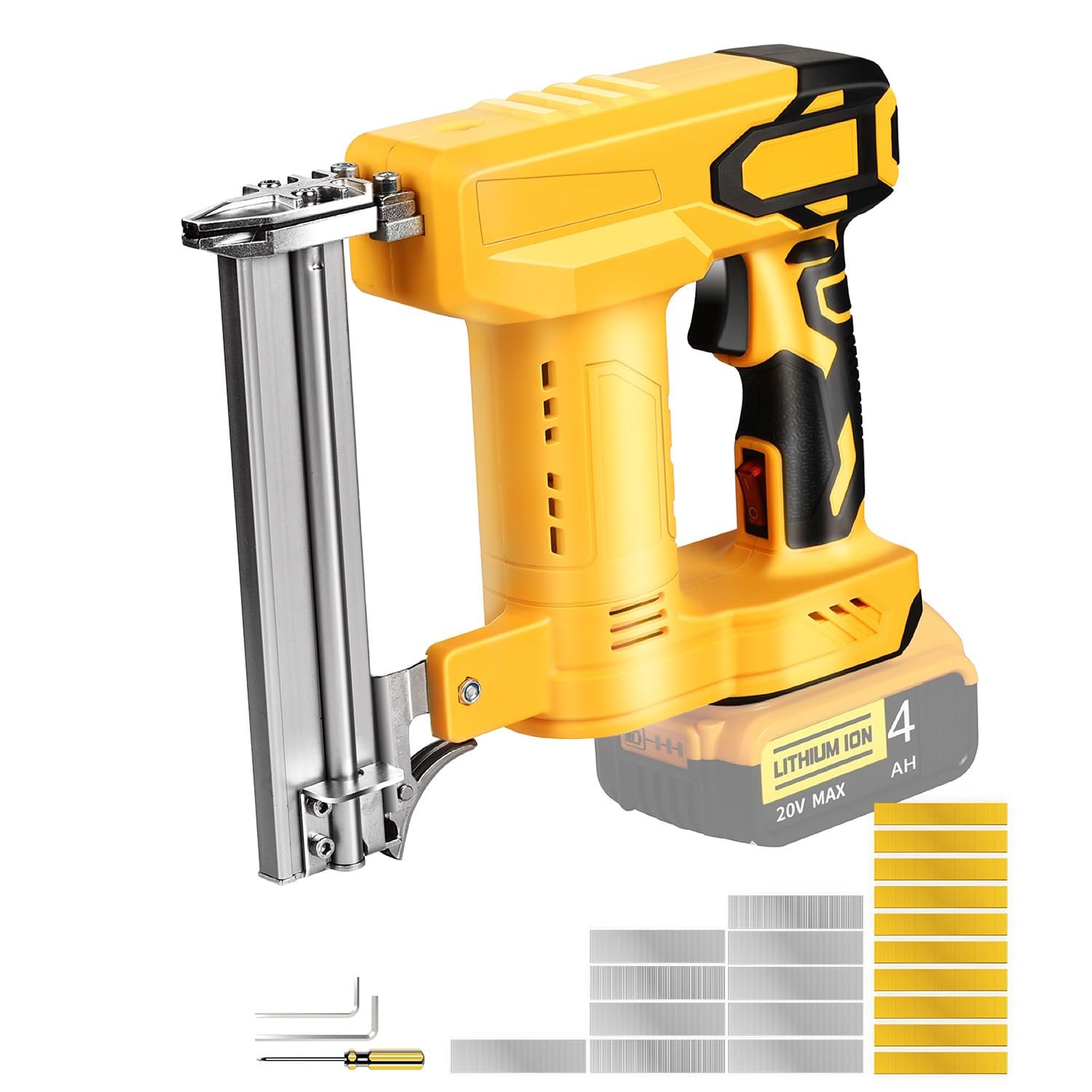
Air tools are often lighter and cheaper, but they need a compressor and hose. Battery tools are easier to move around and better for quick jobs. For small home projects, battery power can be more convenient. For long shop sessions, air tools can be very efficient.
Fastener availability
Make sure the staple or brad size is easy to find in your area. A cheap tool is not a good deal if the correct fasteners are hard to buy later.
Depth adjustment
Depth control matters a lot. A tool without good depth adjustment can make good work harder than it should be. This is especially important on softer woods and finish surfaces.
Comfort and balance
If you plan to use the tool for a long time, hold it if possible before buying. A tool that feels heavy or awkward will slow you down and make you less accurate.
A simple way to remember the difference
Think of it this way:
- Crown stapler = wider grip, stronger hold on soft or thin material, more visible mark.
- Brad nailer = smaller hole, cleaner finish, lighter holding power.
If your main concern is holding, lean toward the crown stapler. If your main concern is appearance, lean toward the brad nailer. In many real projects, that one question solves the decision fast.
Credit: amazon.com
Final verdict
When comparing crown stapler vs brad nailer, the better tool depends on the job. A crown stapler is best when you need broader holding power on soft, thin, or fabric-based materials. A brad nailer is better when you want a cleaner look and are working on trim, molding, or decorative woodwork.
For most finish carpentry projects, a brad nailer is the more versatile choice. For upholstery, paneling, and hidden fastening, a crown stapler is often the better tool. If you work on both types of projects, owning both can make sense. But if you only want one, start with the tool that matches the work you do most often.
The right choice is not about which tool is “better” in general. It is about which one gives you the best result for your material, finish, and budget.
FAQs
1. Can I use a crown stapler instead of a brad nailer?
Sometimes, but not always. A crown stapler can hold well, but it leaves a larger and more visible mark. For finish trim and decorative work, a brad nailer is usually the better choice.
2. Can I use a brad nailer for upholstery?
No, a brad nailer is not the right tool for upholstery. Fabric needs the wider grip of staples, so a crown stapler is the better option.
3. Which tool is better for baseboards?
A brad nailer is usually better for baseboards because it leaves smaller holes and gives a cleaner finish. It is easier to fill and paint later.
4. Do crown staplers hold stronger than brad nailers?
In many soft or thin materials, yes. Crown staplers often provide stronger surface hold because the staple crown spreads force across a wider area.
5. Which is better for beginners?
For visible finish work, a brad nailer is often easier for beginners because the holes are smaller and mistakes are less obvious. For upholstery or hidden fastening, a crown stapler may be the better first tool.
