
Choosing the right fastener can make drywall work feel easy or frustrating. The wrong choice can lead to popped heads, cracked joints, wasted time, and extra repair work later. That is why the drywall screws vs nails question matters more than many beginners think.
At first, both fasteners seem simple. They hold drywall to wood framing, and both have been used for decades. But they do not perform the same way. Screws and nails differ in grip, speed, cost, and long-term strength. The best choice depends on your project, your tools, and the finish you want.
If you are hanging one room, patching a wall, or working on a larger build, knowing the real differences will save you time and help you avoid common mistakes. In this guide, you will learn when screws are better, when nails still make sense, and how to choose the right fastener with confidence.
What makes drywall fasteners different
Drywall fasteners do one main job: they hold the board tightly against the framing until the joint compound and finish work are complete. But the way they hold that board is very different.
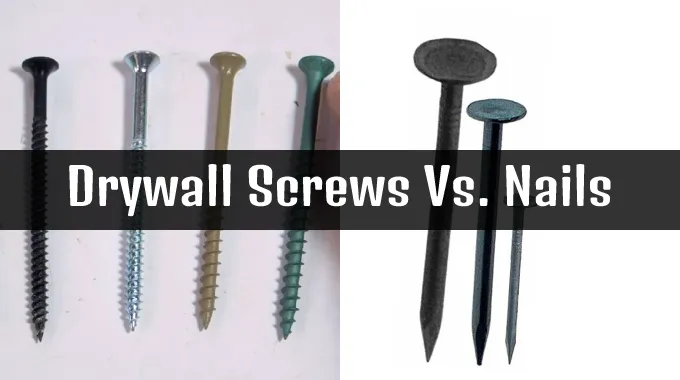
Drywall screws bite into wood or metal with threads. That thread creates strong holding power and resists movement. Drywall nails, on the other hand, rely more on friction and the shape of the shank. They are faster to install, but they usually do not hold as firmly over time.
This is why the drywall screws vs nails debate is not just about preference. It is about performance under pressure. Drywall can move a little as a house expands, contracts, or vibrates. A fastener that handles that movement better can reduce future problems.
For a reliable technical reference on drywall installation basics, you can also check the USG drywall installation guidance.
Drywall screws vs nails: the practical differences
Here is the simple version: screws are stronger, nails are faster. That is the first thing most people learn. But there is more to it than that.
| Factor | Drywall screws | Drywall nails |
|---|---|---|
| Holding power | Very strong | Moderate |
| Speed of installation | Slower | Faster |
| Resistance to loosening | High | Lower |
| Ease of driving | Needs driver or drill | Hammer only |
| Risk of surface damage | Can overdrive if careless | Can dent drywall if struck hard |
| Cost | Slightly higher | Usually lower |
| Best use | Most wall and ceiling jobs | Fast work, some budget jobs, and older methods |
The table gives the broad picture, but real project conditions matter. A fastener that works fine on a small wall may not be the best choice for a ceiling. A fastener that saves time today may cause nail pops or loose sheets months later.
Why screws are the modern standard
In most drywall projects today, screws are the first choice. That is because they offer better control and stronger grip. Once driven correctly, they stay in place well and resist seasonal movement in the framing.
One big advantage is predictability. A screw can be placed at the exact depth you want. That matters because drywall needs to sit flat without breaking the paper face. If a screw head is slightly recessed, it is easy to cover with mud. If it is driven too deep, it can damage the board and weaken that spot.
Screws are also better for ceiling work. Gravity pulls downward all the time, so the fastener needs to hold the panel securely. A screw gives more peace of mind in that situation.
Where screws shine most
- Standard wall installation
- Ceilings, where extra holding power matters
- Repairs where a panel must stay tight for years
- Jobs with wood or metal studs that may move slightly
- Projects where future cracking would be expensive to fix
Here is a detail beginners often miss: screws do not just hold better because they are “stronger.” They hold better because their threads resist pull-out and vibration. That matters in real homes, where doors close hard, floors flex a little, and framing shifts over time.
One caution with screws
Screws are not perfect. If you use the wrong bit, poor drill settings, or too much force, you can strip the head or break the paper surface. That creates a weak point. The fix is simple, but it requires care. Drive each screw just below the surface, not so deep that it tears the face paper.
A clutch setting on your drill or driver helps a lot here. Beginners often think they need maximum power. In reality, controlled power is better than brute force.
Where nails still make sense
Drywall nails are not obsolete. They still have a place, especially when speed and simplicity matter more than long-term perfection.
For example, if you are doing a small repair and do not want to bring out a drill, nails can be convenient. They are also familiar to many carpenters who have used them for years. In some budget-focused jobs, they can lower material cost a little.
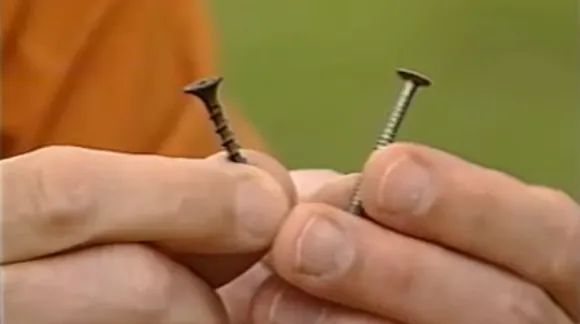
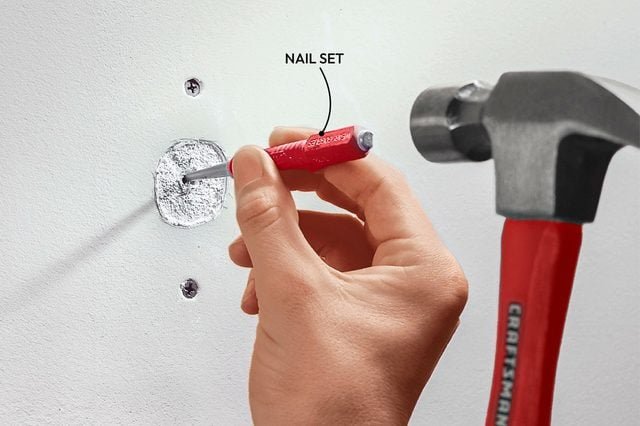
That said, nails are more likely to loosen over time if the framing shifts. This is the main reason many builders moved away from them for most applications. A loose fastener can create a nail pop, which shows up as a small bump or visible circle in the finished wall.
Credit: handyworkshop.com
When nails may be the better option
- Very small repairs
- Quick jobs where speed matters most
- Situations where only a hammer is available
- Projects following older construction methods
- Temporary or low-stakes applications
One less obvious point: nails can sometimes feel easier on very thin or fragile drywall during light work because you are not spinning a thread into the board. But that does not mean they are better overall. It only means they may be useful in specific, limited cases.
Strength, movement, and long-term reliability
If you want the wall to look good for years, long-term reliability should matter more than the fastest installation. This is where screws usually win by a wide margin.
Homes move. Wood expands and contracts with humidity. Temperature changes affect framing. Even small movement can stress the connection between drywall and studs. Screws handle that stress better because they grip the framing more securely.
Nails can slowly work loose under repeated vibration or seasonal changes. Once that happens, the drywall surface may start to show a bump, crack, or pop. These problems are not always immediate, which is why they surprise people later.
Beginner insight: a fastener failure often starts before the visible problem appears. The panel may sound slightly hollow or feel less firm long before a nail pop becomes visible. That is one reason careful fastening matters during installation, not just after the job is done.
Speed, cost, and labor trade-offs
Nails are faster to drive. If you are covering a lot of drywall and have the skill to work quickly with a hammer, that speed can matter. Screws take more time because each one needs a driver.
However, time savings at installation can be misleading. A slightly faster job is not always cheaper if you later need to repair loose boards or popped nails. The real cost is not just the price of the fastener. It includes labor, future touch-ups, and finish quality.
What beginners often overlook
- Fast installation is not the same as efficient installation. A faster nail job may create more finishing work later.
- Material cost is only one part of the budget. Screws cost a bit more, but they often reduce repair risk.
- Your tools matter. If you already own a good drill or drywall screw gun, screws are usually the smarter investment.
For many homeowners, the slightly higher cost of screws is worth it because it buys peace of mind. For pros working on a large job with a strong system and experienced hands, nails may still have a place in limited settings. But for most people, screws are the safer general choice.
Ceilings are different from walls
Ceilings place more stress on fasteners than walls do. The panel must stay overhead, and gravity never stops working. This is one of the biggest reasons screws are usually preferred on ceilings.
A screw gives a tighter and more reliable hold. It helps reduce sagging, shifting, and future movement. Nails can work in some ceiling situations, but the margin for error is smaller. If one fastener loosens, the repair becomes harder and more visible.
Here is the practical rule: if you are doing a ceiling and want the best chance of a clean, durable finish, use screws unless the project has a very specific reason not to.
Wall framing type also affects your choice
Drywall fasteners do not behave the same on every framing material. Wood studs and metal studs have different properties, and that changes what works best.
Credit: handyworkshop.com
Wood studs
Wood gives screws and nails something solid to bite into. Screws still usually win because their threads hold the panel tightly. Nails can work, but they are more likely to loosen if the wood shrinks or twists.
Metal studs
Metal framing often calls for special drywall screws made for metal. Nails are generally not the right choice for standard metal stud drywall installation because they do not grip the same way. If your project uses metal studs, screws are usually the correct path, while wood framing comparisons are covered in more detail in our wood screw vs drywall screw guide.
Non-obvious insight: in mixed framing or older homes, it is not enough to know whether the wall is wood or metal. You also need to check for uneven framing, bowing studs, and hidden movement. A fastener cannot fully solve a framing problem, but screws give you more control when the surface is not perfect.
Common mistakes that cause problems later
Many drywall failures are not caused by the wrong fastener alone. They happen because the fastener was installed poorly. These are the most common mistakes to avoid.
Driving screws too deep
If the screw tears the paper face, the holding strength drops. The joint compound may also crack over time. Stop the screw just below the surface, not far past it.
Leaving nails proud
A nail that sticks up even a little will be hard to hide. It can also interfere with finishing and create visible bumps later.
Using the wrong fastener length
If the fastener is too short, it may not reach deep enough into the stud. If it is too long for the job, it can create extra risk without adding real benefit. The fastener should match the thickness of the drywall and the framing depth.
Spacing them too far apart
Even a strong fastener cannot do its job alone. Drywall needs proper spacing so the panel stays flat and secure. Too few fasteners can lead to flexing, which increases the chance of cracks; use a proper spacing reference like our how many screws per sheet of drywall guide before you start.
Ignoring framing quality
If studs are crooked or loose, the drywall will never feel fully solid. Fasteners can only do so much. Before hanging board, check that the framing is straight and firm.
Which one is better for DIY projects
For most DIYers, screws are the better answer. They are more forgiving in the long run, and they usually create a more durable result. Even if they take a little more time, that time is often worth it.
If you are new to drywall, screws also give you more room to correct small mistakes. A screw can be removed and replaced more cleanly than a nail in many cases. That makes the learning process easier.
There is one exception: if you are doing a very small patch and only need to secure a tiny piece quickly, nails may be acceptable. But for anything larger, especially walls and ceilings, screws are the safer bet.
Which one is better for professionals
Many professionals use screws for most jobs because the final result matters more than shaving a few minutes off the schedule. A cleaner finish means fewer callbacks and better customer trust.
That said, experienced crews may still use nails in specific workflow situations. The right decision depends on speed, crew skill, project type, and local building habits. On some large jobs, nail guns and specialized processes still make sense for parts of the work.
The key is not to assume one fastener is always superior in every situation. Instead, match the fastener to the task. For most standard drywall hanging, screws remain the default choice because they reduce risk.
How to decide for your project
If you are still unsure about drywall screws vs nails, use this simple approach.
- Choose screws for most walls, ceilings, and permanent installations.
- Choose screws if the room will get vibration, movement, or moisture swings.
- Choose screws if you want the safest choice for a DIY project.
- Consider nails only for small, fast, low-risk jobs where speed matters more than long-term strength.
- Match the fastener to the framing and use the right length and spacing.
If your goal is a clean wall with fewer future problems, screws are usually the best answer. If your goal is a quick patch or a very specific old-style workflow, nails can still be useful.
Practical rule: when in doubt, use drywall screws. They are the safer and more modern choice for most home projects.
Credit: familyhandyman.com
Final verdict
When comparing drywall screws vs nails, screws win for most projects because they hold better, resist loosening, and perform more reliably over time. They are the better choice for walls, ceilings, and any job where you care about a lasting finish.
Nails are faster and can still work in limited situations, but they are more likely to create future problems if the wall moves or the installation is not perfect. That makes them a less secure choice for most homeowners and many professionals.
If you want the best all-around fastener for drywall, choose screws. If you want the fastest tool-light option for a small, low-risk job, nails may still fit the task. The right answer depends on the project, but for durability and peace of mind, screws usually come out on top.
FAQs
1. Are drywall screws stronger than nails?
Yes. Drywall screws usually provide stronger holding power because their threads grip the framing more securely. They also resist loosening better over time.
2. Can I use nails instead of screws for drywall?
Yes, in some small or low-risk jobs you can use nails. But for most wall and ceiling projects, screws are the better choice because they are more reliable.
3. Why do drywall nails pop out?
Nails can pop when framing moves, wood shrinks, or the fastener loosens over time. This is one reason many builders prefer screws.
4. Are screws harder to install than nails?
Screws take a little more time because you need a drill or driver, but they are still easy to install with the right tool. Most DIYers find them manageable.
5. Should I use screws on drywall ceilings?
Yes, in most cases screws are the best choice for ceilings. They offer better grip and help keep the board secure against gravity.
