
If you have a frame, shelf, mirror, or light object and a brick wall is the only place to hang it, you may wonder: can you nail into brick? The short answer is yes, but not in the same easy way you would nail into wood. Brick is hard, dense, and often fragile in the wrong spots. A regular nail can bend, slip, or crack the surface.
The good news is that there are safe ways to work with brick. You can use masonry nails for light jobs, but for many projects, better methods like anchors, screws, and adhesives will give you stronger and safer results. The right choice depends on the weight of the item, the condition of the brick, and whether you want a permanent or removable fix.
In this guide, you will learn when it is safe to nail into brick, what tools to use, which mistakes to avoid, and what alternatives work better for most homes.
What makes brick different from wood or drywall
Brick is not forgiving. Wood lets a nail slide in because the fibers move out of the way. Drywall is soft and only needs a basic anchor, though anchor choice still matters if you need to know how much weight drywall anchors can hold. Brick is the opposite. It is made to be strong under pressure, not to accept random fasteners.
That means a nail driven into brick can do one of three things:
- Bend before it goes in
- Chip the brick surface
- Hold only a very light item for a short time
Another thing many beginners miss is that brick itself is not always the real problem. Mortar, the soft material between bricks, is easier to penetrate, but it is also weaker. Nail or drill into the wrong spot, and the fixing can come loose faster than expected.
Also, not all brick is the same. Older brick may be soft and crumbly. Newer brick can be harder but still crack if struck badly. Painted brick, damaged brick, and brick veneer all react differently too.
Can you nail into brick safely?
Yes, can you nail into brick is a valid question, and the answer is yes for some situations. But “safe” depends on what you are trying to hang.
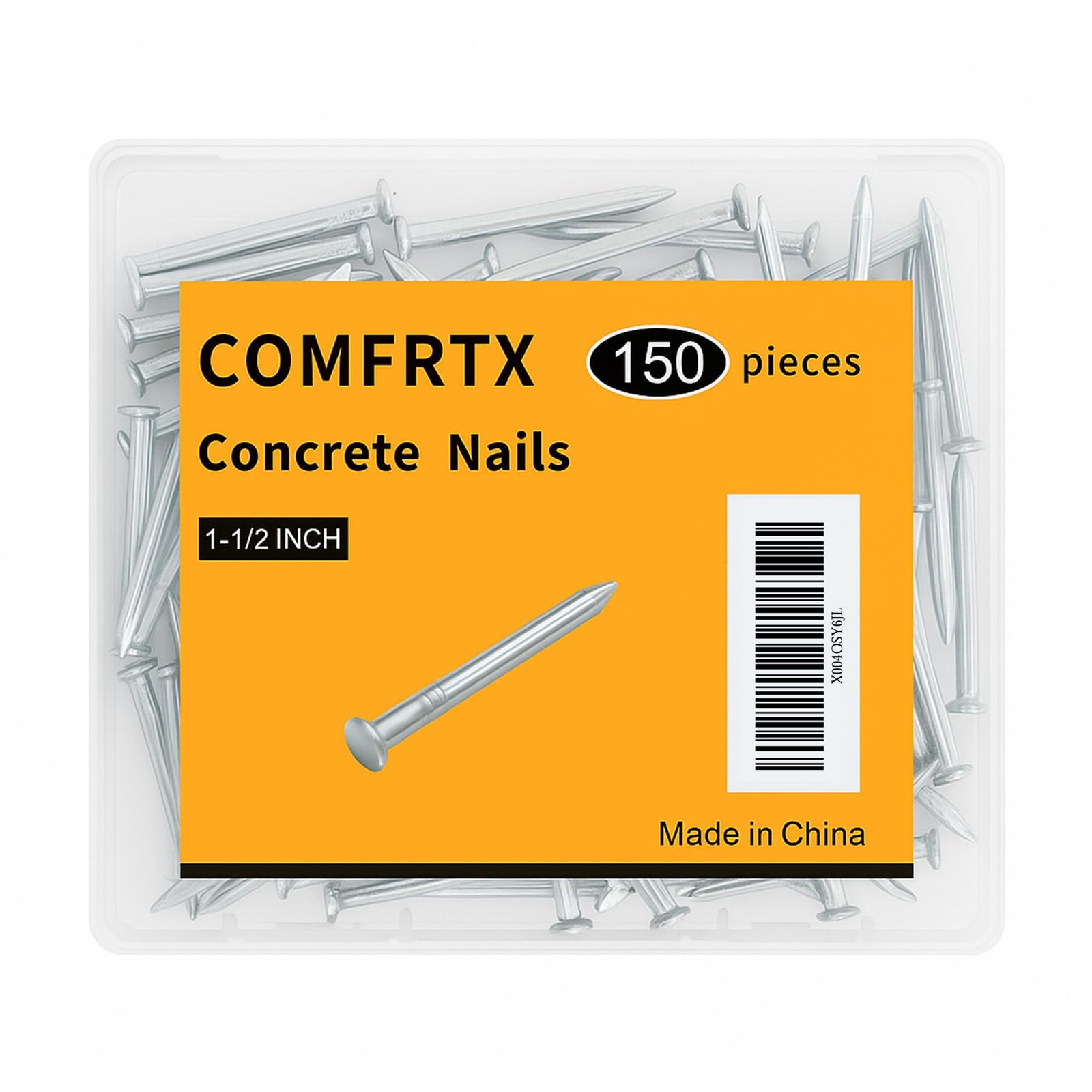
Masonry nails are made for light-duty use in brick or mortar joints. They are hardened and shaped to resist bending more than regular nails. Even so, they are not a good choice for heavy objects.
Use nails only when:
- The item is very light
- You only need a temporary hold
- You are working with soft mortar rather than solid brick
- You accept a small risk of surface damage
Do not use nails when:
- You need to hold heavy shelves, cabinets, or railings
- The brick is old, weak, or crumbling
- You need a long-lasting installation
- The object may pull or move often
For most home projects, drilling and using the correct masonry anchor is safer and stronger. If drilling is the better route, follow a dedicated guide on how to drill into brick before choosing the fastener.
Tools and materials you may need
If you decide to work with brick, the right tools matter more than force. Trying to pound a normal nail into masonry with a hammer usually ends badly.
| Tool or material | Why it helps | Best use |
|---|---|---|
| Masonry nails | Hardened for brick or mortar | Very light hanging jobs |
| Hammer | Drives the nail with controlled taps | Installing masonry nails |
| Drill with masonry bit | Makes clean holes in brick | Anchors and screws |
| Masonry screws | Create a strong hold in predrilled holes | Medium-duty attachments |
| Plastic or metal anchors | Help screws grip in masonry | Secure installations |
| Safety glasses | Protect eyes from dust and chips | All brick work |
| Dust mask | Reduces breathing in fine dust | Drilling or cleaning holes |
| Vacuum or brush | Clears dust from drilled holes | Better anchor grip |
One detail people often skip: hole cleanliness matters a lot. Dust inside a drilled hole can weaken the hold of a screw or anchor. A quick blow-out or vacuum can improve performance more than using a bigger fastener.
How to nail into brick the safest way
If the project is light and you still want to use a nail, take a careful approach. The goal is to reduce cracking and avoid wasting effort on a bent nail.
Credit: pinterest.com
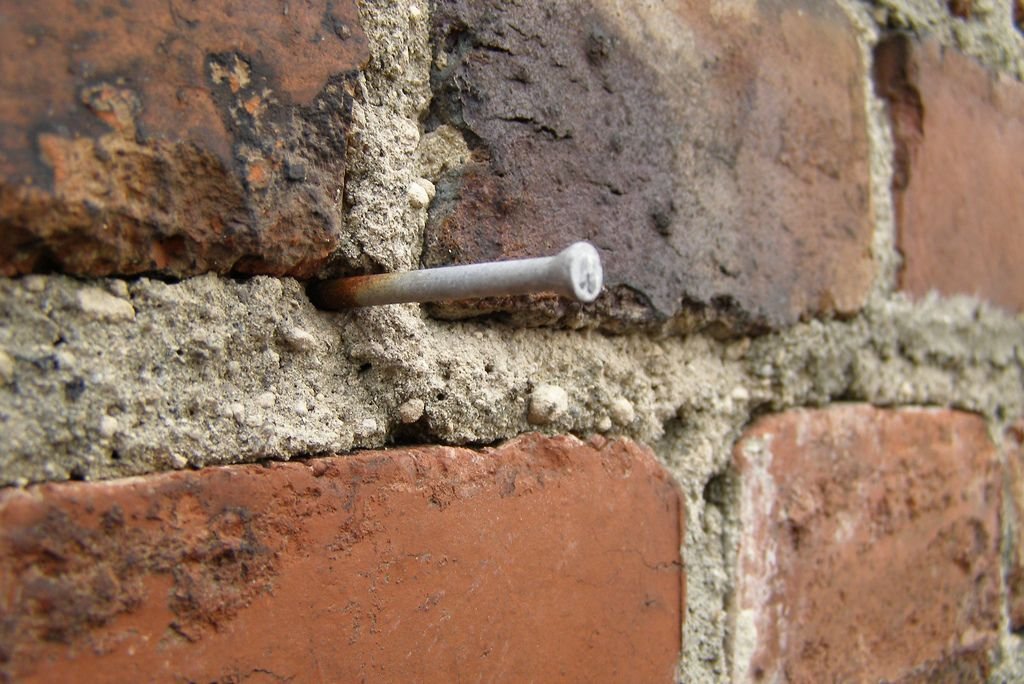
1. Check whether you can use mortar instead of brick
Whenever possible, place the fastener in the mortar joint, not in the brick face. Mortar is softer, so it is easier to penetrate with less damage. That said, mortar is also weaker, so keep the load light.
2. Use the right nail
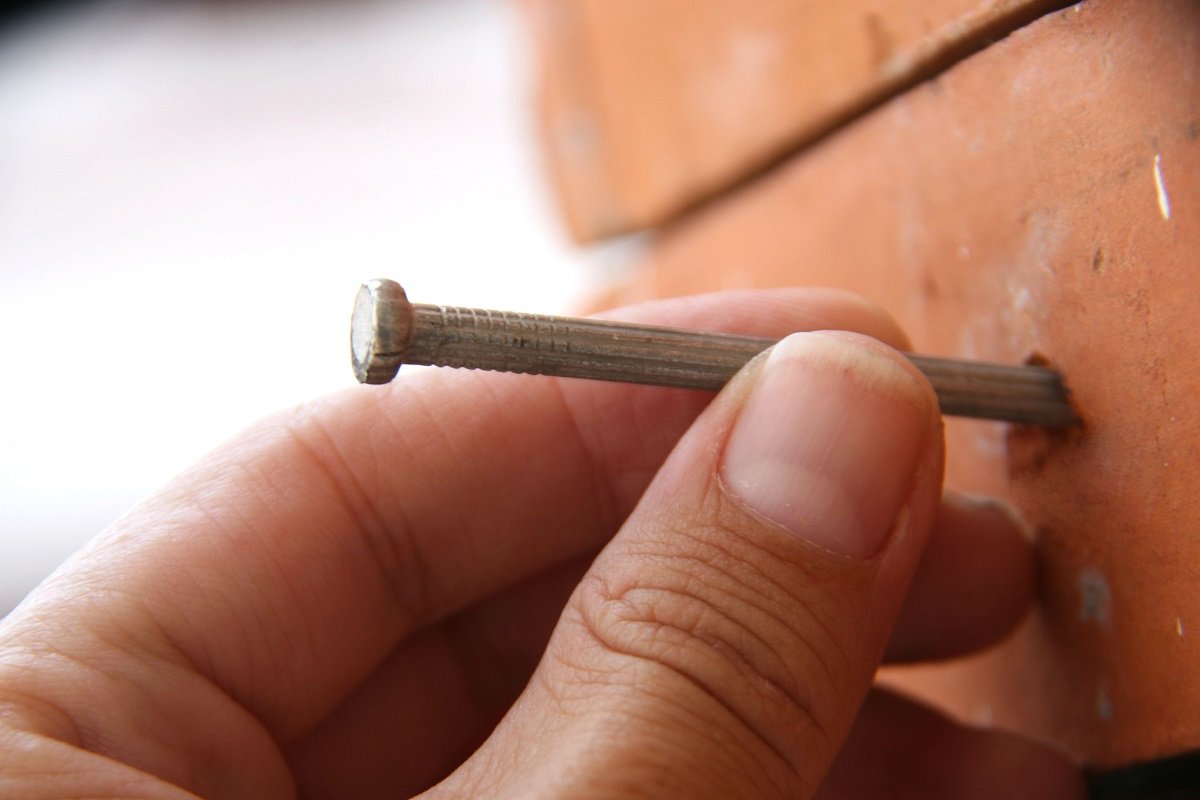
Choose a masonry nail, not a common nail. Masonry nails are thicker and hardened. They are designed to resist bending when driven into hard materials.
3. Mark the spot carefully
Measure first. A misplaced hole is annoying on brick because it is harder to hide than a small drywall mistake. Use painter’s tape if you want to reduce slipping and help the point stay in place.
4. Start with gentle taps
Do not hit the nail hard at first. Light taps help set the point and reduce the chance of the nail jumping or the brick surface chipping. Once the nail is steady, continue carefully.
5. Stop if resistance feels too high
If the nail bends, skates across the surface, or makes the brick sound hollow and brittle, stop. Forcing it can damage the wall or injure your hand. At that point, switch to a drilled anchor method.
Important: If you are holding anything valuable or heavy, do not rely on a nailed fix. Use a drilled masonry fastener instead.
When nailing is a bad idea
Some jobs are simply too demanding for a nail in brick. The biggest mistake is treating masonry like wood. It is not.
Avoid nailing into brick if you are hanging:
- Floating shelves
- Wall-mounted TVs
- Cabinets
- Handrails
- Planters with wet soil
- Heavy picture frames in busy areas
Also avoid it if the brick shows these signs:
- Cracks near the target area
- Soft or sandy texture
- Loose mortar
- Spalling, where the surface flakes off
- Water damage or white salt marks
These are warning signs that the wall may not hold a fastener well. In that case, drilling may still work, but only after checking the condition carefully.
Better alternatives to nails in brick
For most people, the better question is not just can you nail into brick, but what method will hold best with the least damage. In many cases, a drilled fixing is the smarter choice.
Masonry screws
Masonry screws are one of the best options for light to medium loads. For general fastener choice, compare nails vs screws so you know when a screw is safer than a nail. They need a drilled hole first, then they bite directly into the masonry. They are strong, neat, and easy to remove later if needed.
They work well for:
- Hooks
- Small brackets
- Light shelves
- Electrical boxes
Plastic or expansion anchors
These anchors expand inside the hole when a screw is inserted. They spread the load and help prevent the screw from loosening. They are a good choice when the item needs more grip than a screw alone can provide.
Sleeve anchors and wedge anchors
These are stronger options for heavier items. They are often used for structural or semi-structural projects. If the item is large or exposed to movement, these anchors are much more dependable than a nail.
Construction adhesive
For some light indoor objects, strong construction adhesive can avoid drilling altogether. It is not right for every project, but it can work well for decorative pieces or items with a broad contact area.
When adhesive makes sense
- Light decorations
- Temporary displays
- Projects where you want no visible holes
Adhesive is not a replacement for anchors when the load is serious. But for some home uses, it is a clean and simple solution.
How to drill into brick instead of nailing
If you want a secure hold, drilling is usually the better route. The same careful setup applies to harder surfaces too, so this concrete drilling guide is useful when brick is not the only masonry surface on the job. It may sound more difficult, but it is actually safer and more controlled than trying to force a nail into hard brick.
- Choose a masonry drill bit that matches your anchor or screw size. If the hole location is near wallboard instead of masonry, check the types of drywall anchors instead of using a masonry fastener.
- Mark the spot clearly.
- Wear eye protection and a dust mask.
- Drill slowly at first so the bit does not wander.
- Keep steady pressure and let the tool do the work.
- Clean the hole before inserting the anchor.
- Insert the anchor and tighten the screw carefully.
If you are not sure what size anchor to use, check the manufacturer’s instructions. This small step prevents loose hardware and damaged holes.
For a trustworthy safety reference on masonry work, the Occupational Safety and Health Administration is a useful authority on safe work practices and protective equipment.
Credit: amazon.com
Common mistakes people make with brick fasteners
Many bad results come from simple mistakes, not from the material itself. Avoid these if you want a better result.
- Using a regular nail instead of a masonry nail
- Hitting too hard too fast, which can chip brick
- Drilling without a masonry bit, which wastes time and damages tools
- Ignoring mortar condition, even though loose mortar may not hold well
- Using a fastener that is too weak for the item’s weight
- Skipping hole cleaning before installing an anchor
One non-obvious issue beginners often miss is vibration. Even if a fastener feels tight on day one, repeated vibration from doors, traffic, or movement can loosen a poor fixing over time. This is another reason anchors usually beat nails in masonry.
How much weight can a nailed brick hold?
There is no single safe weight limit because it depends on the brick type, the nail type, the spot you choose, and the condition of the wall. Still, the practical rule is simple: assume nailed brick is only for very light objects.
Think in terms of lightweight decor, not hardware. A small picture frame may be fine. A shelf full of books is not. If the object can pull away, shake, or be bumped often, use a stronger method.
Another important point: the weight limit is not only about vertical load. If the item sticks out from the wall, it creates leverage. That leverage can pull even a strong-looking nail loose much faster.
Choosing the right method for your project
The best choice depends on what you are hanging. A good rule is to match the fastener to the risk level, not to your convenience.
If you are hanging a light decoration, a masonry nail or adhesive may be enough. For wood projects, use the correct nail type instead; this guide to types of nails for wood explains why the material changes the fastener choice. If you are installing a bracket or heavy object, drill and use anchors. If the item is expensive, heavy, or safety-related, do not cut corners.
Here is a simple way to think about it:
- Light and temporary: masonry nail or adhesive
- Light to medium and permanent: masonry screw with anchor
- Heavy or load-bearing: sleeve anchor, wedge anchor, or professional installation
This is where many homeowners save time in the long run. A few extra minutes choosing the right fixing can prevent wall damage, repair costs, and repeated drilling.
Extra tips for cleaner, safer results
A few small habits make a big difference when working with brick.
- Use a pencil or tape to mark your spot clearly.
- Drill a test hole in a hidden area if the wall is old or fragile.
- Work slowly and keep your body balanced.
- Wear gloves if the brick edges are rough.
- Keep children and pets away from dust and tools.
Also, remember that neat work is not just about appearance. A clean hole, the correct depth, and the right fastener all improve safety and lifespan.
Credit: storables.com
Final thoughts
So, can you nail into brick? Yes, but only for light jobs and with the right type of nail. For most projects, especially anything medium or heavy, nailing is not the best solution. Brick is strong, but it needs the right fastening method.
If you want a hold that lasts, use masonry screws, anchors, or adhesive when appropriate. Take the time to match the fastener to the job, and you will avoid cracks, loose fittings, and wasted effort. In brickwork, the safe choice is usually the stronger one.
FAQs
1. Can you nail into brick without drilling?
Yes, but only in limited cases. A masonry nail can go into soft mortar or some brick surfaces for very light items. For stronger or more secure fixing, drilling is usually better.
2. Is it better to nail into brick or mortar?
Mortar is easier to penetrate, so it is usually the better choice for a nail. But mortar is also weaker than brick, so only use it for light loads.
3. What happens if I use a regular nail on brick?
A regular nail may bend, slide off the surface, or crack the brick. It is not made for masonry, so it is a poor choice for safe fastening.
4. What is the strongest alternative to nailing into brick?
For many home projects, masonry screws with anchors are strong and reliable. For heavier items, sleeve anchors or wedge anchors are usually better.
5. Can I hang a heavy shelf with nails in brick?
No, that is not a safe idea. Heavy shelves need drilled anchors or another strong masonry fixing to handle the weight and leverage.
