
If you want better results from your workshop, few machines give you more value than a table saw. It can rip boards, cut panels, make clean joints, and turn plain lumber into useful, good-looking pieces. That is why diy table saw projects are so popular with woodworkers of all levels.
The best part is that you do not need a huge shop or expensive tools to get started. With careful measuring, a sharp blade, and a simple plan, you can build pieces that look professional and work well in real life. Some projects are useful for storage. Others make your home better. A few help you improve your skills fast.
Below you will find 15 practical table saw projects that can create amazing woodworking results. Each one is chosen because it teaches useful skills, uses the saw in a smart way, and gives you something worth keeping.
What makes a great table saw project
A good project is not only about cutting wood. It is about using the table saw in a way that gives you clean edges, repeatable cuts, and strong joints. That is where the real value comes from. Many beginners think the saw does all the work. It does not. Your measurements, setup, and safety habits matter just as much.
When choosing diy table saw projects, look for pieces that match your skill level and your tools. A project with simple cuts can still look amazing if the design is thoughtful. On the other hand, a project with too many tricky angles may waste time and wood if you are still learning.
Three things that matter most
- Accuracy: The table saw is best when cuts match exactly. Small errors can create big problems later.
- Repeatability: Projects that need several matching parts are ideal because the saw can make them consistent.
- Assembly fit: A project should come together without forcing parts into place. Good planning makes this easier.
One beginner mistake many people miss
Many woodworkers focus on the cut line but forget blade setup. A blade that is not square, dull, or too high can make rough cuts and burn marks. Another common issue is using the wrong fence position. Even a small fence error can ruin several pieces at once. Take time to check setup before every serious cut.
1. Simple floating shelf
A floating shelf is one of the easiest and most useful diy table saw projects. It teaches straight ripping, accurate squaring, and clean edge finishing. You can build it for a bedroom, living room, kitchen, or hallway. It also looks more advanced than it really is.
Use hardwood or good-quality plywood. Cut the main shell, then make a hidden support frame that screws into wall studs. The table saw helps you keep the shelf body square, which is important because small errors show once it is mounted on the wall.
Why it is worth building
It improves your cutting accuracy and gives you a piece that can fit almost any space. You can make one shelf or a full set in matching sizes.
2. Cutting board with contrasting strips
Cutting boards are classic shop projects, but they are also a smart way to practice repeat cuts. You can rip strips of different woods, glue them together, and then run the blank back through the saw to create patterns. The final result can look very professional.
This project works best when you use hardwoods like maple, walnut, or cherry. Avoid softwoods for food use. After gluing, flatten the board carefully and round the edges. Finish with food-safe oil.
Non-obvious tip: The table saw can create a better pattern if you alternate wood colors before the second rip. That simple change turns a plain board into a design piece.
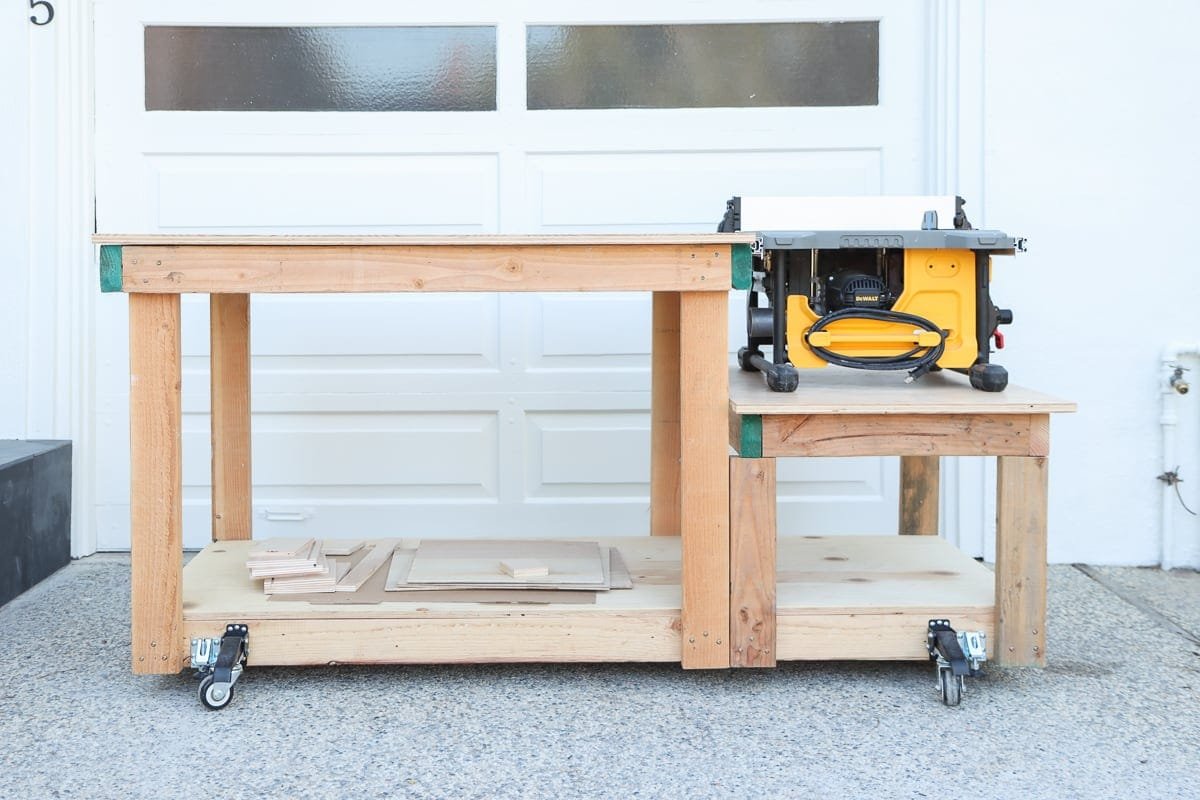
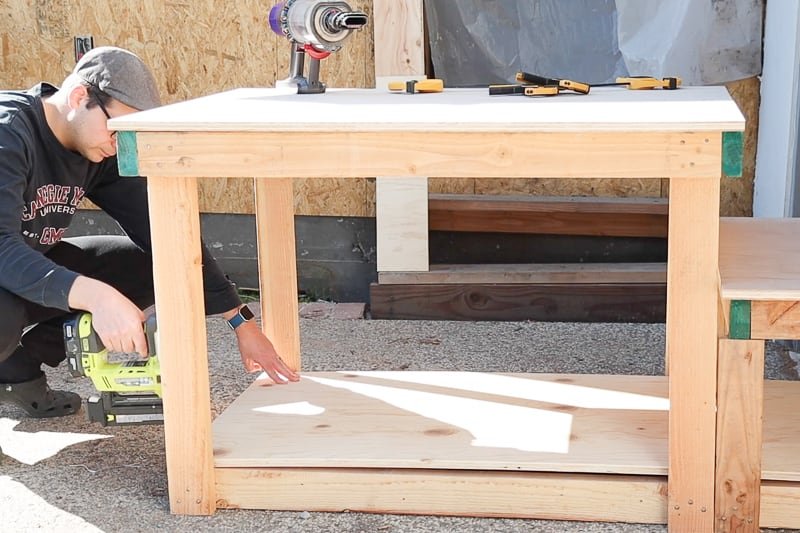
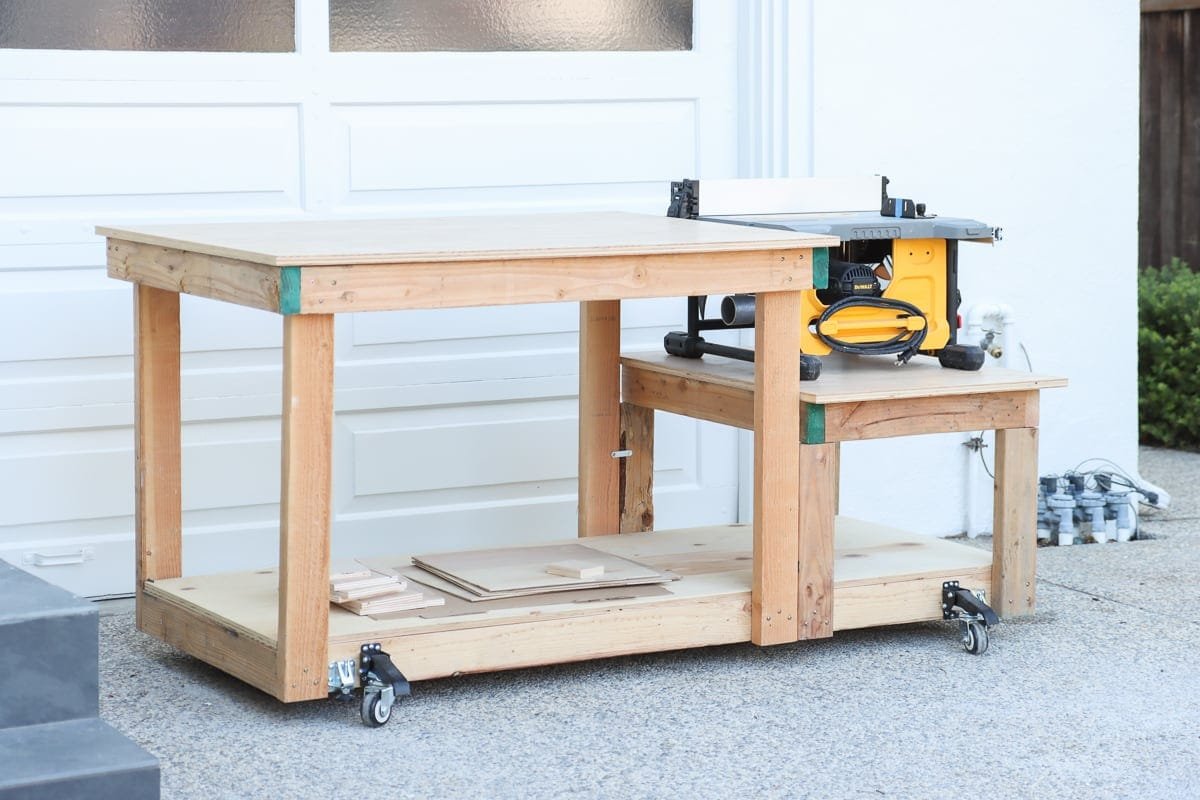
3. Shop cart with storage shelves
A mobile shop cart is useful in almost every garage. It gives you space for tools, glue, clamps, or small parts. The table saw is perfect for cutting the frame pieces and shelving panels to exact sizes.
Build the cart with locking casters so it stays still when needed. The saw helps you make the shelf openings equal, which makes the cart look neat and balanced. If you want a stronger design, add dadoes for the shelves instead of only using screws.
What beginners learn here
- Working with sheet goods
- Making repeat cuts
- Checking square assembly
4. Picture frame set
Picture frames are small, but they teach a big lesson: precise angles matter. The table saw is a good tool for making clean 45-degree cuts when you use a miter gauge or sled. You can create one frame or a full matching set for a gallery wall.
This is a good project for learning how small mistakes affect fit. If one corner is even slightly off, the frame will not close well. That makes it a strong practice build for new woodworkers.
Non-obvious tip: Cut one test frame from scrap first. It saves expensive wood and shows whether your angle setup is truly correct.
Credit: hydrangeatreehouse.com
5. Storage crate for home or workshop
Storage crates are simple, fast, and very useful. They can hold books, tools, blankets, toys, or seasonal items. With a table saw, you can cut identical panels and make the crate feel solid and balanced.
Choose plywood for a light and strong build. Add handholds by cutting openings before assembly. If you want a nicer look, sand the edges and stain the wood after assembly. The design can be rustic or modern depending on the finish.
6. Workbench drawer inserts
Drawer inserts are small projects with a big payoff. They help you organize screws, chisels, tape, pencils, and other small items. A table saw is the right tool because it can cut thin divider strips and consistent grooves.
Many people skip organization builds because they seem less exciting. That is a mistake. A well-organized bench saves time every day. Once you have a neat drawer system, it is easier to keep the whole shop in order.
Useful setup idea
Measure your drawer first, then build the insert to fit tightly but not too tightly. Leave a little room so the insert can move in and out without binding.
7. Serving tray with handles
A serving tray gives you a chance to make something both useful and attractive. It can be built from solid wood or plywood with hardwood edging. The table saw is ideal for cutting the tray base, the frame, and any decorative slots or handle openings.
This project is a good lesson in detail work. Small touches, like smooth edges and balanced proportions, make the tray look expensive. You can also add a raised lip so items do not slide off easily.
8. Bookshelf or small display shelf
A small bookshelf is one of the most practical diy table saw projects because it uses straight cuts and simple joinery. It can be a floor unit, a narrow display shelf, or a child’s book holder. The saw helps you keep the parts aligned and the shelves evenly spaced.
If you want a stronger build, cut dados into the side panels so the shelves sit in grooves. This makes the shelf stronger and also shows a more advanced skill.
Non-obvious tip: Think about shelf depth before you start cutting. Many beginners make shelves too deep or too shallow for the items they want to store.
9. Crosscut sled
A crosscut sled is not only a project. It is also a shop tool that makes later work safer and more accurate. Once built, it helps you cut boards square and repeatable. That means better results on many future projects.
This build teaches precision. The base must slide smoothly, the fence must be square, and the stop must hold true. If the sled is right, your future woodworking becomes much easier. For many woodworkers, this is the first project that truly upgrades the whole shop.
If you want a detailed safety reference for table saw use, the Wood Magazine table saw resource can be helpful.
10. Wall-mounted coat rack
A coat rack is a small build that can improve an entryway fast. It can be plain and modern or more decorative with hooks and trim. The table saw helps you cut the base board, backing strips, and small accent pieces cleanly.
You can also add a small shelf above the hooks for keys or mail. That makes the project more useful without making it much harder. Mount it into wall studs so it supports real weight.
11. Dice tower or game accessory
For something more fun, try a dice tower or another tabletop game accessory. These projects let you make angled cuts, repeated parts, and compact assemblies. They are excellent for gifts and hobby rooms.
Because the pieces are small, the table saw must be set up carefully. Use push sticks and a stop block where needed. The finished item can be painted, stained, or left natural.
Credit: hydrangeatreehouse.com
12. Desktop organizer
A desktop organizer is a practical project for home offices, school desks, or craft rooms. It can hold pens, notebooks, mail, and chargers. The table saw gives you clean, matching parts that make the organizer look neat.
There are many ways to design it. You can make a file holder, a pen tray, or a multi-slot organizer. If you use plywood, edge banding can improve the final look without adding much cost.
13. Wooden step stool
A step stool is one of the best projects for learning strength and balance. It must support weight safely, so solid joinery matters. The table saw is useful for cutting the legs, top, and brace pieces to size.
This project teaches you to think beyond appearance. A stool that looks nice but feels weak is not a success. Use thick lumber or quality plywood, and test stability before use.
Common mistake to avoid
Do not make the stool too tall or too narrow. A good design needs a wide enough base so it does not tip when someone steps on it.
14. Planter box
A planter box is a great outdoor project and a simple way to practice repeated cuts. You can make it for flowers, herbs, or small shrubs. The saw helps you cut identical boards, which makes the box sides line up well.
If the planter will stay outside, choose rot-resistant wood or line the inside with plastic. Leave drainage holes at the bottom. A clean build with simple lines often looks better than a fancy one with weak joints.
15. Small bench or entry seat
A small bench is one of the most rewarding table saw builds because it combines function, strength, and design. It can sit in a hallway, bedroom, mudroom, or porch. The saw lets you make the seat top, legs, and braces to exact measurements.
This project is a step up from smaller builds because it must handle real use. Strong joinery matters. A bench can also be customized with a lower shelf for shoes or baskets, which makes it even more useful.
How to choose the right project for your skill level
Not every project should be your first. Pick something that challenges you without overwhelming you. If you are new, start with a shelf, tray, or organizer. If you already know how to make square cuts and basic joints, move into stools, benches, or shop tools.
| Skill level | Best project types | Main benefit |
|---|---|---|
| Beginner | Floating shelf, crate, tray, organizer | Learn accurate straight cuts |
| Intermediate | Bookshelf, planter box, coat rack, stool | Practice stronger joinery and fit |
| Advanced beginner to advanced | Crosscut sled, bench, drawer inserts, frame sets | Improve precision and shop efficiency |
Safety habits that protect your results
Good safety is not only about avoiding injury. It also protects the project. A rushed cut, a bad stance, or poor support can ruin a board in seconds. That is why the safest setup usually gives the best results too.
- Use a sharp blade: It cuts cleaner and needs less force.
- Keep the fence aligned: A bad fence can pinch the wood or cause burn marks.
- Support long boards: Sagging wood can move during the cut.
- Use push sticks or push blocks: They keep your hands away from danger.
- Test with scrap first: This is one of the easiest ways to prevent costly mistakes.
Another overlooked habit is planning the full cutting order before turning on the saw. Many woodworkers cut parts in the wrong sequence and end up with pieces that are too short for the next step. A simple cut plan saves wood and stress.
Why these projects deliver strong woodworking results
The best diy table saw projects do more than fill time. They build skill, improve your shop, and create useful pieces for daily life. They also teach you how to work with accuracy, which is the core of good woodworking.
What makes them especially valuable is that each project gives back in a different way. A shelf improves your home. A crosscut sled improves your tools. A stool or bench adds both function and practice. Even a small tray can teach you how to work neatly and finish well.
If you build a few of these projects, you will notice something important. Your cuts become cleaner. Your joints fit better. Your confidence grows. That is how a table saw becomes more than just a machine. It becomes a tool that helps you make real progress.
Credit: hydrangeatreehouse.com
FAQs
1. What are the best diy table saw projects for beginners?
Good beginner projects include floating shelves, storage crates, serving trays, and simple organizers. These builds use straight cuts and basic assembly, so they are easier to finish with clean results.
2. Can I make useful furniture with a table saw?
Yes. A table saw can help you build small benches, stools, bookshelves, coat racks, and other useful furniture. The key is accurate measuring and strong joinery.
3. What wood is best for table saw projects?
Plywood is great for many shop and home projects because it is stable and affordable. Hardwood is better for visible pieces like cutting boards, trays, and frames. Choose the wood based on how the project will be used.
4. Do I need extra tools for these projects?
Most projects need a few simple tools besides the saw, such as a tape measure, square, clamps, drill, and sander. Some projects also benefit from a miter gauge, sled, or router, but they are not always required.
5. How do I get cleaner cuts on a table saw?
Use a sharp blade, set the fence carefully, and support the wood during the cut. Also, cut slowly and test your setup on scrap wood first. These small habits make a big difference in the final result.
