
If you are choosing a framing nailer, the first question is often not brand or price. It is 21 vs 30 degree framing nailer. That small angle changes how the tool feels, how it fits in tight spaces, and even how easy it is to find nails for your job.
Both tools can drive strong framing nails. If you are still learning nail sizes, start with this guide to what gauge framing nails are before choosing a nailer angle. Both are used for walls, roofs, floors, and heavy wood projects. But they are not the same. The magazine angle affects nail type, tool size, nail capacity, and the kind of work each nailer handles best.
If you are a homeowner, carpenter, or DIY builder, this guide will help you choose the right one with confidence. You will see the key differences, the real pros and cons, and the best use cases for each type. By the end, the choice will be much clearer.
What the angle really changes
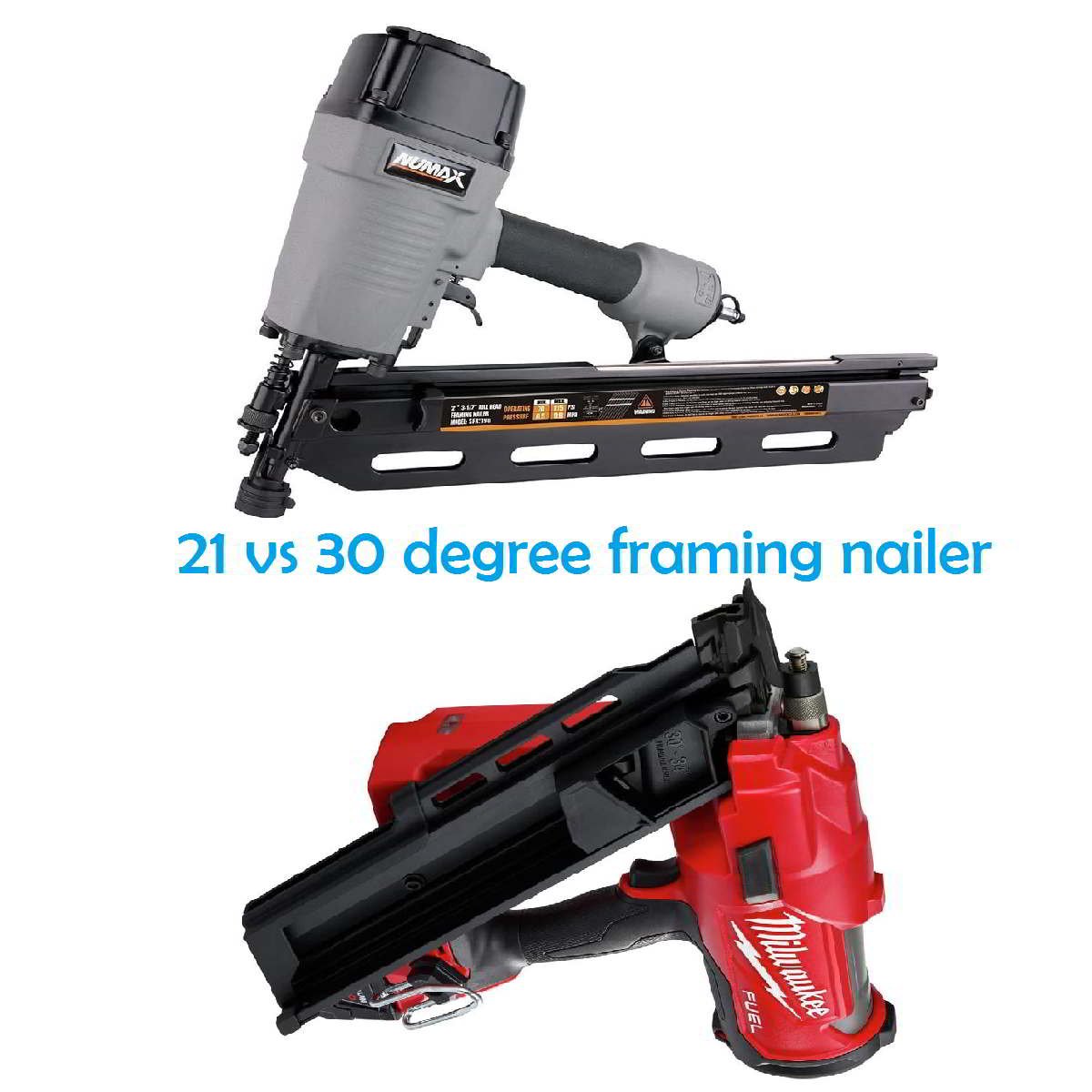
The degree number refers to the angle of the nail magazine, not the power of the tool. For the bigger picture, see how a framing nailer works before comparing magazine angles. A 21-degree framing nailer holds nails in a round plastic collated strip. A 30-degree framing nailer holds nails in a strip tied with paper and set at a steeper angle.
That angle affects more than storage. It changes how the nailer fits into corners, how many nails it carries, and what kind of nails you need to buy. It also changes the size and feel of the tool in your hand.
Many beginners think a higher angle means more power. That is not true. The main difference is access and convenience, not raw driving strength.
Quick comparison at a glance
| Feature | 21 Degree Framing Nailer | 30 Degree Framing Nailer |
|---|---|---|
| Magazine angle | 21° | 30° |
| Nail collation | Plastic strip | Paper tape |
| Magazine capacity | Varies by model and magazine design | Varies by model; compact paper strips can help some tools carry more nails |
| Fastener fit | Use only nails approved for that nailer angle, collation, shank, length, and head style | Use only nails approved for that nailer angle, collation, shank, length, and head style |
| Access in tight spaces | Good | Better |
| Weight and size | Often bulkier | Usually slimmer |
| Nail availability | Very common | Common, but less universal |
| Typical use | General framing, new builds | Tight corners, remodel work |
How a 21 degree framing nailer works
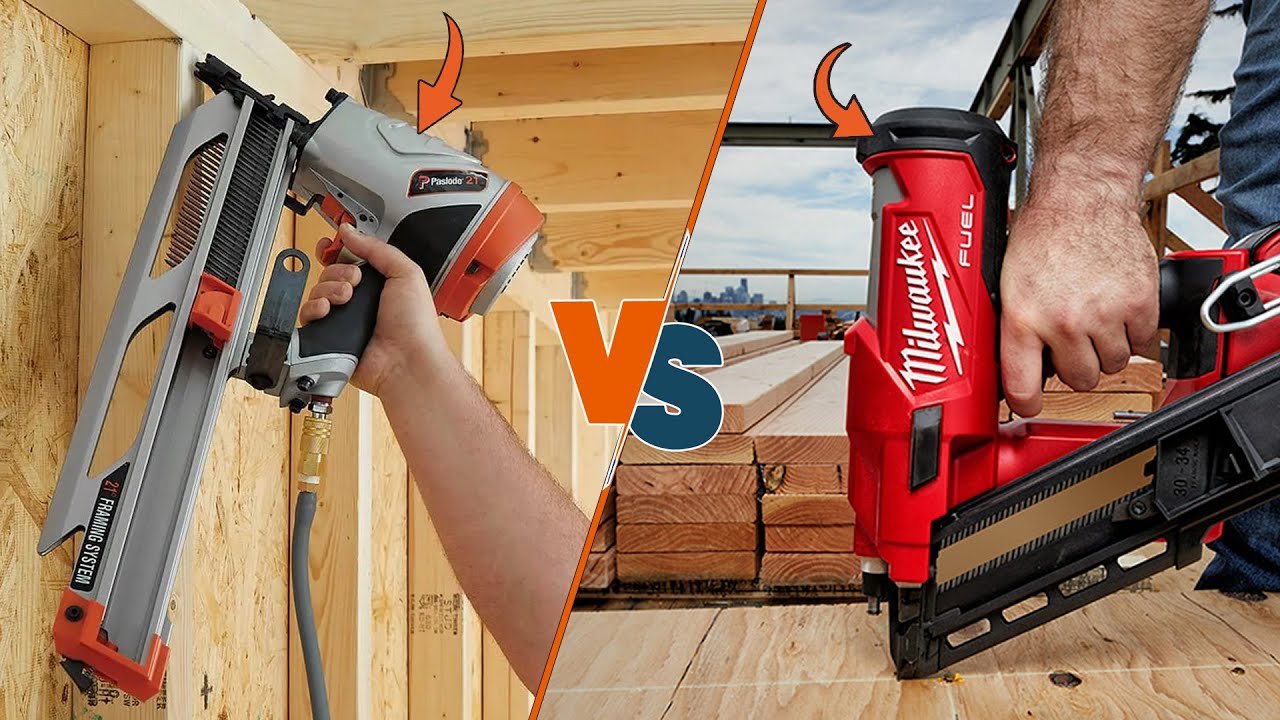
A 21-degree framing nailer is one of the most common framing tools in the industry. It uses nails joined by plastic strips. Because the nails sit in a wider arc, the magazine is broader. Capacity still depends on the exact model, magazine, and nail strip, so check the tool spec instead of assuming every 21-degree nailer holds more nails.
These nailers are popular on large framing jobs because they are easy to load, easy to find nails for, and often built for fast production work. They are also different from trim tools, so compare framing nailers vs finish nailers if you are choosing between framing and finish work. If you are building walls on a regular basis, the 21-degree model may feel like the “standard” choice.
Pros of a 21 degree framing nailer
- Common production setup — Many 21-degree tools are easy to load and widely used on large framing projects.
- Very common nails — Plastic-collated nails are easy to find in most hardware stores.
- Strong and stable feel — The wider magazine often feels solid during heavy use.
- Good for general construction — It handles many framing tasks well, from wall studs to roof work.
Cons of a 21 degree framing nailer
- Bulkier body — The wider angle can make it harder to fit into tight corners.
- Plastic nail strips can leave debris — In colder weather, plastic collation may break more easily.
- Less ideal for narrow spaces — Some framing joints are just easier to reach with a steeper angle tool.
How a 30 degree framing nailer works
A 30-degree framing nailer uses nails held together with paper tape. The steeper magazine angle makes the tool slimmer and easier to place in tight spots. This is a big reason many remodelers and roofers like it.
Because the nails are angled more sharply, the tool can sometimes reach places where a 21-degree nailer feels awkward. That does not mean it is better for every job. It means it is better for certain kinds of access problems.
Credit: nailerpros.com
Pros of a 30 degree framing nailer
- Better for tight spaces — The slimmer magazine helps in corners and between framing members.
- Smaller, lighter feel — Many users find it easier to handle overhead or in awkward positions.
- Great for remodeling — Old homes and retrofit work often create access challenges.
- Paper-tape nails reduce plastic waste — This can be cleaner on some jobs.
Cons of a 30 degree framing nailer
- Capacity varies by model — Some 30-degree tools or magazine setups may carry similar or higher nail counts, so compare the listed magazine capacity.
- Nails can be more specific — Not every store carries the exact size you need.
- Paper tape can be sensitive to moisture — Wet storage can damage the nail strips.
Key differences that matter in real work
When comparing the 21 vs 30 degree framing nailer, the small numbers hide practical differences that matter on the job. The best choice depends less on theory and more on how you actually work.
1. Access in tight spaces
This is the biggest difference. A 30-degree nailer is usually easier to fit between studs, near corners, and in cramped framing layouts. If you often work in older buildings, additions, or repair jobs, this matters a lot.
A 21-degree nailer can still work in many places, but its wider shape may make you adjust your angle more often. That slows you down when the space is limited.
2. Nail capacity
Do not choose by angle alone. Magazine capacity is a model-specific spec, not a universal 21-degree vs 30-degree rule. Nail strip length, collation, magazine style, and optional extended magazines can all change how often you reload.
Before buying, compare the manufacturer-approved fastener range and magazine capacity for the exact model. Also check whether your local framing requirements accept the nail head style listed for that tool and fastener.
3. Nail availability
21-degree nails are very common. You will usually find them easily in stores and online. 30-degree nails are also widely available, but the selection may be a little narrower depending on your area.
If you work in a remote location or buy supplies from small local stores, the 21-degree option may be safer. If you already know your supplier carries the nails you need, this point becomes less important.
4. Tool size and handling
A 30-degree nailer often feels easier to maneuver. That can reduce fatigue when working overhead or at awkward angles. A 21-degree nailer often feels more substantial, which some users like for stability.
The right feel is personal. Some framers prefer a tool that feels planted and heavy. Others want the lightest, slimmest tool possible. If possible, hold both before buying.
5. Nail strip material
21-degree models use plastic strips. 30-degree models use paper tape. Each has trade-offs.
Plastic strips can be more durable in dry storage and often help with feeding. Paper tape can be cleaner and slimmer, but it can be less friendly if exposed to moisture. This is a small detail, but it can affect long-term use if your tools live in a damp truck or site box.
Which one is better for specific jobs
The best framing nailer depends on the type of work you do most. Here is the simple way to think about it.
Best for new home construction
A 21 degree framing nailer is often the better fit for large, open framing jobs because plastic-collated nails are common and the setup is familiar on many framing sites. Compare the exact model capacity before assuming it will need fewer reloads.
Best for remodeling and repair work
A 30 degree framing nailer usually wins here. Remodel jobs often involve awkward spaces, hidden corners, and older framing where a slimmer tool makes the work easier.
Best for roof framing
Both can work, but many users prefer the 30-degree model when working on roofs or overhead spaces. If your project is closer to exterior covering than framing, compare a siding nailer vs roofing nailer instead. The slimmer body can be easier to manage in uncomfortable positions. Still, if you already own a 21-degree nailer, it may be perfectly fine for open roof framing.
Best for DIY homeowners
If you are doing mixed projects and want one general tool, the 21-degree framing nailer is often the safer choice. For lighter trim and woodworking tasks, a pin nailer vs brad nailer comparison may be more useful than a framing nailer. It is common, versatile, and easy to support with supplies.
But if your work involves repairs, fence sections, deck framing, or reaching into tight places, the 30-degree nailer may feel more useful.
Common mistakes buyers make
Many people compare these tools only by angle and miss the details that matter most. It also helps to review the different types of nail guns so you do not buy a framing tool for the wrong job. That leads to regret later. Here are the mistakes to avoid.
Credit: toolsgearlab.com
Buying the tool before checking nail access
The nailer is only part of the system. You also need matching nails. Before you buy, check that local stores or your preferred online seller carry the size and collation type you need.
Assuming one angle is always more powerful
Power comes from the nailer’s design, not the angle alone. A 30-degree nailer does not automatically drive nails deeper or faster than a 21-degree model.
Ignoring the job site conditions
If your nails may sit in a humid truck or a damp storage area, paper-tape nails may need more care. If you want maximum supply availability, plastic-collated nails may be easier to manage. This is the kind of detail beginners often overlook.
Choosing only based on price
A cheaper tool is not always the better value. If the tool does not fit your work style, you may slow down every day you use it. That costs more than the price difference.
How to choose the right one for you
The easiest way to decide is to think about your most common work. Do you build big, open frames? Or do you often repair, remodel, and work in cramped spaces?
If you need a simple rule, use this:
- Choose 21 degrees if you want a common plastic-collated setup and the exact model has the capacity and fastener specs you need.
- Choose 30 degrees if you need better access in tight spaces and more comfort in awkward jobs.
If you are still unsure, ask one more question: Which nail type can I buy easily and keep in stock? That answer often settles the decision.
A practical decision guide
- If you do large framing jobs every week, start with a 21-degree nailer.
- If you often work in closets, corners, or older homes, lean toward 30 degrees.
- If you want one tool for general use and easy nail sourcing, 21 degrees is usually more convenient.
- If comfort in tight areas matters more than the listed capacity of your exact model, 30 degrees is usually better.
Performance, safety, and maintenance tips
No matter which tool you choose, good habits make the biggest difference in results. A framing nailer is powerful, so it must be handled with care.
Keep the tool clean
Dust, wood chips, and oil buildup can affect feeding. Clean the magazine and nose area regularly. This helps prevent jams and misfires.
Use the right nails only
Do not mix nail types or sizes. If you also use smaller nailers, compare 16 gauge vs 18 gauge nailers so each tool gets the right fastener. Even a small mismatch can cause feeding problems or poor fastening. This is especially important with angled nailers, since the angle, collation style, shank diameter, length, and head style must match the tool.
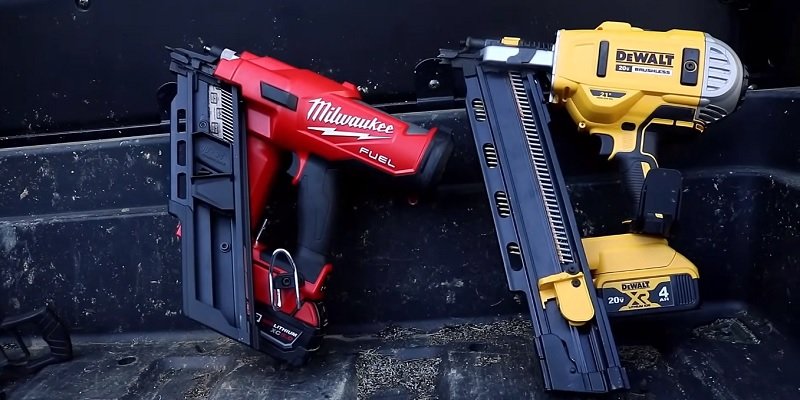
Manufacturer specs show why this matters. For example, DeWalt lists both a 21-degree extended magazine and a 30-degree extended magazine as holding two strips, while Paslode lists different capacities across its 30-degree framing nailer models. Check the exact model manual or product page before treating nail angle as the capacity spec.
Watch the work surface
Driving into knots, very hard lumber, or edges of boards can change nail depth. Test on scrap wood when possible. This helps you set the depth correctly before working on the final piece.
Store nail strips properly
Keep plastic or paper-collated nails dry and out of direct sun. Heat and moisture can damage both types, but paper tape is especially sensitive. This is a small habit that prevents wasted nails and feed issues later.
For more general nailer safety guidance, you can also review the official advice from OSHA.
Final verdict: 21 vs 30 degree framing nailer
There is no universal winner in the 21 vs 30 degree framing nailer debate. The better tool depends on your space, your job type, and how often you need easy access to nails.
Choose 21 degrees if you want a common plastic-collated framing nailer for regular construction work and the exact model meets your capacity needs. Choose 30 degrees if you need slimmer access and more comfort in tight or awkward spaces.
If you are buying only one framing nailer, think about your most frequent job first. That is the smartest way to spend your money and get a tool that stays useful for years.
Credit: thesprucetools.com
FAQs
1. Is a 21 degree framing nailer better than a 30 degree framing nailer?
Not always. A 21-degree framing nailer is often better for general construction and common nail availability. A 30-degree framing nailer is better when you need slimmer access in tight spaces. Magazine capacity depends on the exact model, not angle alone.
2. Can I use 21 degree nails in a 30 degree framing nailer?
No. You should only use nails made for that specific nailer angle and collation type. Using the wrong nails can cause jams, misfires, or poor fastening.
3. Why do 30 degree framing nailers fit tighter spaces better?
They have a steeper magazine angle, so the body of the tool is usually slimmer. That makes it easier to work in corners, between studs, and in areas with less room.
4. Which framing nailer is better for beginners?
Many beginners choose a 21-degree framing nailer because it is common and easy to find nails for. But if the beginner expects a lot of remodeling or tight-space work, a 30-degree model may be more useful.
5. Do 21 degree and 30 degree framing nailers drive nails with the same strength?
Yes, they can both drive framing nails effectively if the tool is designed well and used correctly. The angle mainly affects access, size, and nail type, not basic driving power.
