
If you are shopping for a cleaning machine, the names can get confusing fast. Some sellers say pressure washer. Others say power washer. Many people use both words like they mean the same thing. That is one reason buyers often feel unsure before they spend money.
The truth is simple, but the details matter. In many cases, pressure washer vs power washer is not a battle between two very different tools. Still, there are a few important differences in heat, cleaning power, and best uses. If you understand those differences, you can choose the right machine for your home, car, patio, fence, or business job.
This guide explains what each machine does, where they are used, what specs matter most, and how to avoid common buying mistakes. By the end, you will know which one fits your work, your surface, and your budget.
What people mean when they say pressure washer or power washer
In everyday language, many people use these terms as if they are the same. That is not completely wrong. Both machines use high-pressure water to remove dirt, mud, grease, mold, and stains. Both are much stronger than a normal garden hose.
The main difference is usually this: a power washer often uses heated water, while a pressure washer usually uses cold water. In simple words, heat is the extra feature that often separates them.
That is why some buyers think they are choosing between two brands or two machine types, but the real choice is usually between cold-water cleaning and hot-water cleaning.
Why the names are confusing
Different sellers and regions use the words in different ways. In some places, people say “power washer” for any strong washer. In other places, “power washer” means a hot-water machine only. This is why you should not rely on the name alone.
Instead, check the machine specs. Look for water temperature, PSI, GPM, motor type, and whether it has a heating system. Those details tell you much more than the label on the box.
The real pressure washer vs power washer difference
If you want the short answer, here it is: a pressure washer usually cleans with cold or normal-temperature water, while a power washer usually uses heated water. Heat helps break down grease, oil, gum, and heavy grime faster.
But heat is not always better. For many home jobs, a cold-water pressure washer is enough. It is often lighter, cheaper, and easier to maintain. A power washer can be more effective on tough commercial messes, but it may also cost more and need more care.
| Feature | Pressure Washer | Power Washer |
|---|---|---|
| Water temperature | Cold or normal temperature | Heated water |
| Best for | General cleaning, dust, dirt, mud, patios, cars | Oil, grease, gum, heavy industrial grime |
| Cost | Usually lower | Usually higher |
| Maintenance | Simpler | More complex because of heating parts |
| Weight | Often lighter | Often heavier |
| Common use | Homeowners, light business use | Commercial and industrial cleaning |
Heat changes the cleaning result
This is one of the most important points beginners miss. Heated water does more than feel stronger. It helps loosen sticky dirt and cut through oil faster. That means you may need less scrubbing and less chemical cleaner.
Still, heat can also be a problem on some surfaces. Soft wood, painted areas, sealed coatings, or delicate parts may not react well to hot water. So the stronger machine is not always the safer choice.
How each machine works
Both tools use a pump to push water through a narrow nozzle at high speed. That speed creates force. The force lifts dirt from the surface. The difference is that a power washer adds a heating system, often powered by gas, electricity, or another fuel source.
That heating system takes time to warm the water and makes the machine more complex. A basic pressure washer is more straightforward. You connect it to a water source, choose a nozzle, and start cleaning.
What matters more than the name
When people compare pressure washer vs power washer, they often focus only on the word. A better way is to look at the cleaning job. For example, a small electric pressure washer may be perfect for a driveway rinse, while a hot-water unit may be the better choice for a greasy workshop floor.
This is why “better” depends on the mess, not the name.
Best uses for a pressure washer
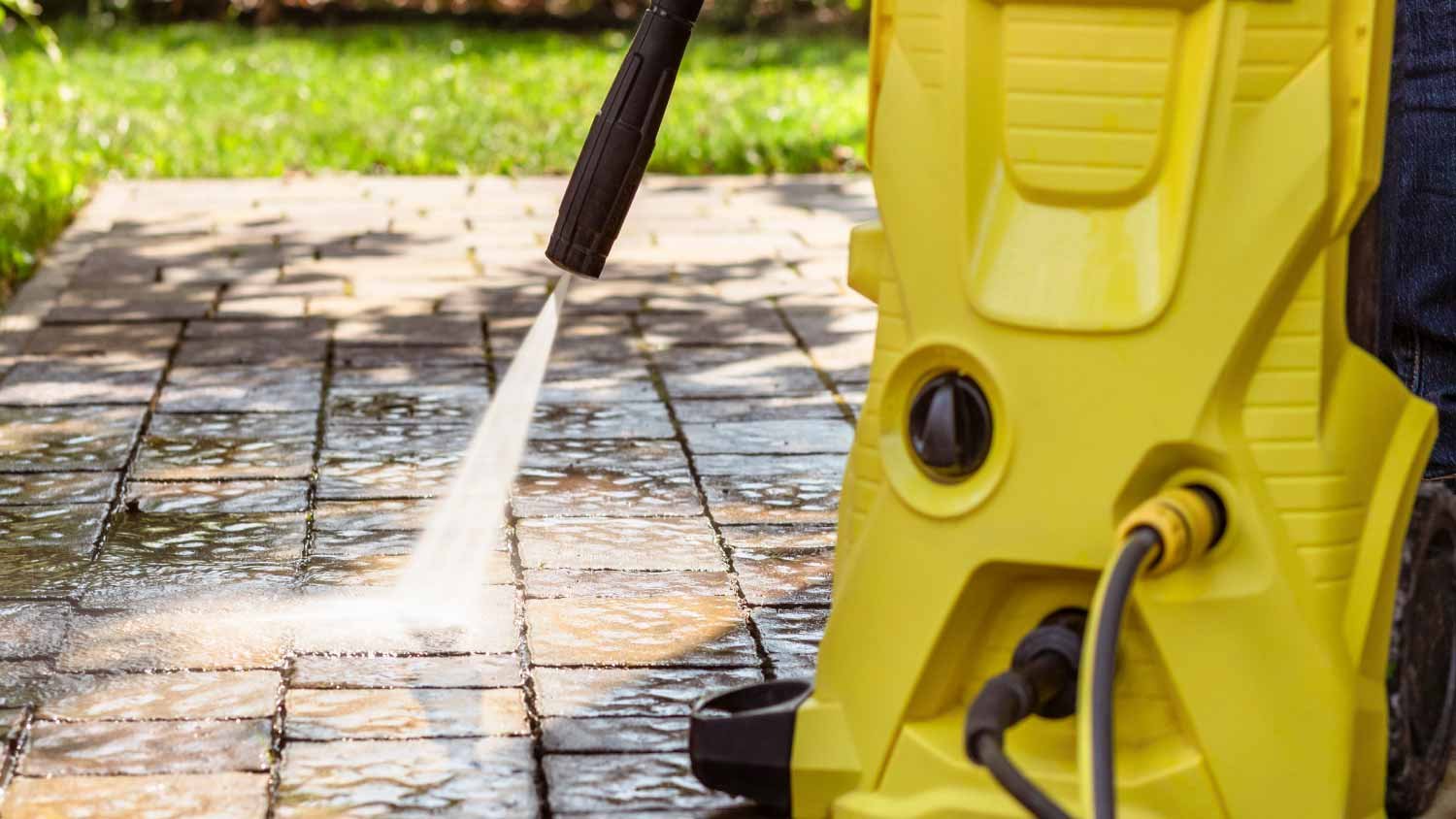
A cold-water pressure washer is usually the smart choice for most homeowners. It handles many outdoor cleaning jobs well and does not require the extra cost of a heating system.
- Patios and decks: Removes dirt, dust, algae, and light mildew.
- Cars and bikes: Good for rinsing mud and road grime when used with the right nozzle.
- Sidewalks and driveways: Clears loose dirt, leaves, and surface stains.
- Outdoor furniture: Useful for plastic, metal, and some coated surfaces.
- Fences and walls: Helps refresh wood, vinyl, or brick.
For many households, this is enough. If you clean a few times a year and mostly deal with dirt or dust, a pressure washer is usually the better buy.
Credit: angi.com
Where a pressure washer performs best
Cold water works especially well when the dirt is not oily. It is also a safer starting point for fragile jobs. If you are not sure how a surface will react, cold water is often the lower-risk option.
That said, do not assume all pressure washers are mild. The pressure itself can still damage paint, wood grain, glass seals, or soft materials if you use the wrong nozzle or stand too close.
Best uses for a power washer
A power washer is more useful when the mess has grease, oil, or baked-on grime. Heat helps break that bond and can reduce the need for strong detergents.
- Garage floors: Great for oil spots and tire marks.
- Commercial kitchens: Useful for greasy outdoor areas and service zones.
- Construction equipment: Helps remove heavy mud and stubborn buildup.
- Industrial surfaces: Better for thick grime that cold water struggles to move.
- Dumpster pads and loading areas: Useful where sanitation and grease removal matter.
In short, a power washer is often the stronger choice for professional cleaning work. It can save time on difficult jobs where cold water would only clean the top layer.
Why businesses often choose hot water
For many companies, time is money. Hot water can clean faster, which means less labor. It can also improve the final result when the surface has oil or food residue. That is why power washers are common in trucking, food service, farming, and maintenance work.
One non-obvious point: hot water can also make rinsing more effective because grease liquefies and moves away faster. That can matter more than raw pressure.
PSI and GPM: the specs that matter more than the label
When buying either machine, do not stop at pressure washer vs power washer. The real performance depends on two numbers: PSI and GPM.
- PSI means pounds per square inch. It measures pressure force.
- GPM means gallons per minute. It measures water flow.
PSI helps lift stuck dirt. GPM helps wash it away. Many beginners only look at PSI, but GPM is just as important. A machine with high pressure but weak water flow may clean slowly.
Simple way to think about it
PSI is like the punch. GPM is like the rinse. You usually need both.
For example, a machine with moderate PSI and strong GPM may outperform a machine with higher PSI but low flow on a big driveway. That is one of the smartest buying lessons many new owners learn too late.
Which surfaces need care
Not every surface can handle the same cleaning force. This is where people make expensive mistakes.
Safe to clean with more care
- Concrete driveways
- Brick walkways
- Metal railings
- Heavy outdoor equipment
Needs a gentler approach
- Wood decks
- Older painted surfaces
- Window screens
- Vinyl siding
- Car paint and trim
On delicate surfaces, lower pressure, a wider spray angle, and more distance are often better than brute force. Stronger water is not always smarter cleaning.
Pressure washer vs power washer for home use
For most homes, a pressure washer is the practical choice. It can handle common outdoor cleaning tasks without being too expensive or difficult to use. If you mainly wash sidewalks, patio furniture, fences, and cars, you probably do not need heated water.
A power washer makes more sense if you often deal with greasy stains, workshop mess, or large cleanup jobs. But if those jobs are rare, the extra cost may not be worth it.
Credit: airtasker.com
What homeowners often overlook
Many people buy a machine based on the biggest number they see. They think more PSI means better value. But a very powerful unit can damage wood, strip paint, or make simple cleaning harder than it needs to be.
Another common mistake is ignoring accessories. A good surface cleaner, the right nozzle, and a hose with enough length can improve results more than an extra 500 PSI in many home jobs.
Pressure washer vs power washer for commercial use
Businesses often have different needs. They may deal with oil, repeated grime, or time pressure. In that case, a power washer can be a better long-term investment. Hot water speeds up work and improves cleaning on tough surfaces.
Still, not every business needs a hot-water unit. Some companies only need to rinse dirt, dust, or mud. For those jobs, a strong cold-water pressure washer may be enough and cost less to run.
If you run a business, ask a simple question: What kind of dirt do we clean most often? If the answer is grease or oil, hot water becomes more valuable. If the answer is soil and dust, cold water may be all you need.
Cost, maintenance, and energy use
Price is another big difference in the pressure washer vs power washer choice. A basic pressure washer usually costs less to buy. It also tends to be easier to maintain because there are fewer parts.
A power washer often costs more because of the heating system. It may use more fuel or electricity, and repairs can be more expensive. If you use it often, the time saved may justify the cost. If you use it only a few times a year, it may not.
Maintenance also matters. Hot-water systems need extra attention. You may have to think about burner care, fuel lines, and temperature control. A simpler cold-water unit is often easier for a homeowner to manage.
Hidden cost many buyers miss
Some buyers forget that the machine is only part of the expense. Nozzles, hoses, detergents, extension wands, and storage space all matter. A heavier machine also takes more effort to move. These are small things, but they affect daily use a lot.
How to choose the right one for your needs
Choosing between these two becomes much easier when you match the machine to the job. Start with the type of dirt, then think about the surface, then think about how often you will use it.
- Choose a pressure washer if your main jobs are general home cleaning, car washing, patio care, and dirt removal.
- Choose a power washer if you need to cut through oil, grease, gum, or heavy industrial grime.
- Choose higher GPM if you clean large areas and want faster rinse-off.
- Choose the right PSI for the surface you clean most often.
- Choose hot water only when it adds real value, not just because it sounds stronger.
If you are still unsure, go with the simpler machine first. In many cases, a good cold-water pressure washer handles far more jobs than people expect.
Common buying mistakes to avoid
Buying a washer is not hard, but a few mistakes can lead to regret.
- Picking the highest PSI without thinking about the surface
- Ignoring GPM and buying pressure only
- Buying hot water when you only need basic outdoor cleaning
- Using a narrow nozzle too close to the surface
- Forgetting about storage, weight, and hose length
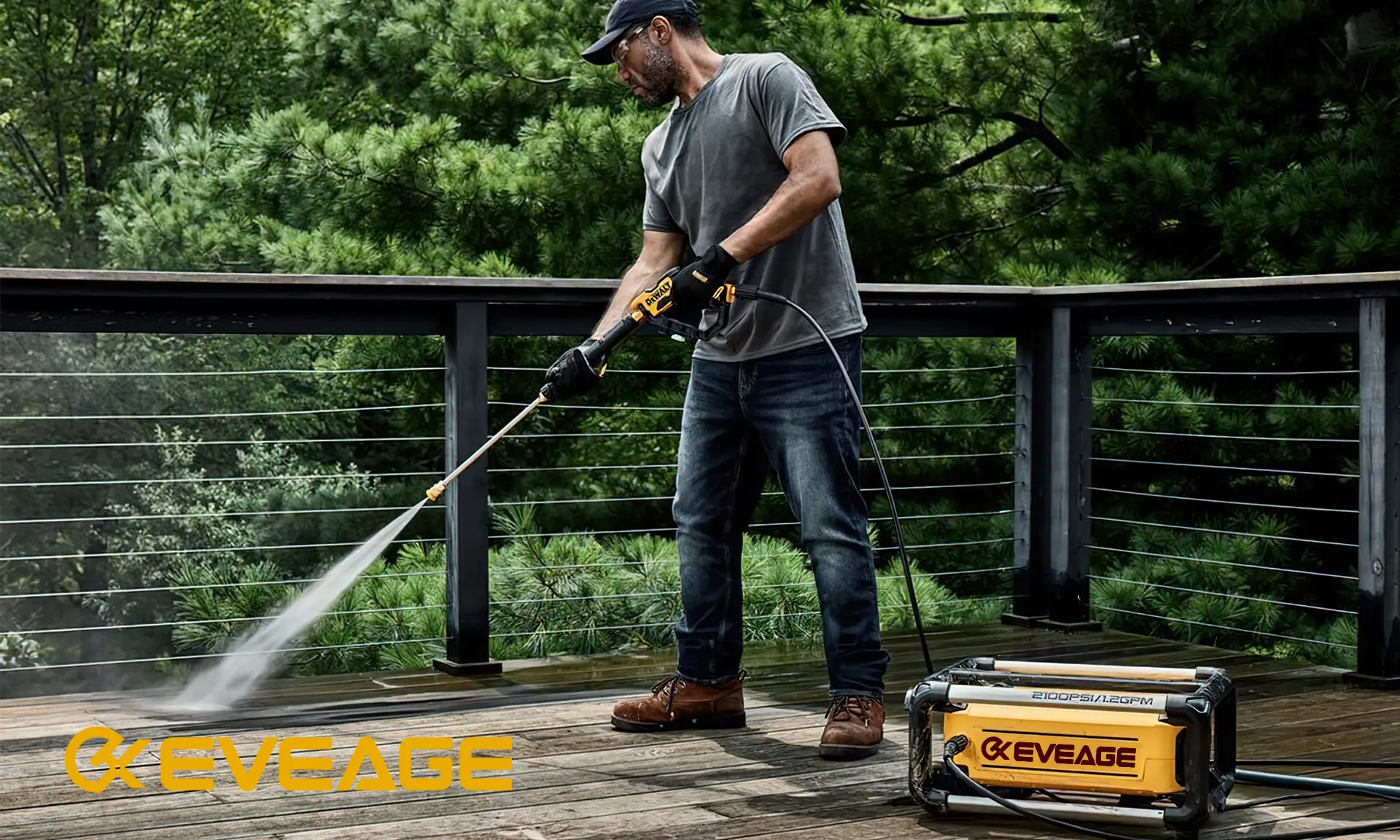
One more point beginners often miss: detergent does not replace the right washer. Cleaning chemicals can help, but the machine still needs the right balance of pressure, flow, and temperature.
Credit: eveagetool.com
So which one do you actually need?
If your cleaning jobs are normal home tasks, a pressure washer is probably the one you need. It is more affordable, easier to use, and strong enough for most outdoor dirt.
If you deal with heavy grease, oil, or commercial messes, a power washer may be the better choice because heat gives you faster and deeper cleaning.
So the best answer to pressure washer vs power washer is not about which one is “better” in general. It is about which one fits the dirt you clean most often.
If you want a simple decision rule, use this: cold water for common dirt, hot water for stubborn grease.
For more technical buying guidance on pressure washer safety and ratings, you can also check this useful resource from the Consumer Reports pressure washer buying guide.
FAQ
1. Is a pressure washer the same as a power washer?
In everyday use, people often use the terms the same way. The main difference is usually that a power washer uses heated water, while a pressure washer usually uses cold or normal-temperature water.
2. Which one is better for home use?
For most homes, a pressure washer is the better choice. It is easier to handle, costs less, and works well for patios, driveways, cars, fences, and outdoor furniture.
3. Does hot water clean better?
Hot water cleans grease, oil, and sticky grime better than cold water. But for simple dirt and dust, hot water is often not necessary.
4. Can a power washer damage surfaces?
Yes. If the pressure is too high or the nozzle is too close, a power washer can damage wood, paint, siding, and other delicate surfaces. Heat can also be too strong for some materials.
5. What should I look at first when buying one?
Start with the type of cleaning job you do most often. Then check PSI, GPM, water temperature, hose length, and how easy the machine is to move and store.
