
Some cleaning jobs look small until you see the results. A dirty driveway, a mossy patio, or a stained fence can make a home feel older than it is. Then one good wash changes everything. That is why pressure washer before after pictures are so powerful. They show real proof, not just promises.
These pictures do more than impress people. They help you understand what a pressure washer can do, what kind of dirt it removes, and where the real limits are. If you are thinking about buying one, renting one, or hiring a cleaning service, seeing the difference can help you make a smarter choice.
In this guide, you will see what makes these cleaning results so dramatic, which surfaces improve the most, and how to get results that look as good in real life as they do in photos. You will also learn a few practical details many beginners miss, like why some jobs need more water flow than pressure, and why the wrong nozzle can ruin a surface even when the “after” photo looks great from far away.
Why before and after pictures are so convincing
Cleaning is one of those rare jobs where the change is instant and easy to see. You do not need special training to understand the difference between a stained surface and a clean one. That is why pressure washer before after pictures work so well. The contrast is clear, and the results feel real.
They also build trust. When people see a driveway with years of grime removed in one session, they can picture what their own home might look like. This is especially useful for homeowners who are unsure if pressure washing is worth the effort or cost.
But there is another reason these photos matter. They help set realistic expectations. Not every stain disappears completely. Not every surface should be blasted at full power. Good before and after pictures show more than a dramatic change. They show what is possible when the right method is used on the right material.
What makes the “after” image so dramatic
The biggest reason is contrast. Dirt builds up slowly, so your eyes get used to it. Once the grime is gone, the clean area often looks brighter than new. This is common on concrete, siding, brick, pavers, and outdoor furniture.
Another reason is texture. Rough surfaces hold dirt deep in small holes and lines. Pressure washing lifts that dirt out, so the surface does not just look cleaner. It often looks sharper and more defined.
Non-obvious insight: sunlight can make the after photo look even better than the real cleaning result. A wet surface often looks darker at first, but once it dries, the true difference becomes much stronger. Good photos are usually taken after the surface dries fully.
Surfaces that show the biggest transformation
Some materials change more than others. If you want the most dramatic pressure washer before after pictures, focus on surfaces that collect dirt, mildew, algae, oil, or old stains over time.
Driveways and sidewalks
Concrete is one of the best places to see a strong before and after. Tire marks, mud, oil spots, and dark patches can make a driveway look badly neglected. A pressure washer can often restore a much cleaner, brighter finish.
Sidewalks show a similar effect, especially in shaded areas where moss and algae grow. Even a small section cleaned well can make the whole property look more cared for.
Patios and pavers
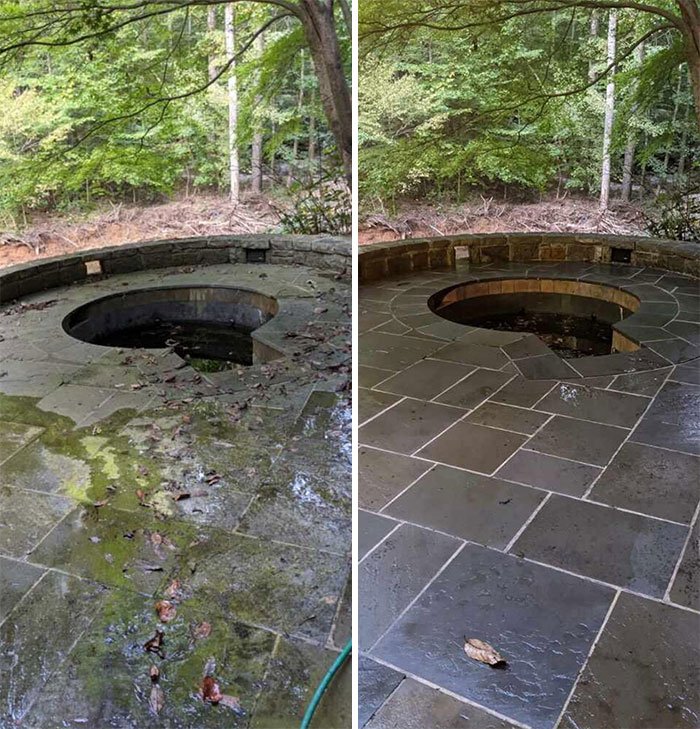
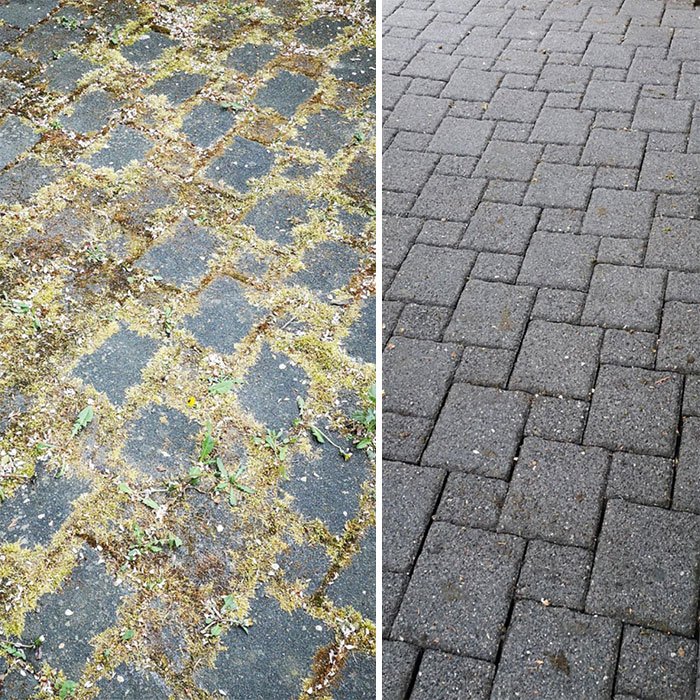
Patios often collect grime between cracks and joints. Pavers can look dull and uneven when dirt sits in the lines. After pressure washing, the color and pattern become much easier to see.
Non-obvious insight: pavers can look amazing after washing, but the joints may lose sand. That does not ruin the result, but it means you may need to refill the joint sand later to keep the surface stable.
Vinyl siding
Vinyl siding can go from gray and dusty to bright and fresh very quickly. Algae streaks, spider webs, and dust buildup are common. Gentle washing often makes a home look newer without any paint work.
However, siding needs care. A high-pressure blast too close to the wall can force water behind the panels. Good before and after pictures from siding jobs usually come from soft washing, not aggressive pressure.
Decks and fences
Wood surfaces can show one of the most satisfying changes. Old gray wood often hides its natural color under weathering and dirt. After cleaning, the grain becomes visible again.
Still, wood is also easy to damage. The best before and after results come from the right pressure, the right cleaner, and a steady hand. If the water marks the wood, the photo may look dramatic, but the surface is not truly improved.
Outdoor furniture
Plastic chairs, benches, and tables often collect pollen, mildew, and sticky dust. These are smaller jobs, but the change can still be striking. A faded patio set can suddenly look ready to use again.
What the pictures do not always show
Before and after photos are useful, but they do not tell the full story. A picture can hide uneven cleaning, surface damage, or problems that appear later. This is why it helps to look beyond the visual impact.
Credit: iknowhair.com
Some stains cannot be fully removed
Oil that has soaked deep into concrete may lighten but not disappear. Rust stains, fertilizer marks, and old tannin stains can also remain after washing. A clean photo can still be honest if the improvement is big, but it should not create false hope.
Surface damage may be invisible from a distance
Pressure can etch concrete, fray wood fibers, or strip paint. From far away, a surface may look clean and even. Up close, you may notice rough patches or lines caused by too much force.
Non-obvious insight: a great “after” picture is not always a sign of safe cleaning. Sometimes the job looks excellent in a photo even though the method was too aggressive. That is why the process matters as much as the final image.
Drying changes the final look
Wet concrete, wet wood, and wet siding all reflect light differently. The final result may look softer or stronger once dry. If you want honest pictures, compare fully dry surfaces under similar light.
How to get the best cleaning results
If your goal is to create your own pressure washer before after pictures, the cleaning process matters a lot. Good results come from control, patience, and the right match between surface and method.
Choose the right machine
Not every pressure washer is suited for every job. A light electric model can be enough for patios, cars, grills, and furniture. A stronger gas model is often better for concrete, large driveways, and older grime.
The best choice depends on two things: pressure and water flow. Many beginners focus only on PSI, but GPM matters too. More water flow helps rinse away loosened dirt faster. That often matters more than raw pressure.
| Surface | Best approach | Main risk |
|---|---|---|
| Concrete driveway | Medium to strong pressure with surface cleaner | Etching if held too close |
| Vinyl siding | Low pressure or soft wash | Water intrusion behind panels |
| Wood deck | Low pressure, wide nozzle, cleaner first | Furring and splintering |
| Pavers | Controlled pressure with even passes | Sand loss in joints |
Use the right nozzle
The nozzle changes the force and shape of the spray. A narrow spray can cut through dirt fast, but it can also damage the surface. A wider spray is safer for delicate materials.
A common beginner mistake is using the smallest nozzle because it looks stronger. That often causes stripes, marks, or gouges. A better method is to start gentle and increase power only if needed.
Work in even passes
Uneven passes create tiger stripes, where some sections look clean and others look patchy. Move the wand at a steady speed and overlap each pass slightly.
Do not stop in one spot. That can leave a visible mark. Keep the motion smooth, like mowing a lawn.
Use cleaner when needed
Water alone can remove loose dirt, but mold, mildew, oil, and heavy grime often need a cleaner. A good pre-treatment can reduce the amount of pressure needed, which protects the surface and improves the final result.
For safety and product guidance, it can help to review general pressure washer advice from a trusted source like Consumer Reports.
Before and after pictures that actually tell the truth
Not every good photo is honest. If you want to judge results fairly, look for pictures that show the same angle, the same light, and the same level of zoom before and after cleaning.
Credit: iknowhair.com
Take pictures in similar light
Morning light and late afternoon light can make one surface look much darker or lighter. A fair comparison should use similar conditions if possible. If not, note the difference in the caption.
Keep the same distance and angle
If the “before” photo is close and the “after” photo is far away, the change may seem bigger than it really is. Same angle, same distance, same framing. That is the cleanest way to show the real result.
Show problem areas close up
Wide shots are useful, but close-ups are better for proving quality. They show whether dirt is truly gone from cracks, corners, and edges. They also reveal if the surface was damaged during cleaning.
Common mistakes that ruin the after shot
A lot of people expect pressure washing to be simple. In many cases it is, but small mistakes can reduce the result fast. These errors also make the final photo less impressive.
- Using too much pressure on a delicate surface
- Holding the nozzle too close to the material
- Skipping pre-treatment on oily or moldy spots
- Cleaning in direct harsh sunlight without checking drying marks
- Rushing the job and leaving streaks or missed spots
One mistake that beginners often miss is failing to rinse properly after cleaning. Soap or loosened dirt left behind can dry into dull film. The photo may look fine when wet, but the surface will not stay clean for long.
Another overlooked issue is runoff. Dirty water can move onto a clean area and stain it again. Good cleaning is not just about the wand. It is also about controlling where the water goes.
Why professional results often look better
Professional cleaners usually get stronger and more even results because they use better equipment, better cleaners, and better technique. They also know which surfaces should never be treated like concrete.
They often use surface cleaners for large flat areas. This tool keeps the cleaning path even and reduces streaking. On walls and roofs, they may use soft washing instead of pressure. That is one reason their before and after pictures often look so polished.
Professionals also know when to stop. Some stains will not come out fully, and pushing harder can make the surface worse. A careful cleaner understands that a good result is not always the most aggressive one.
When hiring a pro makes sense
If you have expensive siding, large commercial spaces, old wood, or heavily stained concrete, a professional can save time and reduce risk. The final result may also last longer because the surface is cleaned more evenly and more safely.
How to judge a good pressure washing result
A strong cleaning result is not only about brightness. It should also look even, safe, and complete. Use this simple standard when reviewing pressure washer before after pictures.
- The surface looks cleaner across the full area, not just in one bright spot.
- There are no obvious stripes, gouges, or patchy sections.
- Edges, corners, and joints are cleaned well.
- The material still looks healthy, not damaged or frayed.
- The final look makes the space feel more usable and maintained.
If a photo looks dramatic but the surface is rough or uneven, the job was probably too aggressive. Real quality should improve both appearance and condition.
Stunning results you can expect from different jobs
Some cleaning projects always make people say “wow.” These are the jobs where the visual change is usually biggest.

Credit: reddit.com
Driveways with years of buildup
A dark, stained driveway can become bright enough to change the whole look of a house. This is one of the most satisfying transformations because the space is large and the contrast is easy to see.
Green or blackened patios
When algae and mildew build up on stone or concrete, the patio can look slippery and old. After cleaning, the color returns and the space feels more open.
Dirty siding on a sunny home exterior
Light-colored siding often shows the biggest visual jump. A home can look freshly maintained without repainting or replacing anything.
Weathered wooden fences
Old fences often go from gray and flat to warm and textured. Even if the wood still needs sealing or staining later, the cleaning alone can make a huge difference.
Final thoughts on real cleaning transformations
The best pressure washer before after pictures are more than eye candy. They show how much life a property can get back with the right cleaning method. A dirty surface is not always damaged. Often, it just needs the right amount of water, the right nozzle, and a little patience.
That is also why the best results are not always the most aggressive ones. True quality cleaning protects the surface while restoring its look. When done well, the difference can be stunning, but it should also be safe and long-lasting.
If you are planning your own project, start with the surface type, not with maximum power. That one choice can make the difference between a beautiful after photo and a costly mistake.
FAQs
1. How do I take good pressure washer before after pictures?
Take both photos from the same angle, at the same distance, and in similar light. Let the surface dry before taking the after photo if you want the result to look clear and honest.
2. What surface shows the biggest difference after pressure washing?
Driveways, sidewalks, patios, and vinyl siding usually show the biggest change. These surfaces often collect dirt, algae, and stains that become very visible before cleaning.
3. Can pressure washing damage a surface?
Yes. Too much pressure can damage wood, strip paint, etch concrete, and force water behind siding. The right nozzle and technique matter as much as the machine itself.
4. Why do some after photos look better than the real result?
Wet surfaces, sunlight, and camera angles can make a cleaned area look better than it really is. A fair result should be judged on a fully dry surface with even cleaning.
5. Do I need a professional for strong cleaning results?
Not always. Small jobs can be done well by homeowners with care. But large, delicate, or heavily stained surfaces often benefit from professional equipment and experience.
