
Cold weather can damage a pressure washer faster than most owners expect. Water left inside the pump, hoses, or spray gun can freeze, expand, and crack parts that are expensive to replace. A small amount of care before winter can save you time, money, and a lot of frustration next spring.
If you want to know how to winterize a pressure washer, the good news is that the process is simple. You do not need special skills, but you do need to follow the steps in the right order. The goal is to remove water, protect the pump, and store the machine in a safe place until warm weather returns.
This guide explains the full process in clear steps. It also covers common mistakes, useful tips, and the small details many beginners miss. If you do it right, your pressure washer will be ready to use again without costly repairs.
Why winterizing matters before the first freeze
A pressure washer may look strong, but its pump is very sensitive to leftover water. When water freezes, it expands. That pressure can split pump seals, crack fittings, damage valves, and burst hoses. Even a tiny amount of trapped water can cause trouble.
The biggest risk is not just one hard freeze. Repeated cold nights can slowly damage internal parts. Some people store their machine in a garage and think that is enough. In many cases, it is not. If the garage is not heated, the water inside can still freeze.
There is another reason winter care matters. Dirt, detergent, and old fuel can sit inside the machine for months. That can cause starting problems, corrosion, and weak performance when you bring it back out. Proper winter storage protects both the pump and the engine.
What can happen if you skip winter prep
- Cracked pump housing
- Leaking seals
- Split hoses or fittings
- Damaged spray gun and wand parts
- Rust inside metal parts
- Hard starting in spring
One thing many beginners miss is this: damage may not show right away. A washer can seem fine after winter, then start leaking or losing pressure weeks later. That is why prevention is much cheaper than repair.
What you need before you begin
Before you start, gather the basic supplies. The exact items may change depending on your machine, but most pressure washers need the same care.
| Item | Why it helps |
|---|---|
| Fresh water source | Used to flush out soap and dirt |
| Pressure washer pump protector or antifreeze designed for pumps | Helps protect seals and internal parts |
| Clean cloths or towels | For drying hoses, gun, and fittings |
| Fuel stabilizer | Useful for gas-powered models |
| Wrench or basic hand tools | May help with hose or plug removal |
| Container for used fuel, if needed | Helps with safe fuel handling |
If you have a gas-powered unit, check the owner’s manual before draining fuel or changing oil. Some machines need a slightly different process. A quick look at the manual can prevent mistakes.
For extra guidance on safe winter storage and fuel care, the Consumer Reports site is a useful authority for general equipment maintenance advice.
Step-by-step process to winterize the machine
The best way to winterize a pressure washer is to work in a clear order. Do not rush. Each step helps remove water, reduce wear, and protect the pump.
1. Turn off the machine and disconnect everything
Start by turning the pressure washer off completely. If it is electric, unplug it. If it is gas-powered, switch the engine off and let it cool. Then disconnect the high-pressure hose, spray gun, wand, and any accessories.
This step seems basic, but it matters. Working with connected parts can trap water inside the system. It also makes the cleaning process harder.
2. Flush out soap, dirt, and leftover debris
If you used detergent, run clean water through the machine for a short time. This clears soap from the system. Soap residue can leave sticky buildup inside the pump and lines during storage.
Use plain water only. Do not add chemicals yet. Run the water through the hose and gun until the stream looks clear.
3. Remove as much water as possible from the system
Now disconnect the water supply and let the pressure washer drain. Hold the hose ends lower than the machine if possible. This helps gravity move water out.
Trigger the spray gun for a few seconds to release trapped water from the line. Do this carefully. You are not trying to run the machine dry for long. You are only helping water escape from the system.
Here is a detail many people overlook: the trigger gun can hold more water than expected, especially in the handle area. Shake it gently and point the wand downward to help empty hidden pockets of water.
4. Protect the pump with pump saver or pump protector
This is one of the most important steps in how to winterize a pressure washer. A pump protector is made to coat the pump interior and prevent freezing damage. It also helps guard against corrosion.
Follow the product instructions exactly. In many cases, you connect the pump protector bottle to the pump inlet and let it flow through until you see it come out of the discharge port. Some products are spray-based, while others use a hose connection.
Do not assume that regular automotive antifreeze is safe for every pressure washer. Use only a product made for pressure washer pumps unless the manufacturer says otherwise.
Why pump protector is better than just draining
Draining helps, but it does not remove every drop. Tiny amounts of water stay behind in valves, seals, and small channels. A proper pump protector gives an extra layer of safety. That small step can prevent very costly pump damage.
5. Handle the hoses, gun, and wand carefully
After the pump is protected, inspect the hoses and attachments. Drain them fully. Wipe them dry with a cloth. Coil hoses loosely so they do not crack or kink in storage.
Do not wrap hoses too tightly. Tight coils can create weak spots, especially if the hose is already old. Store the spray gun and wand in a dry place where they will not be hit or bent.
If any part shows wear, now is the right time to replace it. A cracked hose or damaged O-ring often gets worse after winter.
6. Take care of the fuel if your pressure washer is gas-powered
Gas-powered washers need one more layer of care. Fuel left in the tank and carburetor can become stale over winter. That can make spring starting difficult.
You have two common options:
- Use a fuel stabilizer and run the engine long enough for treated fuel to move through the system
- Drain the fuel tank and, if needed, follow the manufacturer’s advice for the carburetor
Which option is best depends on your machine and how long it will sit unused. If you are not sure, the owner’s manual should guide you. In many cases, fuel stabilizer is easier and safer than full draining.
Another useful tip: if your washer will sit for many months, check the oil too. Old oil may contain moisture and debris. Fresh oil before storage is often a smart move.
7. Clean the outside of the machine
Wipe down the frame, handle, wheels, and pump area. Remove mud, grass, soap, and grime. A clean machine is easier to inspect later, and dirt does not hold moisture as easily when the washer is stored.
This is also a good time to check for loose bolts, worn seals, or cracked fittings. Small repairs are easier now than after winter.
8. Store it in the right place
Where you store the machine matters almost as much as the winterizing steps. Keep it in a dry area that stays above freezing if possible. A heated garage, utility room, or basement is ideal.
If you must store it in a colder space, make sure the pump has been protected properly. Keep the machine off the floor if the area gets damp. A small shelf or mat can help reduce moisture contact.
Cover the washer with a breathable cover or clean cloth. Avoid sealing it in plastic if moisture might still be present. Trapped moisture can lead to mildew or rust.
Different winterizing needs for electric and gas models
Not all pressure washers need the same care. The basic goal is the same, but the details change depending on power type.
Credit: greenworkstools.com
Credit: familyhandyman.com
Electric pressure washers
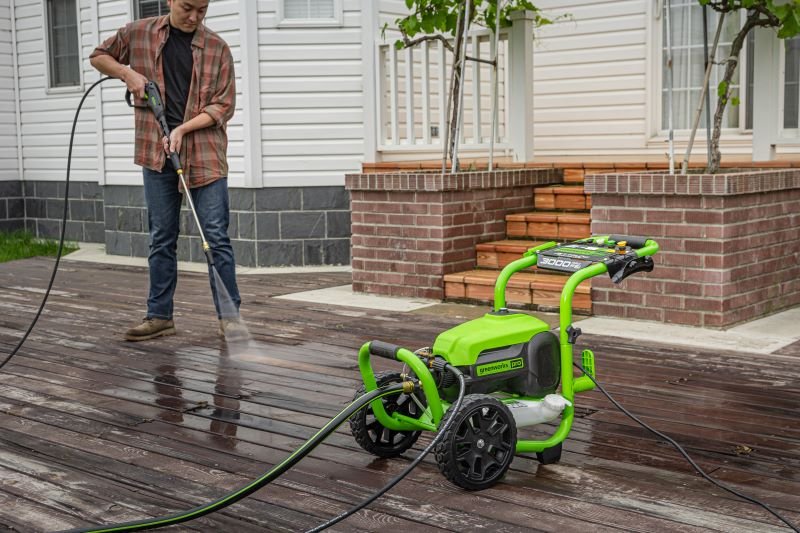
Electric models are usually simpler. They do not have fuel to worry about, so the focus is on water removal, pump protection, cord care, and dry storage.
Make sure the power cord is clean and dry before wrapping it. Do not tighten the wrap too much. A sharp bend near the plug can cause damage over time.
Gas pressure washers
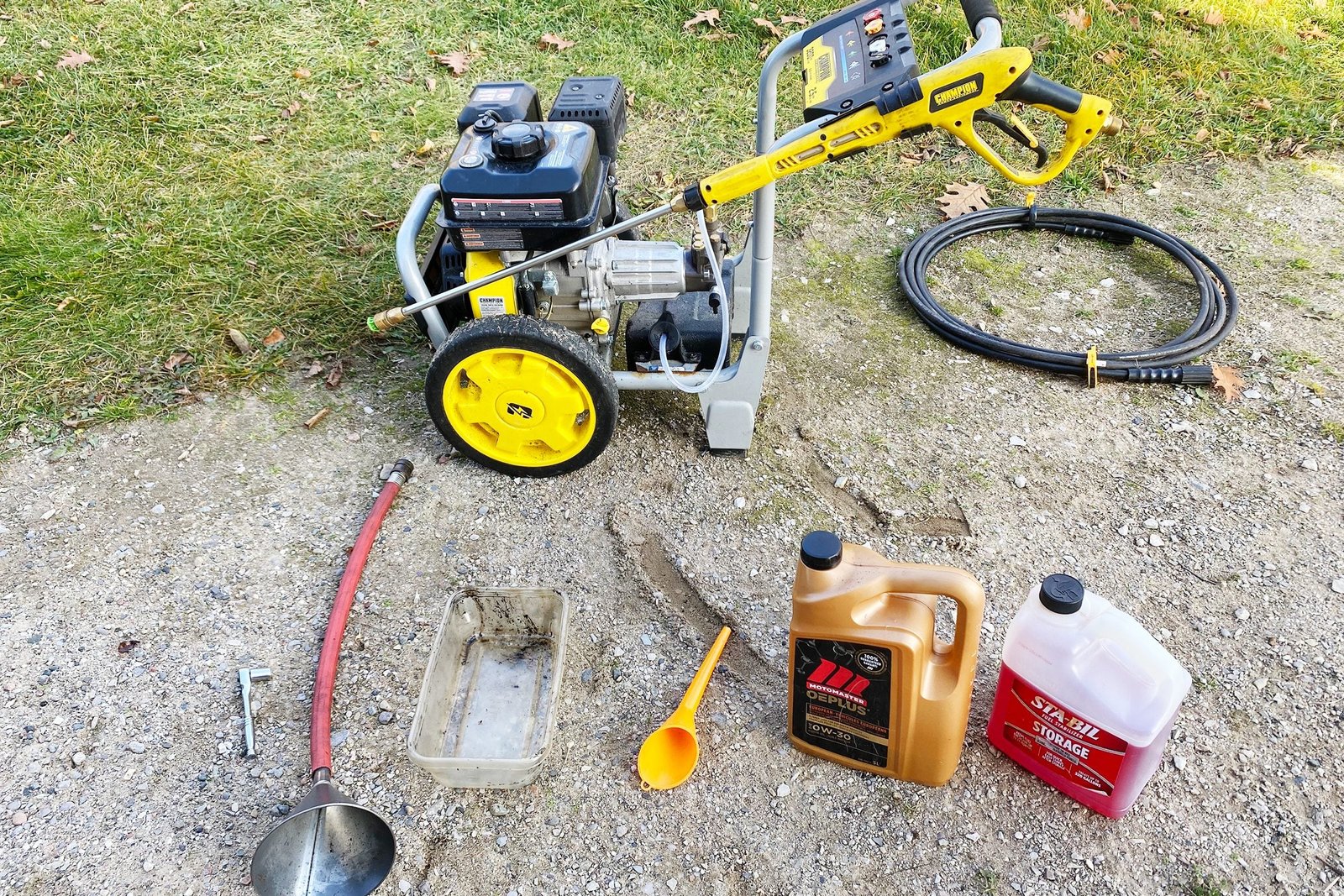
Gas models need all the same water protection, plus fuel and engine care. You may need to add stabilizer, check the oil, and store the unit where fumes will not build up.
Some owners forget the spark plug area. If your manual recommends it, remove the spark plug wire or perform additional engine storage steps. Always follow the brand’s instructions.
Common mistakes that cause winter damage
Many pressure washer problems come from small mistakes, not big failures. If you avoid these errors, you are already ahead of most owners.
- Storing the washer with water still inside Leaving water in the pump or hose is the fastest way to cause freeze damage.
- Using the wrong antifreeze Not every antifreeze is safe for every machine. Use a pump-safe product made for pressure washers.
- Forgetting the spray gun and wand These parts can hold trapped water even when the main pump looks empty.
- Skipping fuel care on gas models Old fuel creates spring starting problems and may clog the carburetor.
- Storing in a damp place Moisture can lead to rust, mold, and corrosion even if the pump is protected.
One less obvious mistake is storing the machine right after a long cleaning job without giving it time to cool and drain. Warm water can still collect in low points. Always finish by letting the system sit long enough to empty well.
How to prepare it for use again in spring
Winterizing is only half the job. When warm weather returns, bring the machine back carefully. A quick check now can prevent surprises later.
- Inspect hoses, seals, and fittings for cracks or leaks.
- Check the oil if you have a gas model.
- Reconnect the water supply and run plain water through the machine first.
- Look for leaks before applying pressure.
- Test the spray gun and nozzle at low pressure if possible.
If you used pump protector, some of it may come out during the first run. That is normal. Run clean water for a short time until the flow looks normal.
Signs the winter storage went well
- The pump starts without strange noises
- There are no water leaks at connections
- The machine builds pressure normally
- The engine starts smoothly on gas models
- The hose stays flexible and does not split
Extra tips that help beginners avoid expensive repairs
Two small habits can make a big difference. First, always store the washer after cleaning it. Dirt and detergent attract moisture. Second, keep a record of when you winterized it and what product you used in the pump. That helps if you need to troubleshoot later.
Also, pay attention to the condition of O-rings and quick-connect fittings. These tiny parts often fail before the pump itself. Replacing them before winter is cheap and smart.
If your washer is older, consider testing it before the first hard freeze, not after. That gives you time to fix problems while parts and service are still easy to get.
Credit: blog.kleen-ritecorp.com
Simple winterizing checklist to follow every year
- Turn off and disconnect the machine
- Flush detergent and debris
- Drain all water from pump, hose, gun, and wand
- Use pump protector or winterizing fluid made for pressure washers
- Protect fuel system on gas models
- Clean and dry all parts
- Store in a dry, above-freezing place if possible
If you follow those steps in order, you will cover the main risks. The process does not take long, but it can protect a very expensive tool from avoidable damage.
FAQs
1. When should I winterize a pressure washer?
Winterize it before the first hard freeze in your area. If temperatures may drop below freezing at night, do not wait. Early prep is safer than emergency repair.
2. Can I use regular antifreeze in my pressure washer?
No, not unless the manufacturer clearly says it is safe. Use a pump protector or winterizing fluid made for pressure washers. Regular antifreeze can damage some parts and is not the best choice for the pump.
3. Do electric pressure washers need winterizing too?
Yes. Electric models still hold water in the pump, hose, and spray gun. They do not need fuel care, but they still need full draining and pump protection.
4. Is it enough to store the pressure washer in a garage?
Not always. If the garage gets below freezing, trapped water can still freeze and damage the machine. Storage in a heated or frost-free space is much better.
5. What happens if I forgot to winterize it last year?
Inspect the washer before using it. Look for cracks, leaks, weak pressure, and starting problems. If it appears damaged, do not force it to run. Have it checked or repaired first.
