
Choosing the right cutting tool can save time, reduce mistakes, and make your work look much better. But many DIY users get stuck on one common question: jigsaw vs oscillating tool — which one is better?
The short answer is that they are made for different jobs. A jigsaw is better for curved cuts, longer cuts, and cutting through sheet material. An oscillating tool is better for detail work, tight spaces, flush cuts, and small repair tasks. If you pick the wrong one, the work becomes slower and rougher.
In this guide, you will learn the key differences, what each tool does best, where beginners often make mistakes, and how to choose the right tool for your project. By the end, the choice will be much clearer.
What each tool is designed to do
Before comparing features, it helps to understand the main purpose of each tool. This is where many people go wrong. They try to use one tool for everything, but these two tools are built for very different kinds of cutting.
Jigsaw
A jigsaw uses a narrow blade that moves up and down very fast. It is made for cutting shapes, curves, and straight lines in wood, plastic, metal, and other sheet materials. It is one of the most flexible saws for home projects.
With the right blade, a jigsaw can cut cabinet openings, sink cutouts, laminate boards, PVC pipe, and metal sheets. It is also useful when you need a portable tool that can follow a marked line.
Oscillating tool
An oscillating tool moves its head side to side in a very small angle. The motion is fast, but the cut is shallow and controlled. It is not meant for long cuts. Instead, it shines in places where other tools cannot fit.
You can use it for trim cuts, plunge cuts, sanding small areas, removing grout, scraping glue, and making repairs in tight corners. It is often called a multitool because it can do more than cutting.
Key differences that matter most
When people search for jigsaw vs oscillating tool, they usually want to know which one cuts better. The real answer depends on the type of cut, the space you have, and the finish you want.
| Feature | Jigsaw | Oscillating Tool |
|---|---|---|
| Best use | Curves, long cuts, sheet materials | Flush cuts, detail work, tight spaces |
| Cut speed | Faster for longer cuts | Slower, more controlled |
| Cut depth | Deeper cuts through thicker material | Shallow cuts, best for small sections |
| Accuracy | Good for marked lines and curves | Very precise in small areas |
| Best in tight spaces | Limited | Excellent |
| Blade movement | Up and down | Side-to-side oscillation |
| Versatility | Mainly cutting | Cutting, sanding, scraping, grout removal |
| Typical finish | Can be clean with the right blade | Very controlled, but slower and narrower |
One important detail beginners often miss is blade flex. Jigsaw blades can bend if you push too hard, especially on thick material. Oscillating blades do not usually bend the same way, but they remove material much more slowly. That means they are better for control, not speed.
Another useful point is that a jigsaw cuts from the front edge inward, while an oscillating tool can make a plunge cut almost anywhere. That makes the oscillating tool much easier to use when you are working inside a finished wall, around trim, or near a corner.
When a jigsaw is the better choice
A jigsaw is the better choice when your project needs longer, smoother cuts. It is also the better choice when the material is large enough to support the saw and guide the blade properly.
Best jobs for a jigsaw
- Cutting curves in wood or plywood
- Making sink or cooktop cutouts
- Trimming boards to shape
- Cutting plastic sheets
- Cutting thin metal with the right blade
- Making rough openings in panels
If you need to cut a shelf into a rounded shape or follow a drawn line around a corner, the jigsaw is usually the better tool. It gives you speed and enough control for most home workshop tasks.
Why it works well
The blade of a jigsaw is narrow, which lets it turn more easily than a circular saw blade. That is why it is so useful for shapes. It can also cut deeper than an oscillating tool, so it handles thicker boards more comfortably.
For cleaner results, many users choose a blade based on the material. Fine-tooth blades are better for plywood, laminate, and metal. Coarser blades are faster in soft wood, but they may leave rougher edges.
Where a jigsaw can struggle
A jigsaw is not ideal for flush cuts. If you want to cut a nail, pipe, or wooden dowel flat against a surface, the jigsaw blade often gets in the way. It also needs some room to move, so it is not great in very tight spaces.
It can also leave chipped edges on laminate or veneer if the wrong blade is used. This is a common beginner problem. A slow speed and the correct blade help reduce the damage.
When an oscillating tool is the better choice
An oscillating tool is the better choice when the space is small, the cut needs to be very controlled, or the job is part cutting and part repair. It is not about speed. It is about access and precision.
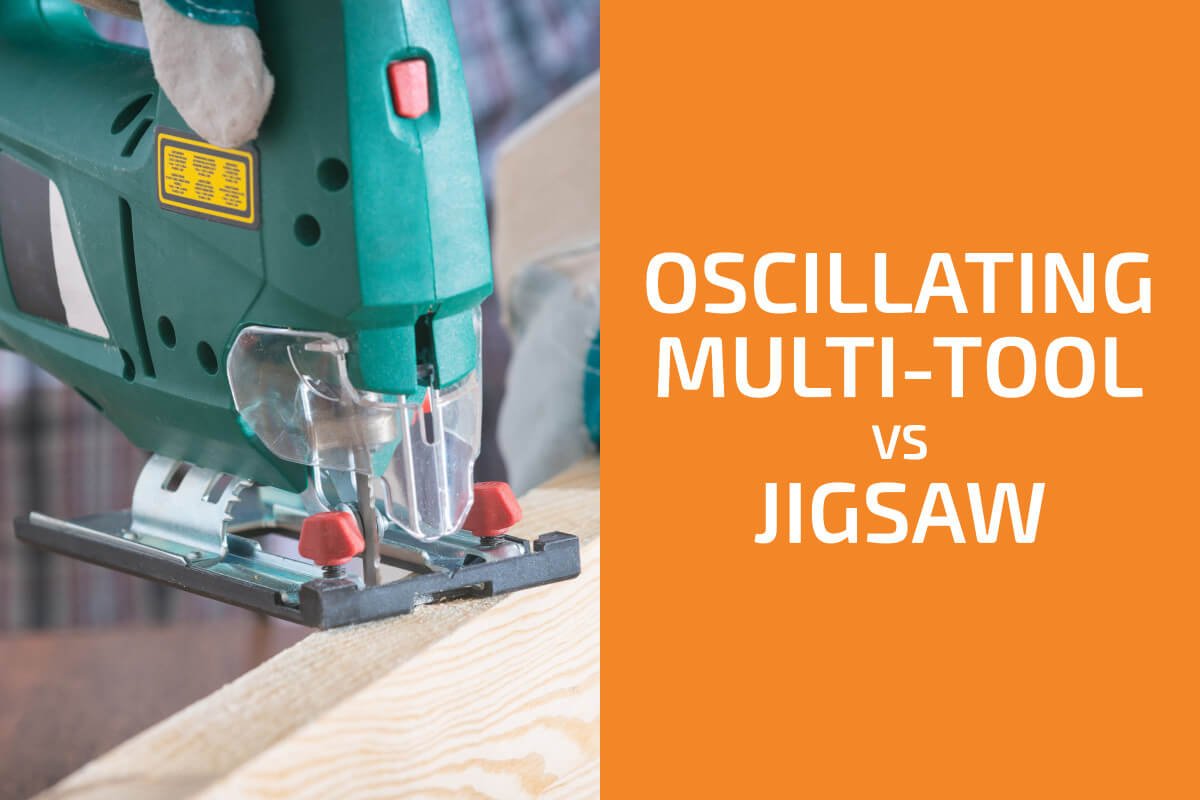
Credit: handymansworld.net
Best jobs for an oscillating tool
- Flush cuts on nails, trim, and screws
- Cutting door jambs during flooring work
- Removing grout between tiles
- Scraping old adhesive or caulk
- Sanding corners and small surfaces
- Making plunge cuts in drywall or wood
This tool is especially useful in renovation work. For example, if you need to cut the bottom of a door frame so new flooring can slide underneath, an oscillating tool is often the cleanest choice. A jigsaw would be awkward there.
Why it works well
The small oscillating motion gives you control. Because the blade does not swing far, it can work close to edges without making large accidental cuts. That is a big advantage when you are working on finished surfaces.
It is also more versatile than many people expect. Some users buy it only for cutting, then later discover it is helpful for sanding tight corners, removing old caulk, or scraping paint in awkward spots.
Where an oscillating tool can struggle
The main weakness is speed. It cuts slowly. If you need to make a long cut in plywood, it will feel painfully slow compared with a jigsaw. The blade also wears out faster on hard material, especially if you push too hard.
Another point beginners miss is heat buildup. Since the blade rubs quickly in a small motion, it can become hot during heavy use. Letting the tool do the work is better than forcing it.
Cut quality and finish: what to expect
Cut quality matters more than many buyers think. A tool may cut the material, but if the edge is torn, chipped, or uneven, you will spend extra time fixing it.
A jigsaw can give a very good finish if you use the right blade, keep the base flat, and move at a steady pace. But the blade can wander, especially on long cuts or thick boards. That is why many woodworkers cut slightly outside the line and then sand to final size.
An oscillating tool makes a narrower cut. That gives it a clean and controlled feel in small areas. The downside is that the finish is not made for long visible edges. It is best for hidden or functional cuts, not show surfaces.
Non-obvious insight: if your project will later be covered by trim, caulk, or another board, the fastest tool is often the better one. You do not need the cleanest possible cut if the area will not be seen. But if the cut will stay visible, the jigsaw usually gives a better balance of speed and appearance.
Which tool is easier for beginners
For pure cutting, many beginners find the jigsaw easier to understand. You place the shoe on the material, follow the line, and let the blade move forward. The learning curve is reasonable.
Still, a jigsaw can be tricky if you want a perfect line. The blade may drift if you push too hard. Holding the base flat is important. So the tool is simple to start with, but not always easy to master.
An oscillating tool is easier in tight spaces, but the cutting action feels unusual at first. New users sometimes press too hard and slow the blade down. That causes heat, wear, and poor cutting speed.
Non-obvious insight: beginners often think the oscillating tool is “safer” because the blade is small. That is only partly true. It is easier to control in close areas, but the blade can still catch skin or damage nearby surfaces if you lose focus. Respect both tools.
Common mistakes people make with both tools
These mistakes happen often, especially with first-time buyers. Avoiding them can improve your results right away.
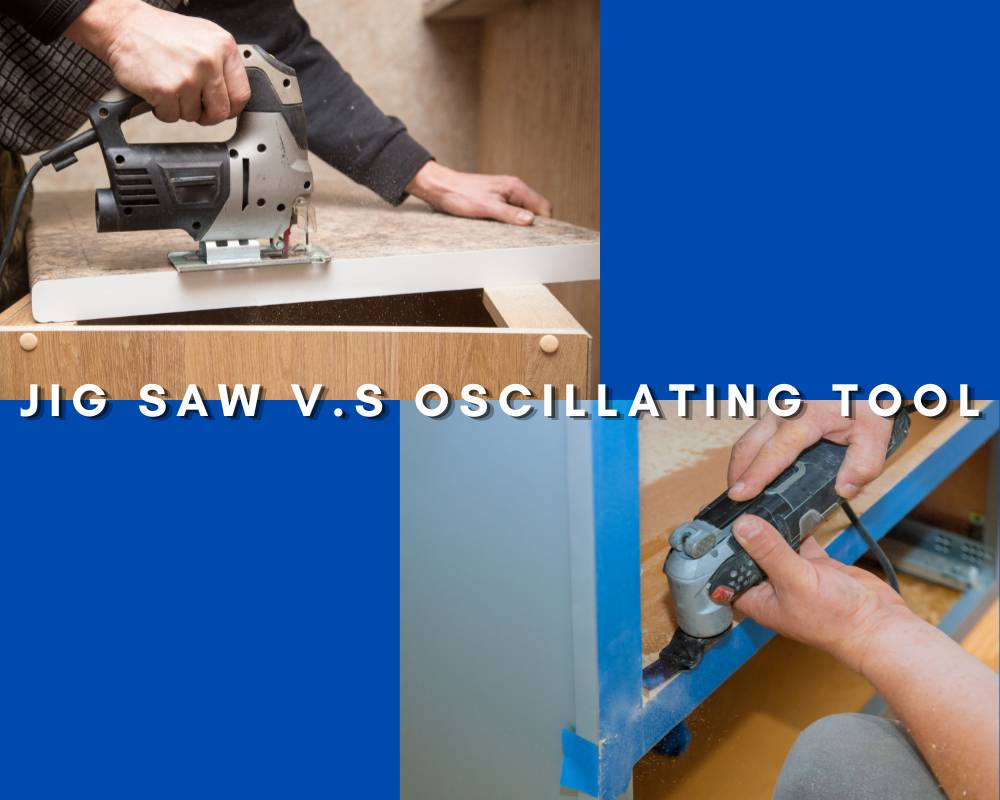
Credit: homebuilderstools.com
With a jigsaw
- Using the wrong blade for the material
- Forcing the saw too fast
- Not supporting the workpiece properly
- Starting a cut before the blade reaches full speed
- Trying to make a flush cut with the wrong tool
With an oscillating tool
- Expecting it to cut as fast as a saw
- Using dull blades for too long
- Pressing too hard and overheating the blade
- Choosing it for long straight cuts
- Not matching the blade to the job
One simple rule helps a lot: use the tool for its natural strength. Do not fight the design. A jigsaw likes open material and continuous cuts. An oscillating tool likes awkward spots and detailed work.
Buying factors that matter before you choose
If you are trying to decide what to buy first, think about the kinds of projects you do most often. That is more useful than comparing raw power alone.
Choose a jigsaw if you often:
- Work with plywood, MDF, or boards
- Need curved or shaped cuts
- Cut panels, shelves, or counters
- Want one tool for many general cutting jobs
Choose an oscillating tool if you often:
- Do repair work
- Work in tight corners
- Need flush cuts
- Remove grout, caulk, or trim
- Want one tool for cutting, sanding, and scraping
If you can only afford one tool, the best choice depends on your main task. For woodworking and larger cuts, the jigsaw is usually the smarter first purchase. For remodeling, repair, and tight-space work, the oscillating tool is often more useful.
Which one should you choose for specific projects?
Here is the practical answer many readers want. Match the tool to the project, not to the brand or marketing claim.
Home furniture work
If you are building shelves, cutting boards, or shaping panels, choose a jigsaw. It is faster and more natural for these jobs.
Bathroom or kitchen renovation
If you are trimming door frames, removing old caulk, or making small cutouts in finished spaces, choose an oscillating tool.
Flooring installation
Both can help, but the oscillating tool is often better for trimming door jambs and tight finishing work. The jigsaw is better for cutting flooring boards to shape.
Drywall repair
An oscillating tool is usually better for making controlled openings and small plunge cuts. It is easier to work close to studs, pipes, and outlets.
Outdoor and garden work
A jigsaw is usually the better choice for cutting boards, plastic panels, or thin metal for outdoor projects. It covers more material faster.
Can one tool replace the other?
Not fully. They overlap a little, but they are not true replacements.
A jigsaw can make some plunge cuts with the right technique, but it is awkward in very tight spaces. An oscillating tool can cut, but it is too slow for most long or wide cuts. If you try to force either one into the other’s job, you usually lose time and quality.
If you only do occasional DIY work, one tool may be enough for now. But if you renovate, build, or repair often, having both is very practical. They solve different problems.
For general tool guidance and safe use tips, the Wood Magazine site is a useful resource for many home workshop users.
The simplest way to decide
If you want the shortest possible answer to jigsaw vs oscillating tool, use this rule:
- Choose a jigsaw for bigger cuts, curves, and sheet materials.
- Choose an oscillating tool for tight spaces, flush cuts, and repair work.
That rule works for most DIY situations. It also prevents the most common buying mistake: choosing a tool because it seems more flexible, not because it fits the actual job.
Another smart way to think about it is this: the jigsaw is a cutter for open work, while the oscillating tool is a problem-solver for awkward work. That small difference explains most of their use cases.
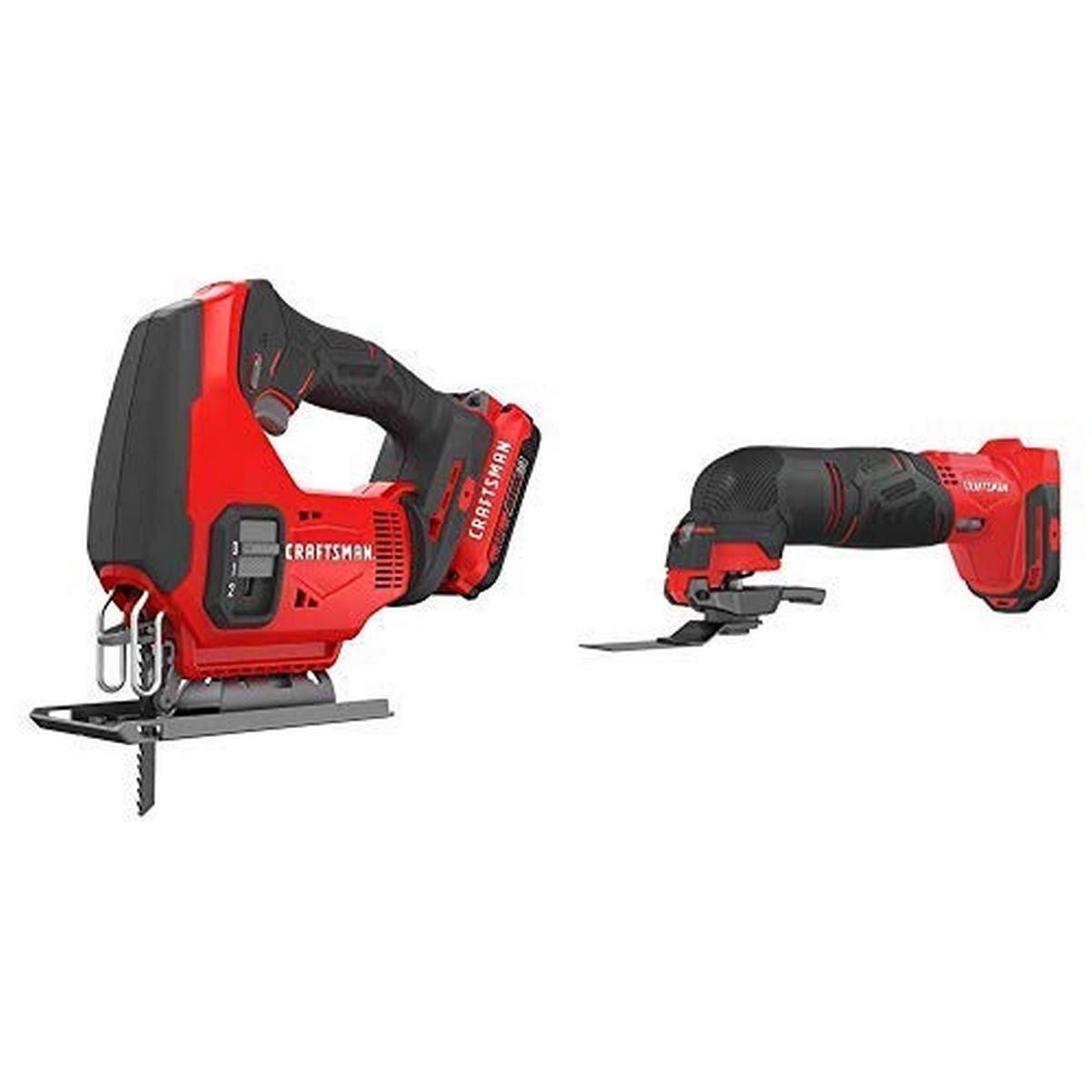
Credit: homeimprovementway.com
Final verdict
Both tools are useful, but they do not do the same job well. The jigsaw is the better choice when you need speed, curved lines, and longer cuts in wood, plastic, or thin metal. The oscillating tool is the better choice when you need control, access, and detail work in tight or finished spaces.
If you are buying only one tool, choose the one that matches your most common projects. For woodworking and general cutting, get a jigsaw first. For remodeling, trim work, and repairs, get an oscillating tool first. If your budget allows it, owning both gives you far more freedom and fewer workarounds.
FAQs
1. Is a jigsaw better than an oscillating tool for wood cutting?
Yes, for most wood cutting jobs a jigsaw is better. It cuts faster, handles longer lines, and works well on boards, plywood, and panels. An oscillating tool is only better when the cut is in a tight or awkward spot.
2. Can an oscillating tool make straight cuts?
It can make short straight cuts, but it is not the best tool for long straight lines. The cut is slower and narrower. A jigsaw is usually the better choice for straight cuts in larger materials.
3. Which tool is better for flush cutting?
An oscillating tool is much better for flush cutting. It can cut nails, screws, trim, and wood close to a surface. A jigsaw usually cannot get close enough for that kind of work.
4. Do I need both a jigsaw and an oscillating tool?
Not always, but many DIY users benefit from both. If you do more woodworking, a jigsaw may be enough at first. If you do repairs or renovation work, an oscillating tool is also very valuable.
5. Which tool is safer for beginners?
Both are safe when used correctly. A jigsaw is easier for beginners to learn for general cutting. An oscillating tool is easier in tight spaces, but it still needs careful handling because the blade can catch surfaces or skin.
