
If you want to save money on small plumbing jobs, learning how to solder copper pipes is a very useful skill. It looks hard at first, but the process is simple when you understand the steps and prepare well. Most beginners do not fail because soldering is impossible. They fail because they rush, skip cleaning, or do not heat the joint the right way.
The good news is that a clean copper joint can be strong, neat, and long-lasting. You do not need advanced tools or years of experience. You only need the right materials, a careful process, and a little patience. Once you know the basics, you can repair leaks, install new lines, or handle simple home projects with more confidence.
This guide explains the full process in plain English. You will learn what tools to use, how to prepare the pipe, how to apply heat and solder correctly, and how to avoid common beginner mistakes. If you follow the steps closely, you can make a professional-looking joint even on your first try.
What you need before you start
Good soldering begins before the torch is lit. The quality of your joint depends mostly on preparation. If the pipe is dirty, wet, or badly fitted, the solder will not flow properly. That is why it helps to gather everything first and check your work area.
Here is a simple overview of the main tools and materials.
| Item | Why it matters |
|---|---|
| Copper pipe and fittings | The parts you will join together |
| Pipe cutter | Makes a clean, straight cut |
| Deburring tool or file | Removes sharp edges inside and outside the pipe |
| Emery cloth or pipe cleaning brush | Cleans the copper so solder can bond well |
| Lead-free solder | Used to seal the joint |
| Flux | Helps the solder flow and protects the metal while heating |
| Propane or MAP gas torch | Heats the fitting evenly |
| Heat-resistant pad or shield | Protects nearby surfaces from fire |
| Safety glasses and gloves | Protects your eyes and hands |
| Small spray bottle or wet rag | Useful for cooling and cleanup after the joint is done |
For water supply work, many plumbers prefer lead-free solder. It is the safer choice for drinking water lines. If you want to learn more about lead safety in plumbing, the U.S. Environmental Protection Agency has helpful guidance.
Choose the right pipe and fitting size
Copper pipe soldering only works well when the pipe and fitting match correctly. Most home plumbing uses common sizes such as 1/2 inch, 3/4 inch, or 1 inch. The fitting should slide over the pipe with a snug fit, not a loose one. If the fit is too loose, the solder joint may not seal well. If it is too tight, the fitting may not seat fully.
One beginner mistake is assuming all copper fittings are the same. They are not. The inside of the fitting and the outside of the pipe must match by size and type. Also check whether you are working with Type M, Type L, or Type K copper. For most home jobs, Type M and Type L are common. Type L is thicker and often used where more strength is needed.
Another small but important point: the pipe ends should be round and undamaged. A dented pipe can ruin the seal. If the pipe end is crushed or badly bent, cut it off and start with a clean section.
Cut, clean, and fit the pipe first
This step matters more than heating. Many new solderers focus on the torch, but the real secret is preparation. Copper must be clean, dry, and properly fitted before solder can bond.
1. Cut the pipe straight
Use a pipe cutter for the cleanest cut. Turn the cutter slowly around the pipe and tighten it little by little. Do not crush the pipe by forcing it. A straight cut helps the fitting sit evenly.
2. Remove burrs
After cutting, the inside edge usually has a burr. That is a small lip of metal left by the cutter. Remove it with a deburring tool or file. If you skip this, water flow can be restricted, and the pipe may not fit as smoothly.
3. Clean the copper
Use emery cloth, sanding pad, or a pipe brush to clean the outside of the pipe end and the inside of the fitting. Clean until the copper looks bright and shiny. This is not about making it look nice. It is about removing oxidation and dirt that block the solder bond.
Non-obvious tip: clean a little farther than you think you need to. If you only clean the exact joint area, your fingers can leave oils on nearby copper while handling the pipe. Clean a slightly wider area and avoid touching the cleaned parts again.
4. Dry fit the parts
Before adding flux, push the pipe into the fitting and check the alignment. Mark the insertion depth with a pencil or marker, then separate the parts. This simple step helps you see later whether the pipe is fully seated after heating.
Apply flux the right way
Flux is a paste that helps stop oxidation while the copper is heated. It also helps the solder flow into the joint. Without flux, even clean copper can become dirty again once heat is applied.
Use a small brush or flux applicator to coat both the pipe and the inside of the fitting with a thin, even layer. You do not need a thick blob. Too much flux can drip, smoke, and make a mess. A light coat is enough.
Then reassemble the joint by pushing the pipe fully into the fitting. Twist it a little as you insert it. This helps spread the flux and seat the parts properly.
Non-obvious tip: flux can dry out if you wait too long after applying it. If you prepare several joints at once, do not leave them sitting for a long time before soldering. Work in a small section so the flux stays active.
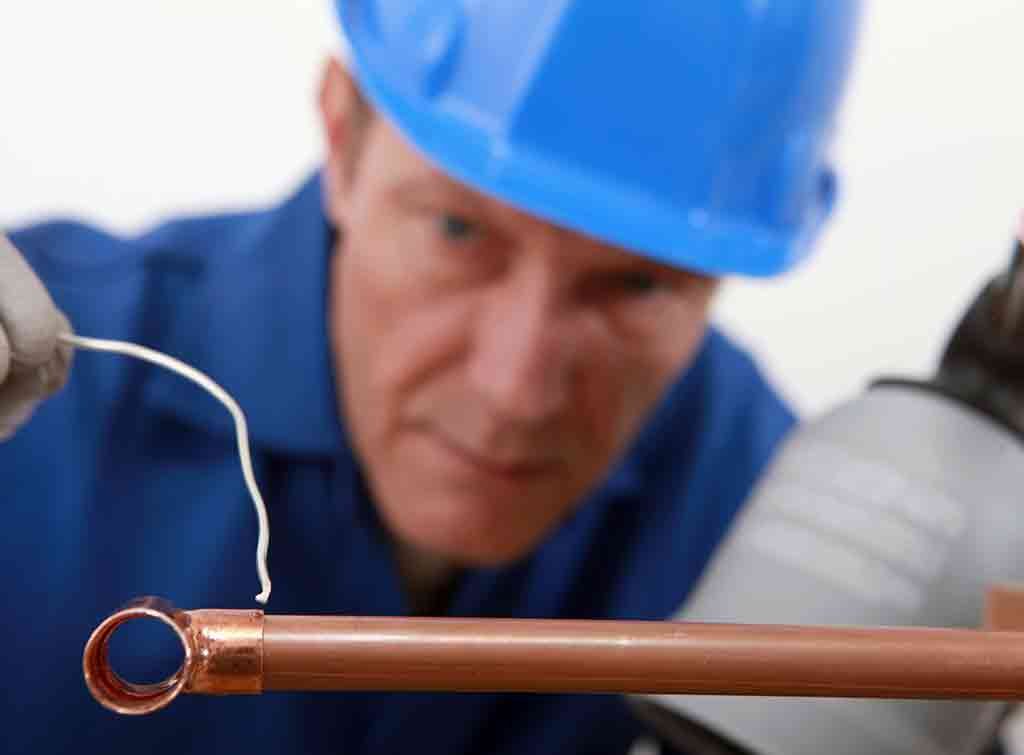
Credit: checkatrade.com
Set up your work area safely
Heat is the part that can cause trouble if you are careless. Copper carries heat quickly, and nearby wood, insulation, or plastic can be damaged easily. Before using the torch, check the surrounding area carefully.
Make sure there is no flammable material close to the joint. Use a heat shield or wet cloth behind the pipe if needed. Keep a fire extinguisher nearby. Never solder near gas leaks or in areas where fumes can collect.
It also helps to drain the pipe completely if it has water in it. Water will pull heat away from the joint and stop the solder from flowing. For active plumbing lines, shut off the water supply and open a nearby faucet to relieve pressure. If water keeps seeping into the joint, you may need to dry the line more carefully before continuing.
Heat the fitting, not the solder
This is one of the most important parts of how to solder copper pipes. Beginners often put the flame on the solder directly. That usually creates a weak joint. The correct method is to heat the fitting and pipe evenly so the metal melts the solder on contact.
Turn on the torch and adjust the flame to a steady blue cone. Move the flame around the fitting, not in one spot only. Heat the larger fitting more than the pipe because the fitting usually takes longer to warm up. You want the whole joint hot enough to melt solder, but not so hot that the flux burns away too soon.
A useful sign is when the flux starts to bubble and the copper becomes hot enough that solder melts on contact. At that point, touch the solder to the edge of the joint opposite the flame. If the joint is ready, the solder will be drawn into the seam by capillary action.
Do not overheat the copper. If the flux turns black, the joint is too hot. In that case, let it cool, clean it again, and start over. Overheating makes the joint harder to seal.
How to know the joint is hot enough
- The flux becomes shiny and starts to flow
- Solder melts when it touches the joint, not the flame
- The solder disappears into the seam instead of sitting on top
Feed the solder smoothly
Once the joint is hot enough, hold the solder near the edge of the fitting. You do not need a lot. In fact, using too much is a common beginner mistake. If the joint is properly heated and fitted, the solder will flow around the seam with a small amount.
Move the solder around the fitting so it reaches all sides. A good joint often forms a thin silver ring around the entire connection. That is a sign the solder reached the full seam.
For most small copper fittings, a few inches of solder is enough. If the solder keeps disappearing too quickly, the joint may be too hot or the pipe may have a gap. If it beads up and will not flow, the joint is usually not hot enough or not clean enough.
Non-obvious tip: feed the solder from the side opposite the flame. That helps the molten solder move toward the hottest part of the joint and spread more evenly through the seam.
Let the joint cool naturally
When the solder has flowed all the way around the joint, remove the flame and let the copper cool on its own. Do not move the pipe while the solder is still liquid. Even a small shift can break the seal and create a leak later.
Some people try to cool the joint quickly with water right away. That is not the best idea. Sudden cooling can stress the joint or leave it dirty. A natural cool-down is safer. Once it is no longer hot enough to burn, you can wipe away extra flux and inspect the joint.
After cooling, check for a smooth ring of solder around the fitting. The joint should look clean and complete, not patchy. If you see gaps, the solder may not have flowed fully.
Inspect the work and test for leaks
The job is not finished until you test it. A joint that looks fine can still leak if it was not heated evenly or if the fitting moved during cooling. Turn the water back on slowly and check every joint with care.
Use a dry cloth or paper towel around the connection. If the towel gets wet, you have a leak. Sometimes the leak is very small and appears as a slow drip. In that case, shut off the water again, drain the line, and repair the joint. You may need to clean it, reapply flux, and reheat it.
It is better to fix a leak now than later. Small leaks can damage cabinets, walls, and floors over time.
Common mistakes beginners make
Many people struggle the first time because of a few repeat errors. If you know these in advance, you can avoid them.
- Not cleaning enough. Oxidation, dirt, and oil stop the solder from bonding well.
- Using too much flux. Extra flux makes smoke and mess. A thin coat is enough.
- Heating the solder directly. Heat the fitting, not the solder wire.
- Overheating the joint. Too much heat burns flux and weakens the result.
- Moving the pipe too soon. The joint must stay still while cooling.
- Forgetting to drain water. Water in the pipe steals heat and ruins the solder flow.
One mistake that beginners often miss is using old or contaminated soldering materials. Flux can dry out, and dirty solder wire can create poor flow. Keep materials sealed and clean. Small details matter here.
Helpful practice tips for your first joint
If you have never done this before, practice on scrap copper first. A few test joints can teach you far more than reading instructions alone. You will see how fast the copper heats, how the solder flows, and how much flux you really need.
Start with simple joints in an open area. Avoid working in a tight corner for your first attempt. Open space makes the torch easier to control and reduces fire risk. You will also learn how to position your hand so the solder feeds smoothly without touching the flame.
Keep your movements slow. Rushing usually causes one of three problems: missed cleaning, uneven heating, or too much solder. All three can be avoided with patience.
Also, remember that copper holds heat longer than many beginners expect. Even after the flame is off, the fitting may stay hot enough to burn skin or melt nearby plastic. Give it time.
When soldering may not be the best choice
Soldering copper pipes is a strong and proven method, but it is not always the best option for every job. In some places, heat is dangerous because of nearby wood framing, old insulation, or finished walls. In those cases, other connection methods may be safer or faster.
If the pipe has active water that cannot be fully drained, soldering becomes much harder. Tiny amounts of water can prevent proper heating. Some repairs need special wet pipe methods or different fittings. If you are unsure, stop and assess the situation before continuing.
Also, if the pipe is in a place you cannot safely reach with a torch, do not force it. A strong joint is important, but safety comes first.
Why good solder joints last so long
A well-made soldered joint can last for many years. The reason is simple: the solder fills the tiny space between the pipe and fitting and creates a sealed bond. It does not just sit on the surface. It is pulled into the seam when the heat is right.
That is why preparation matters so much. The cleaner the copper, the better the solder can flow. The better the fit, the stronger the seal. The more even the heat, the more complete the bond. A good joint is the result of several small things done correctly.
When you understand that idea, soldering stops feeling random. It becomes a clear process with predictable results.
Quick recap of the process
If you want a simple memory aid, remember this flow: cut, clean, flux, fit, heat, solder, cool, test. That is the heart of how to solder copper pipes. Each step supports the next one.
If one part goes wrong, the whole joint can fail. But when you take your time and follow the process closely, you can make a neat, reliable connection even as a beginner.
FAQs
1. Can I solder copper pipes without flux?
No. Flux is important because it helps clean the metal while heating and lets the solder flow into the joint. Without flux, the solder may not bond well and the joint can leak.
2. What type of solder should I use for plumbing?
Use lead-free solder for water supply lines. It is the safer choice, especially for drinking water systems. Make sure the solder is made for plumbing use.
3. Why does my solder not stick to the copper pipe?
The most common reasons are dirty copper, not enough heat, or too much water in the pipe. Clean the joint again, apply fresh flux, and heat the fitting evenly until the solder melts on contact.
4. How do I know if a soldered joint is good?
A good joint usually has a thin, even ring of solder around the fitting. It should look smooth and complete. After the pipe cools, test it with water and check for leaks using a dry cloth or paper towel.
5. Is soldering copper pipes hard for beginners?
It can feel hard at first, but it becomes much easier with practice. If you take time to clean the pipe, use the right heat, and let the joint cool without moving it, you can make a solid connection on your first few tries.
