
If you have ever used a pressure washer, you probably know the sound comes on fast and strong. It can be much louder than a normal garden hose, and in some cases it feels almost like a small engine next to your ear. That is why many people ask how loud are pressure washers before they buy one or use one for the first time.
The short answer is that most pressure washers are noisy enough to need care. Some electric models are manageable in a backyard. Many gas models are loud enough to bother neighbors, wake sleeping children, and make long jobs tiring. The exact noise depends on the motor type, pump design, pressure, and even the surface you are cleaning.
In this guide, you will learn what decibel ratings really mean, what noise levels to expect from different types of pressure washers, and how to choose a quieter machine when sound matters. You will also learn simple ways to reduce noise and protect your ears while still getting the job done.
For safer and quieter planning, compare electric vs gas pressure washers, review these pressure washer safety tips, and learn how to use a pressure washer correctly.
What pressure washer noise actually sounds like
Pressure washer noise is not just one sound. It is usually a mix of motor hum, pump vibration, water spray, and sometimes engine exhaust. That is why two machines with similar cleaning power can sound very different in real use.
A small electric washer may sound like a loud vacuum or a lawn trimmer at a distance. A gas pressure washer often sounds more like a running mower or a small generator. The spray itself also adds noise, especially when water hits concrete, brick, or metal.
If you are asking how loud are pressure washers in everyday terms, the answer is: loud enough that you should not stand close to one for long without ear protection, especially if it is a gas unit.
Why the sound feels harsher than the number alone
Decibel ratings matter, but they do not tell the full story. A pressure washer can be 10 dB louder than another machine, and that difference may feel much bigger than it looks on paper. Human hearing does not respond in a simple straight line. A small increase in decibels can seem like a big jump in loudness.
Also, some noises are sharper. A high-pitched electric motor may feel less heavy than a deep gas engine, but it can still become annoying during long jobs. This is one reason sound quality matters, not only sound level.
Understanding decibels in simple terms
Decibels, or dB, are the unit used to measure sound. The scale is not linear. That means a small increase can represent a much bigger real-world difference in noise energy.
Here is an easy way to think about it: a sound at 70 dB is not just a little louder than 60 dB. It is about 10 times more intense in sound energy. That does not mean it feels 10 times louder, but it does mean your ears experience much more strain over time.
For a helpful reference on noise exposure and hearing safety, see the CDC’s guide to sounds that can damage hearing.
Common sound levels to compare
These examples can help you understand pressure washer noise in a normal context:
- 30 dB — quiet bedroom
- 50 dB — calm office or light rainfall
- 60 dB — normal conversation
- 70 dB — vacuum cleaner
- 80 dB — busy street or loud appliance
- 90 dB — lawn mower, loud machinery
- 100 dB+ — very loud power tools and engines
Most pressure washers sit somewhere between the vacuum cleaner range and the lawn mower range, but gas models can go higher.
Typical decibel ratings by pressure washer type
Not all pressure washers are built the same. The biggest noise difference usually comes from the power source. Electric units are often quieter. Gas units are usually louder and more tiring to use for long periods.
| Pressure washer type | Typical decibel range | What it sounds like | Best use case |
|---|---|---|---|
| Small electric pressure washer | 70–75 dB | Vacuum-like, light motor sound | Patios, cars, decks, light home cleaning |
| Medium electric pressure washer | 75–85 dB | Brighter motor noise, more spray sound | Driveways, siding, larger home tasks |
| Gas pressure washer | 85–100 dB | Mower-like engine roar | Heavy-duty cleaning, long hoses, remote areas |
| Commercial gas pressure washer | 95 dB and above | Very loud engine and pump noise | Professional cleaning jobs |
These ranges are general, not fixed. One machine may be quieter or louder than another model in the same category. But they give you a useful starting point when you compare products.
Electric pressure washers are usually easier on the ears
Electric pressure washers are often the better choice if you care about noise. They do not have a gas engine, so they skip the loud exhaust and engine vibration that make many machines noisy.
Still, electric does not always mean silent. The pump can still be loud, and cheaper units may sound rough or rattly. If the motor is not well insulated, the noise can be more annoying than you expect.
Non-obvious insight: Some electric pressure washers sound louder than they test on paper because the noise is sharper and more constant. A steady high-pitched sound can wear on your ears faster than a deeper but lower sound.
Gas pressure washers are powerful, but noise comes with the power
Gas pressure washers are usually the loudest common type. The engine, muffler, and vibration all add to the sound. If the washer sits on a hard surface like concrete, the noise can feel even stronger because vibration travels through the ground.
These machines are often the right tool for big jobs. But if you plan to use one in a neighborhood, near an apartment, or early in the morning, sound can become a real problem.
Non-obvious insight: The same gas washer can seem much louder when it is idling under no load than when it is spraying at a distance. Many people think the machine is “extra loud” because they hear it while walking around it, not while using it in the work position.
What affects how loud a pressure washer feels in real life
The printed decibel rating is only part of the story. Real-world loudness depends on several practical factors that buyers often overlook.
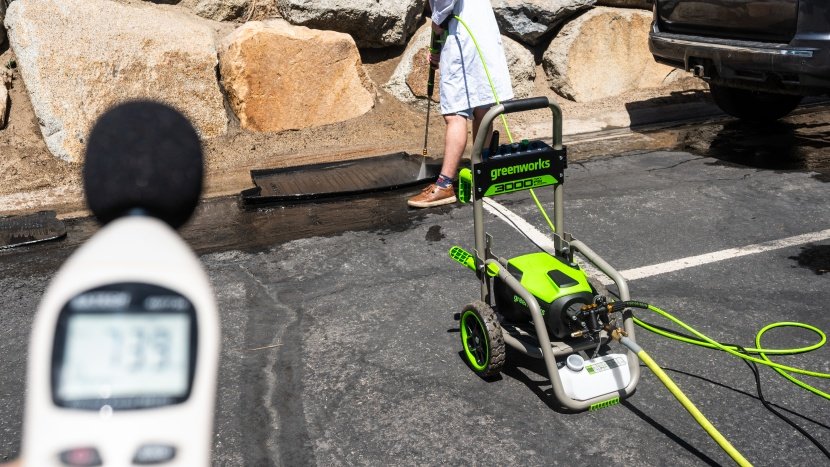
Credit: techgearlab.com
1. Distance from the machine
Sound drops as you move away. This is one of the easiest ways to reduce noise exposure. Standing 20 feet away from a pressure washer can feel much easier than standing next to it.
That said, long hoses are not just about convenience. They can also keep you farther from the noisiest part of the machine during work.
2. Hard surfaces reflect sound
Cleaning a driveway, wall, or metal surface can make the noise feel stronger. Hard surfaces bounce sound back toward you. Soft grass, dirt, and open space usually feel less harsh.
This is why a pressure washer can seem louder in a small patio area than in a wide open yard.
3. Engine condition matters
A well-maintained machine often sounds smoother and less rough. Loose parts, clogged filters, worn pumps, and poor lubrication can all make a washer louder. If a machine suddenly sounds harsher than before, that is often a sign that something needs attention.
4. Nozzle choice can change the sound
Some nozzles create a sharper spray pattern and more noise when the water hits the surface. Rotating or turbo nozzles can sometimes sound especially aggressive because they combine pressure, movement, and strong impact.
5. The surface being cleaned matters
Spraying concrete often sounds louder than spraying wood or vinyl siding because hard surfaces react more strongly. Metal railings, pavers, and brick can also produce a stronger echo effect.
How loud are pressure washers compared with common household sounds?
Many buyers want a simple comparison before they choose a model. The table below gives a practical feel for what to expect.
| Sound source | Approximate loudness | How it compares |
|---|---|---|
| Quiet electric pressure washer | 70–75 dB | Similar to a strong vacuum cleaner |
| Average electric pressure washer | 75–85 dB | Similar to a blender or loud kitchen appliance |
| Gas pressure washer | 85–100 dB | Similar to a lawn mower or leaf blower |
| Very loud commercial unit | 100 dB+ | Can be uncomfortable after short exposure |
This comparison is useful because many shoppers do not know what a decibel number means until they compare it to something familiar.
When pressure washer noise becomes a real concern
Noise is not only about comfort. It can also affect safety, neighbors, and how long you can work without fatigue.
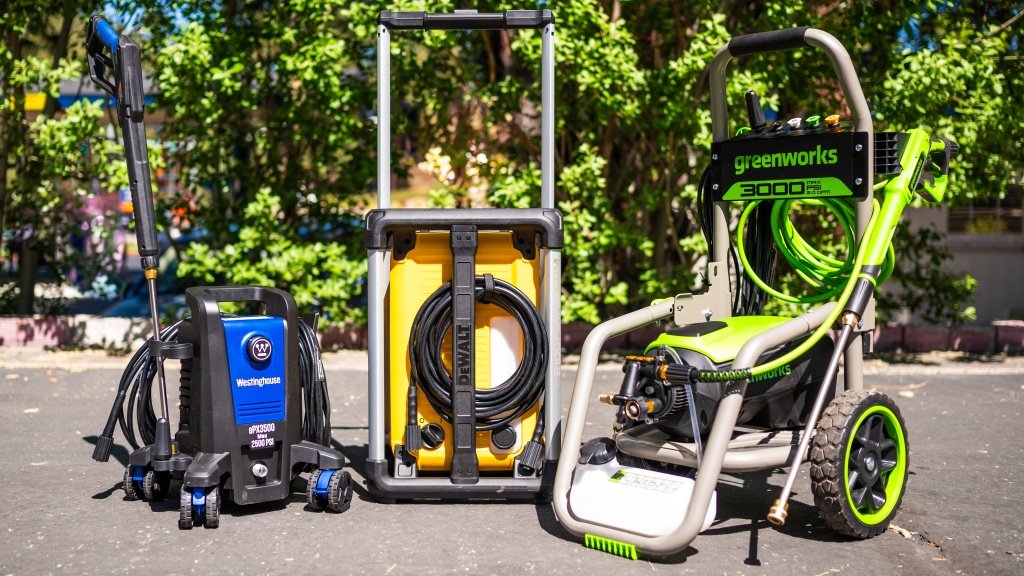
Credit: techgearlab.com
Hearing protection is often necessary
If a pressure washer is above 85 dB, hearing protection becomes a smart choice. Many gas models cross that line. Even if the job is short, repeated exposure can strain your ears.
Foam earplugs, earmuffs, or both together can help. For long cleaning jobs, earmuffs are often easier to put on and remove.
Timing matters in neighborhoods
Early morning and late evening are bad times to run a noisy washer. Even if your machine is not extremely loud, pressure washer sound carries well in quiet streets.
If you live close to neighbors, using a quieter electric model can help you avoid complaints and keep the work day peaceful.
Noise can cause fatigue
Many people focus on water pressure and forget about sound fatigue. A loud washer can make the job feel longer than it really is. You may feel tired sooner, even if the physical work is not difficult.
Non-obvious insight: Noise fatigue can affect your focus. That matters because reduced focus can make you miss spots, over-spray delicate areas, or move the wand too fast and waste time.
How to choose a quieter pressure washer
If you want to reduce noise from the start, look beyond pressure numbers like PSI and GPM. Cleaning power matters, but so does the sound profile.
Look for lower decibel specs
Some brands publish noise levels. If they do, use that information. A few dB can make a real difference, especially if you plan to use the washer often.
When comparing products, do not focus only on cleaning strength. A slightly less powerful model may still do the job and be much easier to live with.
Choose electric when possible
For most home users, electric models are the quietest practical option. They are also easier to start, lighter to carry, and better suited to shorter cleaning jobs.
If you only need to wash cars, patio furniture, bikes, siding, or a small driveway, electric is often the smarter choice.
Check pump and frame quality
Cheaper pressure washers often vibrate more. Vibration adds noise. A sturdier frame, solid pump housing, and better build quality can reduce rattling and keep sound more controlled.
Pay attention to hose length
A longer hose lets you keep the machine farther away from where you stand. This does not make the machine quieter, but it makes the work feel quieter. That small difference can improve comfort a lot during long cleaning sessions.
Simple ways to make a pressure washer quieter
You cannot make a loud machine silent, but you can reduce the noise you hear and the noise others hear.
- Place the machine on a soft surface. A rubber mat, thick mat, or patch of grass can reduce vibration compared with bare concrete.
- Keep the washer farther away. Use a longer hose so the engine or motor stays away from your body and from windows.
- Maintain the machine well. Tighten loose parts, clean filters, and service the engine or pump on time.
- Use the right nozzle. A nozzle that matches the job can reduce unnecessary spray noise and improve cleaning speed.
- Wear hearing protection. This does not reduce the machine’s sound, but it protects you from the effect of the noise.
One more useful trick is to avoid running the washer dry or forcing it to work too hard. Struggling pumps and engines often sound louder and rougher than healthy ones.
Should you worry about pressure washer noise for children, pets, or neighbors?
Yes, in many cases you should. Pressure washer noise can be startling, especially for children and pets. Dogs may bark or hide. Cats may run away. Small children may find the sound uncomfortable or scary.
If you plan to clean near family members, tell them first. Give them time to move away from the work area. This is especially important when using a gas unit.
Neighbors matter too. Even a normal home pressure washer can be annoying if used too early, too often, or too close to shared walls and fences.
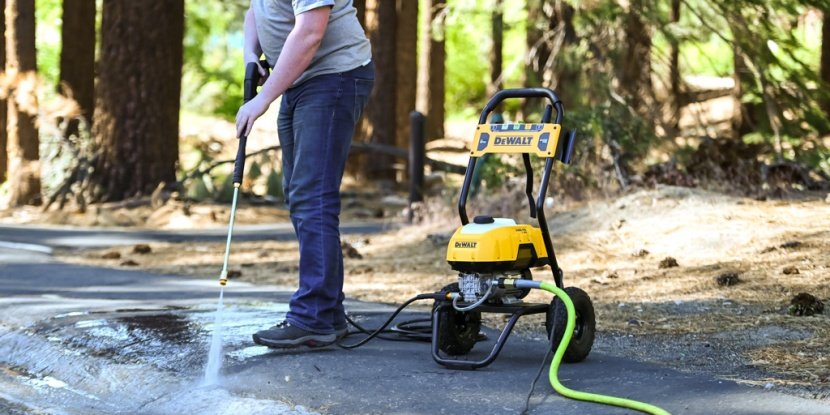
Credit: techgearlab.com
Small planning steps that help a lot
- Run the washer during daytime hours.
- Close nearby windows before starting.
- Move vehicles, pets, and kids away from the area.
- Keep the machine away from fence lines when possible.
- Tell neighbors in advance if the job may take a while.
What to expect before you buy
If you are shopping for a pressure washer, think about how often you will use it and where you will use it. For a typical home, an electric washer is often enough and much easier to live with. For heavy jobs, gas may be needed, but the noise tradeoff is real.
Do not assume that higher pressure always means a better washer. Sometimes a quieter machine that you are willing to use often is more valuable than a louder machine that stays in storage because it is unpleasant to run.
That is the real answer to how loud are pressure washers: loudness depends on the type of machine, the job, and the space around you. For many people, the best choice is not the strongest washer on paper, but the one that fits the way they actually clean.
FAQs
1. How loud are pressure washers on average?
Most electric pressure washers are around 70 to 85 dB, while gas pressure washers are often around 85 to 100 dB or more. The exact sound depends on the model, maintenance, and surface being cleaned.
2. Is an electric pressure washer quiet enough for home use?
Yes, in most cases. Electric pressure washers are usually the better choice for home use because they are much quieter than gas models. They can still be loud, but they are easier to use in neighborhoods and smaller spaces.
3. Do I need ear protection when using a pressure washer?
If the washer is above 85 dB, ear protection is a smart idea. Many gas pressure washers cross that level. Even with electric models, hearing protection can help during longer cleaning sessions.
4. Why does my pressure washer seem louder on concrete?
Concrete reflects sound very well. That makes the pressure washer noise feel stronger and sharper. Hard surfaces also amplify the sound of water hitting the ground.
5. Can I make a pressure washer quieter?
You can reduce the noise by placing it on a softer surface, using a longer hose, keeping it in good condition, and wearing hearing protection. You cannot make it silent, but you can make it more comfortable to use.
